Gratitude and Satisfaction – Healthcare Perspective

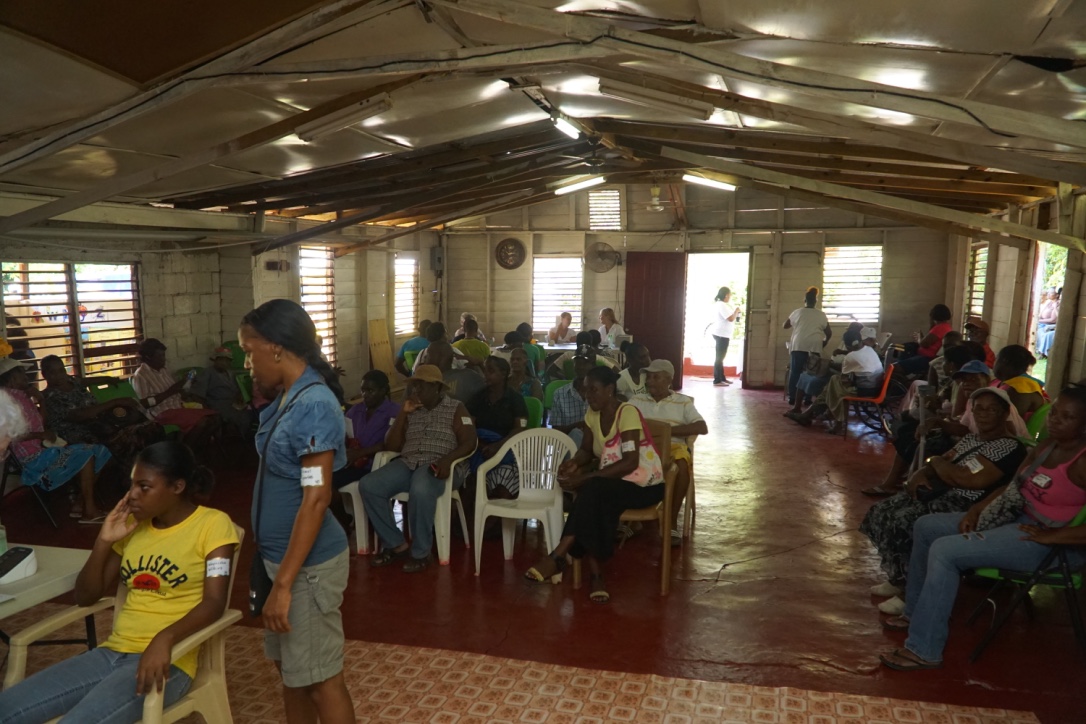
jamaica-group-wait
Have you expressed gratitude for your healthcare?

When was the last time you expressed gratitude for your healthcare? How often are you satisfied with the healthcare you receive? When do you suppose is the last time your doctor, nurse, pharmacist, medical assistant, intake/discharge specialist, or billing office received a ‘Thank you!’?

I encourage you to take a moment and list the last five benefits you received from your healthcare providers?

Here is my current list:

  1. Emergency services in the middle of a blizzard for a head injury for a child.
  2. A surgeon and many, many supportive people for a rotator cuff repair.
  3. A patient, engaging ophthalmologist helping a frustrated teen with vision-related headaches.
  4. Access to an annual mammogram with follow up ultrasound whenever something looks suspicious.
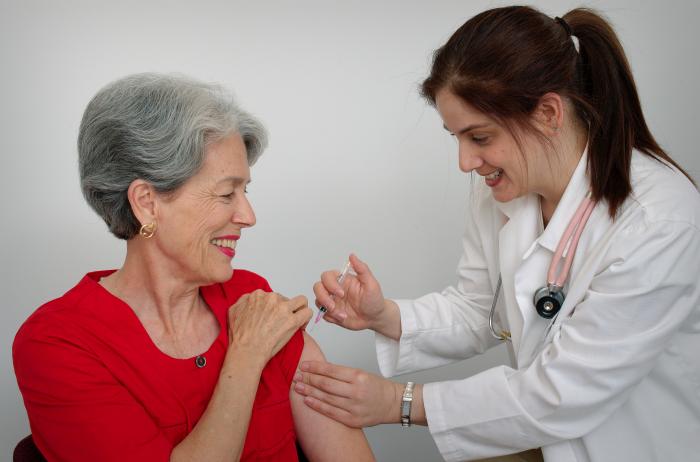
  5. Preventative vaccines and personalized guidance from my physician in preparation for third-world healthcare provision.

Healthcare gratitude I experienced in Jamaica

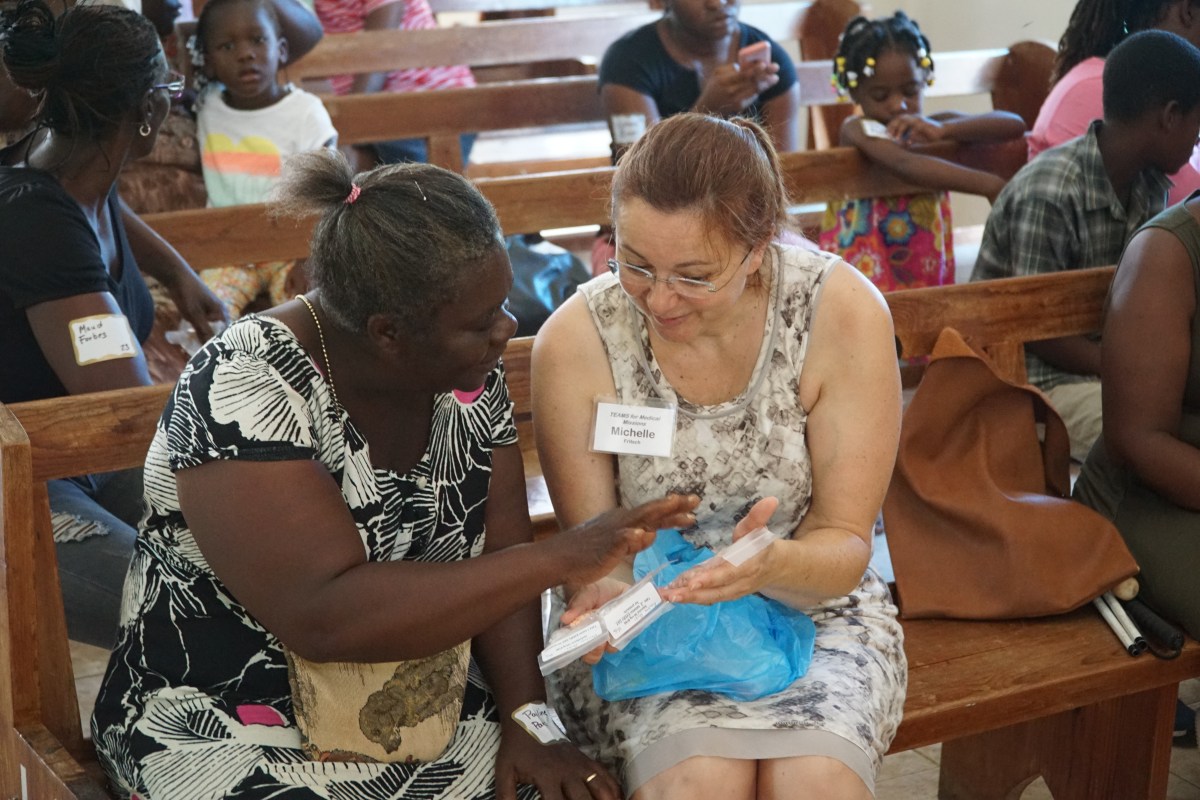
I can’t stop thinking about my week in Jamaica and the many insights I took away. I was honored to serve with a team of about 20 people caring for people in St. Mary Parish, an underserved portion of Jamaica. We had physicians, nurses, pharmacists, medical records, check-in, child-care, and spiritual support specialists. (Remember that spiritual health is a key aspect to overall health).

Two situations have especially stood out to me. One was a woman who was diagnosed with breast cancer in 2014. She was treated with a mastectomy. She did not have access to radiation or chemotherapy. Now, in 2016, she had a lump under her arm. The physician prescribed an antibiotic. We are all hoping and praying it is an infected cyst and not cancer. Guess what? She was grateful for the care and for the antibiotics! She did not demand other therapy. She was not disgruntled. [Maybe she doesn’t know how it would be treated in a developed country with insurance. Then again, her gratitude and lack of stress over options can actually be to her benefit.]

The other situation was a young boy with low hemoglobin, so he was anemic. Hemoglobin carries oxygen throughout the body. There are several possible causes of anemia in a child. We were able to give him multivitamins and iron supplements. His mother was surprised to hear he was anemic. He was outside playing with the other children as we talked about the medicine. When he came in she showed me how strong and healthy he looks. She was very satisfied with the vitamins and iron. I couldn’t help but think how differently that exchange would likely be here in the US. Parents would want a series of tests to rule out any obscure implication of the anemia. [Note, anemia in children is not uncommon in Jamaica. Children are breastfed for an extended period by mothers who do not have prenatal vitamins. Then, because meat is expensive, the diet has less iron in it.]

Health benefits of gratitude

It is so easy to find fault in other people and in systems. Add the element of fear that comes with medical diagnoses, and people often have very negative reactions in the healthcare setting. That increases stress for the patient, any caregivers with the patient, the physician, and all members of the healthcare team.

Consider the benefits of gratitude instead. Gratitude can:

  • Boost your spirits and sense of well-being
  • Boost your immune system making you less likely to get sick
  • Decrease your chances of heart disease
  • Improve your performance (job, concentration)
  • Bust your stress

By all means, when mistakes are made they need to be addressed. But mistakes are not the norm. People go to school for many, many years to be able to provide the best healthcare they can provide.

We saw hundreds of patients in very hot August in Jamaica in churches with no air conditioning and few fans. And I only heard one person complain over five very full days. That woman didn’t understand why the man next to her got more diabetes medication than she got. Once she understood it took more medicine to manage his sugar she was satisfied.

If you would like to hear more about my trip to Jamaica or about the health benefit of gratitude, contact me at www.medsmash.com/newsblog/.

BIBLICAL APPLICATION

Life feels so different when we live in gratitude rather than dissatisfaction. Negativity stresses us out and ultimately kills us.

1 Thessalonians 5:18 ESV

Give thanks in all circumstances; for this is the will of God in Christ Jesus for you.

I have a new source of gratitude this week.

Do you ever have a God moment when something becomes so clear? I received the best analogy this week. And I can’t wait to tell you about it!

It likens faith with a child going on vacation.

When a family is going on vacation, the child knows the mom or other adult will pack the clothes, the snacks, the sunscreen, the towels, and anything needed for that vacation. The child knows someone will take care of the directions, putting gas in the tank, making hotel reservations, and other travel details. The child knows there will be a safe place to sleep, some fun adventures along the way, food to eat, and all basic needs will be met. The child gets in the car when told it’s time and follows the lead of the adults who have planned the trip. The child is along for the fun with no stress and no second-guessing the plans.

Wow, isn’t that like faith? God’s got this! He has plans for your life. He has plans for each year, month, day, minute, … Faith is being the child with full faith in the adults who are in charge of the details.

Proverbs 3:5-6 ESV

Trust in the Lord with all your heart, and do not lean on your own understanding. In all your ways acknowledge him, and he will make straight your paths.

Isaiah 42:16 NIV

I will lead the blind by ways they have not known,

    along unfamiliar paths I will guide them;

I will turn the darkness into light before them

    and make the rough places smooth.

These are the things I will do;

    I will not forsake them.

I encourage you to spend less time on daily travel details and more time letting God take the lead this week.

Blessings,

Michelle

 

When the Rules Don’t Quite Make Sense

Airplane ors.od.nih.gov
Interpretation of rules has created an airplane that has launched with no plans to build the runway in healthcare.

To finish a thought from last week’s blog, sometimes the rules create their own problems. The Centers for Medicare and Medicaid (CMS) created a new risk-sharing payment strategy with hospitals. If someone has health insurance through Medicare, and if they are readmitted to the hospital for the same condition within 30 days, then the hospital will not be paid for the second admission. (Of course it’s a bit more complex than that, but this is the gist).

This ruling has created a whole new ‘market’. A group of very smart technology experts and entrepreneurs have identified this as a place to create new ways to keep people healthy at home. Tools and solutions are created that help people be successful at home after being in the hospital.

  • Patients benefits by having new resources to help them maneuver their care at home and stay at home.
  • The hospital benefits by losing less money on readmissions within 30 days.
  • The new companies, technology gurus, and entrepreneurs make money by being paid through the hospital’s cost savings.

Rules (and solutions) – make sense?

These are the parts that are missing, in my opinion.

  1. Once we determine how to keep people home safely for 30 days, I anticipate CMS will expand the time window to 60, 90, or more days. So short–sighted solutions will not survive.
  2. What happens after 30 days? Many of these new solutions involve technology. Who pays for the technology and the monitoring after the 30 days? Will it just be removed from the person’s home? Then what happens? Is that cost effective? Does it even make sense?
  3. What about people who are fearful of technology? Again, most of the solutions I’m hearing and reading about are based on technology. What if the person doesn’t have internet access or land-line phone access? What if the person has no interest in learning how to use the technology? What if the person just can’t get the hang of the technology?
  4. As I mentioned last week, I am finding very little data on what users/people with chronic medication conditions want. Solutions are being developed with little to no input about whether people will actually want or use the solutions.

For some of these issues the answers I’ve received are that there will always be exceptions. Those will be dealt with one by one. The goal is to find solutions for the majority.

It was funny, in one of these conversations we likened the current technology solutions boom to the airplane that’s in the air but no one has thought yet about the runway. That seems like a fitting analogy to me right now.

Hope

There is hope. I talked yesterday to a company taking a MUCH broader view of helping people stay healthy in their homes. They are not even thinking about the 30 day readmission rules. They are looking at long-term solutions that are created and maintained around the person that is using them. I know that company is not alone. I’ll put my hope in these types of companies!

For more information about new technologies in healthcare, please contact us at www.medsmash/contact.

BIBLICAL APPLICATION

Do you ever feel like the ‘rules’ of Christianity don’t make sense? Are you left wondering why the Christians around you are doing things a particular way? Have you been instructed to do something that doesn’t make sense?

In these instances, I encourage your FIRST question to be, ‘Is it Biblical’?

1 John 4:1 ESV

Beloved, do not believe every spirit, but test the spirits to see whether they are from God, for many false prophets have gone out into the world.

2 Peter 2:1 ESV

But false prophets also arose among the people, just as there will be false teachers among you, who will secretly bring in destructive heresies, even denying the Master who bought them, bringing upon themselves swift destruction.

I’m not saying every pastor or spiritual leader who says something that is not Biblical is a false prophet. People, even pastors, do make mistakes. But we have A LOT of examples of people adding rules to what is in the Bible. These ‘human’ rules are just that. Each denomination has their ‘way of doing things’. Even these are often the result of people trying their best to understand and interpret the scriptures. So see if the item that you question is from people or from God.

Your SECOND question should be, ‘Did I understand correctly’? Never hesitate to ask clarifying questions. We are all guilty of making assumptions about the other person’s knowledge when we answer a question. This often leads to complete misunderstanding.

Proverbs 18:13 MSG

Answering before listening

    is both stupid and rude. 

1 Timothy 6:20-21 MSG

And oh, my dear Timothy, guard the treasure you were given! Guard it with your life. Avoid the talk-show religion and the practiced confusion of the so-called experts. People caught up in a lot of talk can miss the whole point of faith.

I encourage your THIRD question to be, ‘Does it glorify God?’ By this I mean, does it promote the type of life and interaction we are called to live?

James 3:17-18 MSG

Real wisdom, God’s wisdom, begins with a holy life and is characterized by getting along with others. It is gentle and reasonable, overflowing with mercy and blessings, not hot one day and cold the next, not two-faced. You can develop a healthy, robust community that lives right with God and enjoy its results only if you do the hard work of getting along with each other, treating each other with dignity and honor.

The real ‘rules’ and instructions are in the Bible. The rest are interpretations, good/spot on and sometimes misguided. So discernment helps us sort them out. I know I have trouble sorting through it all on my own. Bible reading, study, trusted people to talk with, and prayer help me through.

Blessings,

Michelle

Image source: Office of Research Support; National Institutes of Health; U.S. Department of Health and Human Services.

30 Days – CMS and Hospitals Share Risk – Input Desired

Slide1
Technology is being developed to help you stay healthy and out of the hospital 30 days.

The Centers for Medicare and Medicaid Services (CMS) are striving to keep healthcare affordable. Healthcare is expensive. Healthcare is necessary. We all need it at some time or another. It is best if medical conditions that require hospitalization are fully treated while in the hospital. CMS wants to pay for these conditions just once. So, to help make sure they are fully treated and that patients are sent home with all they need to stay healthy, there is now a shared risk payment model. If someone returns to the hospital within 30 days of discharge, then CMS will not pay for that second visit. (Of course it is all more complex than this paragraph describes).

So, there are a number of very smart people working hard to increase the success of people going home from the hospital to help them not return. At least making sure people don’t return for the same problem within 30 days.

There are people working on tools to help keep medication regimens straight. Others are working on ways to monitor health so if it starts to get worse an adjustment can be made at home. This could prevent a need to go back to the hospital. These tools can monitor blood pressure, blood sugar, weight, oxygenation, and more. There are also tools to monitor in-home activity, measure falls risk, and respond when someone has fallen. Much of the follow up after a hospitalization can occur more frequently and simply with telehealth. This means talking with your doctor, nurse, pharmacist, or other provider over the computer.

There is an explosion of new technology. The issue now is to determine which types of technology are most effective. It is also to determine which types really help people get better. And ideally, the best technology will help people stay better for a long time.

Then there is the issue of how people, the patients, feel about the technology. Some are very excited to have new ways to monitor their own health. Look at the growth and acceptance of wearable devices. Some popular examples are Fitbit, Apple watch, and Garmin Forerunner, and TomTom. Spark.

  • I can find a lot of information about how the technology is proposed to help people safely go home and stay healthy enough to stay out of the hospital.
  • I can find some information demonstrating that these really do cut down on the number of people that bounce back to the hospital.
  • I can find very little data about how people feel about the use of such technology, especially for at least 30 days.

Hospitals are preparing to spend millions of dollars on these solutions. For the money saved by reducing readmission, the hospital and the solutions companies will share those dollars.

  • So what do you think?
  • Are you excited about the use of technology to help you stay healthy?
  • Do you see more advantages or disadvantages?
  • Have you experienced some of these technologies when you or a loved one has been discharged from the hospital?

I would love to hear your thoughts. Please send your questions, your ideas, and your opinions to us at www.medsmash.com/contact.

BIBLICAL APPLICATION

Another thing that I’ve been pondering about 30-day readmission rates is the usefulness of short term solutions. I might have to write about that next week.

I find that topic to be really relevant in my Christian life as well. I love the ‘mountaintop’ experiences. These are the times when you are absolutely on fire for God. They are the times when you are closest to God. They are the times when you most directly feel God’s presence.

At those moments, what do you plan to do? Do you agree with me that it feels like you’ll be able to stay in that intimate place for a long time? How long do those intentions really last?

Have you ever made plans during those times when you felt most intimate with God? Did you make some promises? Did you decide your were going to make big changes in your life? I know I have.

Even now, just two weeks back from a life-changing experience in Jamaica, I’ve fallen back into old habits. I’m putting my needs and desires before other people. I’m way less focused on all that I could be doing for others. I’m more focused on my own aches and pains again. This is not what I intended. It is not what I told myself or God I would do when I got back.

Romans 8:5 ESV

For those who live according to the flesh set their minds on the things of the flesh, but those who live according to the Spirit set their minds on the things of the Spirit.

I really, truly want to live according to the Spirit. Yet my progress often feels like two steps forward, one step back.

Do you have the same experiences?

So each day, I strive to stay focused. I try to keep my eyes on God.

Colossians 3:2 ESV

Set your minds on things that are above, not on things that are on earth.

Every day I fail at some point, or a lot of points. But, I also have more of those moments of intimacy. I feel better in every way when I make that time for God. (And knowing that, I still charge right past that time to get on with the to-do list of the day).

Proverbs 16:3 ESV

Commit your work to the Lord, and your plans will be established.

So today, I will strive again to stay focused on God’s plans. I will strive to keep my ‘spiritual eyes’ on and see the needs of those around me. I will keep working toward the long-term goal rather than a short-term solution.

Blessings,

Michelle

Hate and Health – Surviving These Days

Hate and ugliness can shape your life. It often comes out of nowhere. How you deal with it has a huge impact on your health.

You often can’t prevent it. You can’t predict. It hits you out of nowhere, so you can’t prepare for it. Yet, hate and ugliness touch most, if not all, of us at some time at least once.

What is the ugliest event that has occurred in your life? How have you been touched by hate? How did you handle it at the time? How have you handled it since?

As a nation and a global community we have seen and experienced acts of hate in so many forms recently. There is unrest stirred by fear, threats, and acts of terror. If this fear takes over in your life, your stress levels increase, your heart works harder, your risk of depression goes way up, anxiety increases, sleep is impaired, and your overall health declines.

Last week I talked about the health benefits of thinking about other people and their needs rather than focusing just on yourself. Altruism is very directly linked to improved health.

The other thing that was directly related to this particular medical mission to Jamaica from which I just returned was a tragic act of hate. The group with whom I worked, Teams for Medical Missions, www.t4mm.org, has been served for many years by long-term missionary couples in Jamaica. These couples have developed programs for children, programs for youth, programs to train ministers for local churches, built many houses, provided chronic and acute medical care by hosting medical mission teams, and so much more. They are Christian missionaries with a real passion for the people of Jamaica, in particular those in the more rural and underserved area of St. Mary Parish.

At the end of April, the two men of these couples were riding their motorcycles on some trails at the top of a mountain known to have beautiful views of the island. Two young men were in that area and heard the motorcycle motors. They decided to wait in a particular place where the motorcycles were sure to pass and ambush them. Both missionaries were killed. It was not a targeted act, just a needless act of hate.

This shook the entire island. The young men who had been actively served by events hosted by these couples for years now stay close to the wife who remains, and they have been staying at her house so she is not alone. The Prime Minister, head of island security, and many others have come to show their respect. Many people have expressed their sorrow in many tender ways.

These medical teams typically provide care in provisional clinics in four local churches once a quarter. People are given a 3-month supply of medication for chronic illnesses, and acute illnesses are treated. Many people in that Parish rely on those clinics for their medical care. I had the humbling experience of seeing the love and gratitude shared with the missionary wife and all of the team members. (All had been on these teams several times and knew the slain missionaries well. This was a very emotional trip for all who were simultaneously grieving and expressing the desire to keep moving forward.) Many residents expressed surprise the clinics were continuing. There was an expectation the mission would fold and return to the US after these deaths.

In spite of these acts of hate, the hope continues. Teri, an incredibly strong and faithful woman is staying and planning what the future can hold in this completely new scenario. Her grief is real and raw. Yet, she is not curled in a corner refusing to move forward.

Health in the midst of hate

The elements that are associated with maintaining health in the midst of hate are:

  • friends to talk to
  • people who care about you
  • a sense of self-worth
  • forgiveness
  • security
  • conflict management skills
  • religion/spirituality

These have all been linked with improved health.

And I will add having a source of HOPE. I believe hope is powerful in the midst of difficulty.

So, knowing that hate and ugliness can strike at any time, the best you can prepare is to take care of yourself, cherish your friends and family, develop your conflict management skills, and forgive others. Find your personal source of hope.  Like Teri, find ways to find hope and stay positive and undeterred in the face of hate.

For more information about hate and health, contact us at www.medsmash.com/contact.

BIBLICAL APPLICATION

Hate, terror, oppression, racism, and other ugliness are all around. And, the Bible gives us indication this will only get worse.

2 Timothy 3:1-5 MSG

Don’t be naive. There are difficult times ahead. As the end approaches, people are going to be self-absorbed, money-hungry, self-promoting, stuck-up, profane, contemptuous of parents, crude, coarse, dog-eat-dog, unbending, slanderers, impulsively wild, savage, cynical, treacherous, ruthless, bloated windbags, addicted to lust, and allergic to God. They’ll make a show of religion, but behind the scenes they’re animals. Stay clear of these people.

I believe our role in these days is three fold:

  1. Be prepared

1 Peter 3:14-16 ESV

But even if you should suffer for righteousness’ sake, you will be blessed. Have no fear of them, nor be troubled, but in your hearts honor Christ the Lord as holy, always being prepared to make a defense to anyone who asks you for a reason for the hope that is in you; yet do it with gentleness and respect, having a good conscience, so that, when you are slandered, those who revile your good behavior in Christ may be put to shame.

  1. Be discerning

Matthew 24:4-8 MSG

Jesus said, “Watch out for doomsday deceivers. Many leaders are going to show up with forged identities, claiming, ‘I am Christ, the Messiah.’ They will deceive a lot of people. When reports come in of wars and rumored wars, keep your head and don’t panic. This is routine history; this is no sign of the end. Nation will fight nation and ruler fight ruler, over and over. Famines and earthquakes will occur in various places. This is nothing compared to what is coming.

  1. Be reaching out

Philippians 2:1-4 MSG

If you’ve gotten anything at all out of following Christ, if his love has made any difference in your life, if being in a community of the Spirit means anything to you, if you have a heart, if you care— then do me a favor: Agree with each other, love each other, be deep-spirited friends. Don’t push your way to the front; don’t sweet-talk your way to the top. Put yourself aside, and help others get ahead. Don’t be obsessed with getting your own advantage. Forget yourselves long enough to lend a helping hand.

And another version of my favorite verses of the year about hope!

Romans 5:3-5 MSG

There’s more to come: We continue to shout our praise even when we’re hemmed in with troubles, because we know how troubles can develop passionate patience in us, and how that patience in turn forges the tempered steel of virtue, keeping us alert for whatever God will do next. In alert expectancy such as this, we’re never left feeling shortchanged. Quite the contrary—we can’t round up enough containers to hold everything God generously pours into our lives through the Holy Spirit!

Blessings,

Michelle

To feel better – do for someone else – altruism

DSC01221
Altruism helps others and improves your health

I am just back from Jamaica, and I need to write about altruism. I was working with a mission group called TEAMS. You can learn more about them at www.t4mm.org. This medical mission group included 3 physicians, 1 nurse practitioner, 2 nurses, 3 pharmacists, 3 for registration, 2 to be with the children while their parents received care, and 2 to provide prayer and emotional support to those coming for care.

We were serving in St. Mary Parish, one of the poorest of the country. Clinic was held in churches in four different areas of the Parish. A Parish is similar to a state in the United States. Sheets draped over ropes often separated exam rooms for physicians. I counseled people about their medications as they sat among many other people. So this was not a private setting. But, excellent practitioners provided individualized care with great compassion.

Each clinic served a particular community. Within that community you could look out at all who were waiting and see the way they cared for each other. Babies would be passed around, older members would be assisted with steps, others in nearby seats would assist with understanding when I was struggling with the Patois (English with a thick dialect spoken very quickly).

It was very hot. Fans helped to stir the air. There was no running water. (I am so thankful for hand sanitizer). Some children had lice or scabies yet they waited patiently with their family. You know they had to be miserable between the heat and the intense itching. Some people had to wait from early morning until mid afternoon to be seen.

Yet, I didn’t hear one person complain. No one was demanding to know why their wait was so long. No one was complaining about the conditions. No one was asserting their needs or rights before someone else’s.

On the medical team, several people were struggling with their own health issues. One was on crutches due to a broken leg; one was recovering from bronchitis; one had a cold; several had various aches and pains. The age range of the care team was 22 to 82. Personally, my leg is still recovering from a ripped calf muscle, and my back has been hurting from all of the time that I was on crutches and a boot.

What struck me was how none of that mattered! Rather than thinking about our issues, we were completely focused on all of the people who had arrived to receive care. My leg did fine the entire week, even carrying heavy tables and boxes and fans to set up and take down clinic every day up steep hills and steps. I didn’t do my back stretches or sit around rubbing my back the way I do at home. That is because I wasn’t even thinking about my back.

Altruism

Altruism is, ‘feelings and behavior that show a desire to help other people and a lack of selfishness’ as defined by Merriam-Webster. I have read several articles linking altruism as a factor in happiness, health, and how long you live. In general, studies have shown that people who focus on others are happier and even live longer, in general. In 2005, Stephen Post published an article in the International Journal of Behavioral Medicine entitled, ‘Altruism, Happiness, and Health: It’s Good to be Good’. A quote from the article is, ‘The article concludes, with some caveats, that a strong correlation exists between the well-being, happiness, health, and longevity of people who are emotionally and behaviorally compassionate, so long as they are not overwhelmed by helping tasks.’

I have seen truth in this in many instances. While I was doing post-graduate training in Wisconsin a study demonstrated that home-bound elders who were in a calling circle.  Those who called to check on each other and remind each other to take medications felt less isolated and more valued. A project called the Eden Alternative long ago demonstrated the value in having daily purpose for everyone in a nursing home setting. Depending on ability level residents would care for a cat or dog, garden, water plants, feed birds, feed fish, or other activities. It was a huge success and continues today! Everyone needs to be needed. That sense of purpose and belonging plays a big role in overall health, including anxiety levels, pain, and depression.

When was the last time you focused on the needs of someone else? I encourage you to find a way each day this week to meet someone else’s needs. Some examples are to check on an older neighbor; take a meal to someone who recently had surgery; call a mom with small children to see if you can grab some things for her when you go to the grocery store and save her a trip.

For more information about how altruism is connected to health, contact us at www.medsmash.com/contact.

BIBLICAL APPLICATION

It is no surprise that altruism is linked to enhanced health. Jesus told us many times about the importance of selflessness.

John 15:12-14 ESV

“This is my commandment, that you love one another as I have loved you. Greater love has no one than this, that someone lay down his life for his friends. You are my friends if you do what I command you.”

Daily devotions, a lot of singing, and prayer with each community were cherished parts of this mission.  The care was among providers, among recipients, among those at the church helping with coordination, and among those providing protection.  My visual each day was being filled up with the Spirit to be completely poured out by the end of the day.

Some say Christian selflessness is not true altruism because we will be rewarded for such care and compassion. Ultimately, eternally a reward is waiting. But while here in this life, you might not see a reward. In fact, your giving isn’t meant to be for show.

Matthew 6:2-4 MSG

“When you do something for someone else, don’t call attention to yourself. You’ve seen them in action, I’m sure—‘playactors’ I call them—treating prayer meeting and street corner alike as a stage, acting compassionate as long as someone is watching, playing to the crowds. They get applause, true, but that’s all they get. When you help someone out, don’t think about how it looks. Just do it—quietly and unobtrusively. That is the way your God, who conceived you in love, working behind the scenes, helps you out.

Paul, Peter, Luke, John, and many other writers in the New Testament extol the virtues of giving to others.

Philippians 2:4 ESV

Let each of you look not only to his own interests, but also to the interests of others.

Luke 6:35 ESV

But love your enemies, and do good, and lend, expecting nothing in return, and your reward will be great, and you will be sons of the Most High, for he is kind to the ungrateful and the evil.

1 Peter 3:8 ESV

Finally, all of you, have unity of mind, sympathy, brotherly love, a tender heart, and a humble mind.

What can you do today to help someone else?

Proverbs 19:17 ESV

Whoever is generous to the poor lends to the Lord, and he will repay him for his deed.

Blessings,

Michelle

Vaccines – Important part of your travel plans

Flu vaccine CDC
Ask your doctor or pharmacist about vaccines needed before international travel.

What are your views about vaccines? Are you up-to-date? When was your last check-up appointment with your primary care provider?

What exotic locations are on your bucket list?

There has been a lot of discussion, many articles, and many opinions shared about vaccination.

Vaccines protect you from communicable diseases. Vaccines also protect other people. For each kind of vaccine, there are some people who have medical conditions that prevent them from receiving the vaccine. So, they rely on those around them to not have the disease and spread it to them.

The Centers for Disease Control (CDC) monitors diseases across the country and the world. Viruses and bacteria can change over time. If these changes make a former vaccine less effective, then guidelines change. So, your vaccine needs change based on these recommendations.

Then there is the issue of travel. Different parts of the world pose risk of various diseases.

I have been updating my understanding of the importance of travel vaccines as I prepare for this medical mission trip to Jamaica. The vaccines recommended for Jamaica are different than those recommended for other areas.

I heard a very sad story recently about two very charitable and successful brothers who traveled to Ghana. One chose to not take precautions for malaria. Once home he acquired a fever and felt poorly.   He saw his doctor who gave him some self care strategies. His condition then declined further. Once it was realized he had malaria, it was too late. So, when you do travel abroad and become ill, immediately tell healthcare providers exactly where you have been. In the US we so rarely see some diseases that we don’t look for them.

I encourage you to travel and explore the world! I also highly encourage you to talk with your doctor and your local pharmacist about any travel vaccines you should obtain prior to your travels. You can learn more about CDC recommendations at this link.

As fall approaches we will talk more about flu, pneumonia, and shingles vaccines in more detail. These are important even if you don’t travel.

For more information about vaccines, please contact us at www.medsmash.com/contact.

BIBLICAL APPLICATION

Vaccines protect you against disease. And God provides you with protection against evil dark forces. We are reminded again and again of His constant love and protection.

Isaiah 41:10 ESV

Fear not, for I am with you; be not dismayed, for I am your God; I will strengthen you, I will help you, I will uphold you with my righteous right hand.

Doesn’t that sweep over you like a big wave of calm? Fear not. God has your back.   God has plans for you. God is with you in each and every circumstance. God is with you no matter where you are or what is happening.

2 Timothy 4:18 ESV

The Lord will rescue me from every evil deed and bring me safely into his heavenly kingdom. To him be the glory forever and ever. Amen.

We all make mistakes. We all sin. These promises and assurances of rescue are so comforting.

2 Thessalonians 3:3 ESV

But the Lord is faithful. He will establish you and guard you against the evil one.

James 4:7 ESV

Submit yourselves therefore to God. Resist the devil, and he will flee from you.

You have a God who loves you and will protect you.

Blessings,

Michelle

Image source: Centers for Disease Control, Department of Health & Human Services, US Public Health Service

Your Medical Insurance – perfect?

Slide1
Does you medical insurance meet your needs? Is it a right?

You likely have medical insurance if you live in the United States. As of 2014, 90% of Americans did. When the 2015 data is released, that number is likely to go up a bit. It increased 2.9% from 2013 to 2014.

Does your insurance policy cover all that you want it to cover? Are all of the types of care you desire covered? Is your care ever delayed longer than anticipated due to insurance company authorization steps?

Our family just experienced this for the second time this year. It is very easy to get frustrated with insurance-related delays. Your doctor orders a test or procedure, and your insurance company takes time to authorize it.

There is a series of checks and balances between the healthcare system (doctors, clinics, hospitals, etc.), insurance companies, and lawyers. Sometimes it seems to tip, leaning more in one of these three directions, but each aspect is needed. Insurance provides you with coverage to maintain your health without losing all of your money due to an illness. It also provides checks and balances to assure cost-effective use of resources, such as procedures, surgeries, and devices. Lawyers help assure you have recourse if healthcare harms you rather than help you.

As a healthcare provider, I have seen numerous examples of excellent healthcare that has prevented or effectively treated a medical issue. I have seen unnecessary use of resources such as antibiotics or procedures. I have seen mistakes and the ramifications. I have seen heroic efforts by all involved to pull together, analyze mistakes, and create safety procedures to prevent such a mistake from happening again.

Is healthcare a right?

A question I annually ask students is whether healthcare is a right. It always leads to great discussion. If it is a right, then how should the system look that provides healthcare to the uninsured? Right now the emergency department (most cannot turn people away for lack of payment) is often the only source for uninsured people. That is a grotesquely expensive misuse of the specialized skills of emergency department personnel. But if you had no insurance, and your child was sick, what would you do? I know I would take my child to the emergency department if that were my only choice.

If it is not a right, then what should happen to uninsured people who are unable to access the healthcare system? Should we stand by and watch suffering and disease that could be treated? Could you walk down the street and just pass by someone suffering? (Do we already do that every day? If you live in Baltimore or another city of significant size, I know that you do.) It’s so easy to focus on ourselves and lose sight of those around us. I challenge you to get to know at least one uninsured person and hear his/her story. What should happen next time that person is injured in an accident or has trouble breathing due to asthma?

Is your medical insurance perfect?

I imaging your answer is ‘no.’ I know mine is far from perfect. But, I am so grateful to have insurance! I am grateful for the coverage I do have. Next week my daughter will get a sports physical to be sure she is healthy enough for her sport; my other daughter will be assessed for a nagging cough; my husband will see a surgeon to create a plan to treat his shoulder. All of these things are possible due to insurance. If all of that was out-of-pocket, my youngest would not play a sport, my middle child would continue to cough, and my husband would try to continue to function with one arm.

Perspective

Next weekend I leave on my first international medical mission trip. In the excellent materials I have been given to prepare, there is a statement that I will see more worms, scabies, and lice than I have seen in my entire career. Caring for the homeless of Baltimore, I have seen some of these things, but apparently not in the quantity I will see next week. How many times have you been treated for scabies, lice, or worms? Probably not many, if ever. We will also be caring for people with diabetes, hypertension, asthma, and the chronic conditions we treat in the affluent in the US. I am especially looking forward to analyzing the needs of a growing population over age 65.

I don’t claim to have the answers. But I do know there are several issues to be pondered. If you have ideas and opinions, please share them with me at www.medsmash.com/contact/.

BIBLICAL APPLICATION

There is no shortage of social issues that need to be addressed. Quality of insurance for the insured and what to do about the uninsured are certainly on that list.

Our pastoral team has been delivering a series based on Deuteronomy this summer. Here is a verse that very directly addresses these questions:

Deuteronomy 15:11 ESV

For there will never cease to be poor in the land. Therefore I command you, ‘You shall open wide your hand to your brother, to the needy and to the poor, in your land.’

This is from the Old Testament/Hebrew Bible, but wow, is it not as relevant today as it has ever been?

We are challenged in at least 60 verses to address these issues.

Proverbs 19:17 ESV

Whoever is generous to the poor lends to the Lord, and he will repay him for his deed.

1 John 3:17 ESV

But if anyone has the world’s goods and sees his brother in need, yet closes his heart against him, how does God’s love abide in him?

Luke 12:33 ESV

Sell your possessions, and give to the needy. Provide yourselves with moneybags that do not grow old, with a treasure in the heavens that does not fail, where no thief approaches and no moth destroys.

Proverbs 14:31 ESV

Whoever oppresses a poor man insults his Maker, but he who is generous to the needy honors him.

Proverbs 29:7 ESV

A righteous man knows the rights of the poor; a wicked man does not understand such knowledge.

I am not suggesting you go out and give everything you have right now. I am not suggesting you feel guilty about what you have.

I am suggesting you join me in contemplating these issues. They will certainly be in my face next week. So, I will be back to talk more about this as my own understanding and experience continue to grow.

Blessings,

Michelle

Your Amazing Kidneys – what do they do exactly?

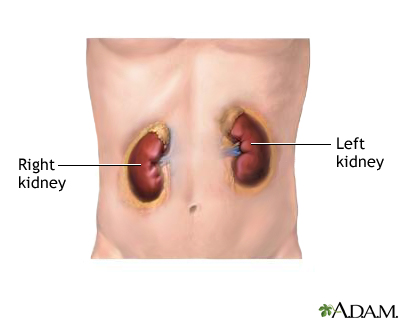
Kidneys - NIH ADAM

Your kidneys clean the blood and manage water

Kidneys – most people have two. Their function is essential for life. If they stop working, then other types of filtration have to be used. We will talk about these back-up plans in a bit.

Think of your kidneys are filters, really good filters. They are about the size of your balled up fist. They are under your rib cage in the back.

Your kidneys have several functions

  • Filter waste and toxins from the blood
  • Remove extra water from the blood
  • Turn the waste, toxins, and extra water into urine
  • Urine removes all of those wastes and extra water from the body

Your kidneys have several parts

Nephrons in your kidneys are the filtering units. You have about a million of them – in each kidney! The nephrons have tubes that carry the urine. They also have small blood vessels that bring the blood past these tubes. The tubes can determine what to keep and put back in the blood and what to send on in the urine out of the body. They determine how much potassium, sodium, water and some other chemicals to keep or release. This is all regulated through a process called the renin-angiotensin-aldosterone system (RAAS).

Keeping and releasing the right amounts of these chemicals and fluids maintains balance in many other parts of your body. In particular, they have a big impact on your blood pressure. Your blood pressure is one important factor in how hard your heart has to work. When your heart has to work too hard for too long, damage can be done leading to heart disease.

The class of kidney-impacting medications that first comes to mind is diuretics. Many people call these ‘water pills’. They work directly in the tubes in the nephron that decide how much water to keep. The diuretics cause more water to be released into the urine and removed from the body. Lowering the total water in the blood lowers the blood pressure. [Note, this is NOT the same as changing the amount of water you drink. If you drink less you put yourself at risk of dehydration, and your kidneys will just hang on to the water it has causing you to urinate less rather than lower your blood pressure. So keep drinking plenty of water on these hot days even if you have high blood pressure. Your kidneys will take care of the rest.] There are a few different kinds of diuretics. Some are used primarily for blood pressure, some for heart failure, and some for edema or other conditions with large amounts of fluid retention.

Two other classes of medications that work through the RAAS system are angiotensin converting enzyme inhibitors (ACE Inhibitors) and Angiotensin II Receptor Blockers (sometimes called ARBs). Some examples of ACE Inhibitors are lisinopril, ramipril, enalapril. Note, the generic names of these medications end in ‘pril’. Some examples of ARBs are losartan and candesartan. Note, the generic names of these medications end in ‘sartan’. Both of these classes of medications have a direct impact on RAAS. This means they help control the amount of water that is excreted through the urine. They also impact the potassium (causing more to be kept in the blood) and have some other actions that lower blood pressure. They cause arteries and veins to open up more relieving pressure on the heart, kidneys, and other organs that have to work harder when these are squeezed tight. By opening them, the pressure slows down and the blood goes through these organs with less force. So these medications are used to treat high blood pressure, heart failure, kidney disease, and to protect the heart for people with diabetes.

When the kidneys just can’t work properly, then dialysis is used to provide the essential filtration. There are two main types of dialysis. One is hemodialysis that is performed in an infusion center. Someone requiring hemodialysis will go to the center about three times per week to be hooked to a machine which will filter the blood. This typically takes at least 2-4 hours. The other type is peritoneal dialysis that can be done at home. This requires an exchange of fluids through the abdominal area about four times per day. Each exchange takes about 30-40 minutes. You can learn a lot more about dialysis from the National Kidney Foundation at this link.

There is obviously a lot more detail needed to completely understand the function of the kidneys. The purpose of this article is to raise awareness of how very important those kidney-bean shaped organs are. It is well worth the effort to protect them. Some ways you can protect them are by keeping your blood pressure and diabetes controlled, staying well hydrated, and maintaining a healthy weight.

To learn more about your kidneys and medications that impact your kidneys, contact us at www.medsmash.com/contact.

BIBLICAL APPLICATION

The kidneys clean the blood. They remove waste, toxins, and extra water from the body.

We are called to be cleansed as Christians. How does that work?

First, what needs to be cleansed? Take an internal inventory on the following items to get started:

  • Judgmental thoughts
  • Angry words
  • Hurtful actions
  • Not helping when you could have helped
  • Selfish motives
  • Jealousy
  • Lustful thoughts

Whew, that list could go on forever, couldn’t it! Yep, you’re a sinner. So am I.

Romans 3:23 (NIV)

for all have sinned and fall short of the glory of God,

So, should you just give up and go home? Or, should you give up and just do what you want since you can’t get it right anyway?

Romans 3:21-24 (MSG)

Since we’ve compiled this long and sorry record as sinners (both us and them) and proved that we are utterly incapable of living the glorious lives God wills for us, God did it for us. Out of sheer generosity he put us in right standing with himself. A pure gift. He got us out of the mess we’re in and restored us to where he always wanted us to be. And he did it by means of Jesus Christ.

Jesus died to cleanse YOU of all of your sin.

1 John 1:9 ESV

If we confess our sins, he is faithful and just to forgive us our sins and to cleanse us from all unrighteousness.

1 John 1:7 ESV

But if we walk in the light, as he is in the light, we have fellowship with one another, and the blood of Jesus his Son cleanses us from all sin.

Titus 3:5 ESV

He saved us, not because of works done by us in righteousness, but according to his own mercy, by the washing of regeneration and renewal of the Holy Spirit,

2 Corinthians 7:1 ESV

Since we have these promises, beloved, let us cleanse ourselves from every defilement of body and spirit, bringing holiness to completion in the fear of God.

Romans 12:2 ESV

Do not be conformed to this world, but be transformed by the renewal of your mind, that by testing you may discern what is the will of God, what is good and acceptable and perfect.

You can’t do it for yourself! Take all the baths you want. Do all of the good things you want for other people. Deny yourself all sorts of things. None of this will cleanse you.

But Jesus can. And He did! Just for you…

Blessings,

Michelle

Image source: National Library of Medicine, National Institutes of Health, U.S. Department of Health and Human Services.

Heart Collaterals – the alternate route

Collaterals are your heart’s solution to blood flow problems. Not only does your heart pump essential blood to the body, it is also a vital muscle that needs its own blood flow. There are several arteries that provide blood to the heart muscle to keep it pumping efficiently.

Cholesterol or clots can block the blood flow in arteries. This can cause trouble anywhere in the body. It is especially troublesome in your heart. When a part of the heart muscle gets no blood or too little blood, that part of the heart muscle stops functioning, and with more time, can start to die. Any time the blood supply is cut off from any part of the body, that part of the body will stop functioning.

If your heart isn’t functioning, then the blood flow to all of the rest of the body can also suffer. So, there is an amazing solution built in.

How does the heart help itself?

When an artery providing blood to the heart muscle starts to fill up, the heart starts working on a back-up plan. Around the occluded artery smaller arteries start to form. These are called collateral blood vessels (collaterals).

As the main artery gradually narrows due to cholesterol, the small arteries (collaterals) are formed to give the blood another route to get to the muscle.

You aren’t born with these smaller collateral arteries. They are formed when a decrease in blood flow to part of the heart is detected. Then, in order to keep everything functioning normally, these much smaller arteries start to form as a bypass around the big artery. This gives the blood another path to the muscle.

I find it amazing that this back-up plan exists. I am also amazed that it starts before you even realize you have a problem. It is one of the ways that the body can actually heal itself.

How will I know if my arteries are filling up?

When you have cholesterol or plaque forming in your arteries gradually, symptoms are often feeling more tired when you exercise.   You might get short of breath doing activities that used to not bother you.

Or, you might not even know it. Some people don’t know their arteries are clogged until they get chest pain or have a heart attack. This is one reason why an annual check up with your doctor is so important. Catching these things early allows them to be addressed before anything like a heart attack happens.

If you would like to know more about how collateral arteries in your heart are formed, contact us at www.medsmash.com.

BIBLICAL APPLICATION

Have you ever felt like you could no longer get to God? Or that God could no longer get to you? Have you felt like you’ve done so many bad things that there is no way God can even care about you any more? Does it feel like that path is blocked?

When we feel separated from God, we are told that simply whispering the name of Jesus can open that path. God is always there. There is nothing you can do keep God away from you or from loving you.

Romans 8:38-39 (NIV)

For I am convinced that neither death nor life, neither angels nor demons, neither the present nor the future, nor any powers, neither height nor depth, nor anything else in all creation, will be able to separate us from the love of God that is in Christ Jesus our Lord.

We can do nothing to earn God’s love. In fact, there is not way we can make ourselves do everything right without sin. We are all sinners. We ALL fall short of God’s glory. And He still loves us!

Titus 3:5 ESV / 3 helpful votes Helpful Not Helpful

He saved us, not because of works done by us in righteousness, but according to his own mercy, by the washing of regeneration and renewal of the Holy Spirit,

So, the heart makes alternate routes to feed the heart muscle when the main route is blocked. And God makes sure we have a CONSTANT connection available with Him. Nothing can block that path. His blood can wash over you with forgiveness; He can sustain you with peace and grace in ALL circumstances.

Blessings,

Michelle

Your amazing liver

Your Amazing Liver – what does it do exactly?

Your amazing liver
Your liver breaks down medication and many other functions.

You have a liver. Do you have any idea what it does? I would venture a guess that most people don’t.

The liver sits in the upper right quadrant of your abdomen. When your doctor presses on your abdomen and puts fingers up under your ribs, that is what is being checked. Usually they won’t feel it or maybe just feel the very edge.

The liver has several functions:

  • Clotting factors in your blood are produced
  • Proteins in your blood are produced
  • Triglycerides and cholesterol are made
  • Stores vitamins
  • Removes toxins, such as ammonia, from the blood
  • Processes nutrients from our food
  • Regulates sugar in the blood
  • Metabolizes (breaks down) alcohol and medications

Of course it is the medication part that I am anxious to talk about.

What does the liver do to medication?

There are several types of enzymes in the liver.

These enzymes change the form of medications. They usually break medications down to a less active form. This also allows the medication to be processed and then to leave the body. If this slows down, then the medication stays in active form longer giving the medication a bigger effect and making it last longer.

Different medicines are broken down by different enzymes. Most of these enzymes are cytochrome P450 (CYP450)enzymes. There are several different CYP450 enzymes, each impacting different medications.

Some people have genetic differences that change those enzymes. For instance, a particular enzyme can be less active in some people based on their genes. This will make that medication more active, sometimes even toxic, for that person. It is becoming more common for people to be tested for any genetic changes that can help guide best medication use.

When there is more than one medication that is metabolized by the same enzyme that can change how those medications are broken down. This is where it really gets complicated. Some medications will induce the enzyme, or make it more effective. Others will inhibit the enzyme making it less effective. While others compete for the activity of the enzyme. These actions and interactions impact how well the medicine works and the amount of side effects it will have.

Even tobacco, some food, and herbs can impact the enzymes.

So, when your pharmacist is filling your prescription, there is SO MUCH more they are looking at than just getting the right number of tablets in to the bottle. The potential interactions need to be carefully screened each time any of your medicines are changed.

AND, this screening can only be complete if your pharmacist also knows what herbs, vitamins, over-the-counter, and other substances you take.

Pay attention to the extra instructions on your medicine label. These liver enzymes are often the reason for special instructions such as ‘avoid grapefruit’ or take at particular times of the day (to separate from other medications).

If you would like to know more about the liver and how liver enzymes impact medications, contact us at www.medsmash.com.

BIBLICAL APPLICATION

Just as the liver has a very specific function within the body, each element of the armor of God has a specific function.

Ephesians 6:10-17 NIV

Finally, be strong in the Lord and in his mighty power.  Put on the full armor of God, so that you can take your stand against the devil’s schemes.  For our struggle is not against flesh and blood, but against the rulers, against the authorities, against the powers of this dark world and against the spiritual forces of evil in the heavenly realms.  Therefore put on the full armor of God, so that when the day of evil comes, you may be able to stand your ground, and after you have done everything, to stand.  Stand firm then, with the belt of truth buckled around your waist, with the breastplate of righteousness in place, and with your feet fitted with the readiness that comes from the gospel of peace.  In addition to all this, take up the shield of faith, with which you can extinguish all the flaming arrows of the evil one.  Take the helmet of salvation and the sword of the Spirit, which is the word of God.

To take advantage of the full protection available to you, put on each piece of armor. Keep each functioning in its most complete and efficient form through prayer and reading the Bible.

If you’ve so much as glanced at the news in the last few weeks, you know that the ‘power of this dark world’ seems to be out in full force. People are hurting people all over the place.

Go out into this hurting world with your truth, righteousness, faith, assurance of salvation, and the Word securely in place.

Now is the time to have some scripture memorized or in your phone where you can reinforce your own understanding or reach out to others in an instant. That sword of the Spirit might be just what someone needs.

I’m praying for the hurt, the evil, the grief, the biases, the fear that separates us from each other and from turning to the love of God. May you be a light in this darkness.

Blessings,

Michelle

Image source: National Library of Medicine; National Institutes of Health; U.S. Department of Health and Human Services