Narcotics, opioids, and addiction – important facts

Slide1
Learn the facts about safe use, natural physiologic changes when you take opioids, and addiction.

There is a lot of information in the news about narcotics, opioids, overdose, death, and a heroin epidemic. Now there is new legislation to try to stop this downward spiral. Have you found it confusing? If you say yes, you are not alone!

First, narcotics = opioids

The correct medical term for these pain medicines is ‘opioid’. This refers to the way they work. These pain medications interact with the mu-receptors and other opioid receptors throughout the brain (and the gastrointestinal tract). As they trigger the mu-receptors, they block pain sensations. They can also cause euphoria, dysphoria, or sedation. So, they can make you feel really good, really laid back, or really sleepy.

There are several medicines that fall in this category of opioids. Here are a few (and some brand names):

  • Morphine (MS Contin, Avinza)
  • Hydromorphone (Dilaudid)
  • Codeine – combined with acetaminophen (Tylenol #3)
  • Hydrocodone – combined with acetaminophen (Lortab, Norco, Vicodin)
  • Oxycodone (OxyContin, Roxicodone)
  • Meperidine (Demerol)
  • Fentanyl (Sublimaze, Duragesic)
  • Methadone (Dolophine)

These medications have been used for decades to treat moderate to severe pain. Pain relief is important in many instances not only for your quality of life but also to get you moving again after a painful event. For instance, it is critical that you get moving again soon after a knee replacement, back surgery, or other similar surgery. As you get moving again you increase your chance of really getting back to full function. You also decrease the risk of a blood clot from lack of use. But, those surgeries are painful. The opioid medication helps relieve that pain allowing you to start your rehabilitation.

When used short term for pain, addiction is not likely

Addiction is usually associated with long term use and/or use for the feeling you get from the medication beyond the pain relief. It is also associated with using more than you are prescribed. To safely use opioid pain medication, use the lowest dose that allows you to move through your pain. Also, use it for the shortest time possible. As the pain level decreases, you can move from an opioid  to a nonopioid pain medicine. Work with your prescriber to determine when you are ready for this change and which option will work best for your pain.

Key terms

The body contains a wonderfully complex system of signals and receivers to transmit and control pain sensations. The body and these communication pathways in the brain and the central nervous system are well organized. When the pain signals are too distressing and an opioid pain medicine is added, the normal body signals and receivers adapt to the effect of the opioid pain medicine. There are natural, physiologic changes that occur in your body as these medicines are used over time. I want you to understand these changes. When they occur, they do not mean you are addicted!

Physical dependence – As the body lets the medicine treat the pain, the body’s normal pain process relaxes.

Tolerance – When you take an opioid pain medicine over time, those nerve transmitters (signals) in your body adapt. Over time doses have less effect and last a shorter period of time. So, over time, the dose needed for the same pain relief goes up.

Withdrawal – When the opioids are suddenly taken away, the body can’t take over the pain control immediately. If this sudden stopping of the medicine happens, you will feel body aches, irritability, fast heart rate, weak. and have difficulty sleeping. You might also yawn, shiver, and have an upset stomach.

These are the body’s normal reaction to having the opioid pain medicine take care of the pain. When your pain level drops to mild to moderate pain, your prescriber will start to slowly decrease your dose of opioid pain medicine. This will allow your body’s normal process to take back over in controlling your pain.

Next week we will cover more about addiction and steps being taken to stop the current epidemic of opioid pain medicine abuse. Addiction involves continued use over time, inability to control drug use, compulsive drug use, continued use even when you know the drug is hurting you, and craving of the drug.

These opioid medications can play a very healthy role in controlling your pain when dosed appropriately and used for the shortest time possible.

If you would like to know more about opioid pain medicines and how they affect you, please contact us at www.medsmash.com.

BIBLICAL APPLICATION

Addiction is so very complex. It is one of many examples of how something good for you can become something bad for you.

It is not possible to look at someone and say, ‘He is an addict.’ Or ‘She is likely to be an addict.’ It is not true that ‘bad people’ become addicts while ‘good people’ avoid that outcome. Parts of the addiction process seem to be within our control while others take us by surprise. We will go in to more detail next week.

So, this is a key area when we can share our compassion and the love of Christ.

It is also a reason to reflect on our self-control. This is one of the fruits of the spirit.

Galatians 5:22-23 ESV

But the fruit of the Spirit is love, joy, peace, patience, kindness, goodness, faithfulness, gentleness, self-control; against such things there is no law.

We are all tempted by various things. One of Christ’s messages to us is to let Him be our strength and shield.  This was shared by Paul as he was explaining why and how we should stay away from idols and temptations that lead off the path to Christ.

1 Corinthians 10:13 ESV

No temptation has overtaken you that is not common to man. God is faithful, and he will not let you be tempted beyond your ability, but with the temptation he will also provide the way of escape, that you may be able to endure it.

Psalm 28:7 ESV

The Lord is my strength and my shield;

    in him my heart trusts, and I am helped;

my heart exults,

    and with my song I give thanks to him.

Peter sums up our role to work on our own self control and in the process share love and compassion with our fellow humans.

2 Peter 1:5-7 ESV

For this very reason, make every effort to supplement your faith with virtue, and virtue with knowledge, and knowledge with self-control, and self-control with steadfastness, and steadfastness with godliness, and godliness with brotherly affection, and brotherly affection with love.

Blessings,

Michelle
Appropriate medications – same at 30, 60, and 90?

ID-10093880
Appropriate medications over age 60

Should the same medications and doses be prescribed for all ages? No! However, we find that often they are.   If a medication was a good choice for you at 30, is it still a good choice at 60 or 90? Not necessarily. So, why does age matter?  How do you know that you are taking all appropriate medications?

What changes as we age?

Even if you eat right, exercise regularly, and make good choices about alcohol and tobacco, changes occur over time.

  • Kidney function starts a very gradual decline in your late 30’s or early 40’s.
  • Liver size and blood flow to your liver diminish. The number of cells shrinks. There is less activity of the enzymes that break down medications.
  • Food and medications move through the intestine more slowly.
  • The volume of urine that the bladder can hold decreases. Bladder muscles weaken.
  • For men, the prostate gland increases in size.
  • For women, the urethra shortens and comes thinner. So, risk of urinary tract infection goes up.
  • Muscles weaken as growth hormone levels decline.
  • Aldosterone levels decrease, so risk of dehydration goes up.
  • The immune system slows down. So, risk of infection and cancer go up. Also, it can take longer to treat an infection.
  • Heart muscle and blood vessels get stiffer. This can increase risk of high blood pressure. Also, with exercise, the heart can’t pump as much blood or speed up as much as it did at younger ages. So, exercise capacity is lower.
  • The muscles involved in breathing weaken. There is a decline in the number of small sacs in the lungs where oxygen is passed to the blood.
  • The amount of water in the body goes down while the body fat goes up.

This list is not meant to depress anyone. These are just some of the very natural changes that occur in all of us. So with all of this change, the need for medication, the types of medications that are needed, and the doses of medications are all different.

Nearly all medications leave the body through the urine or the stool. Most medications are changed as they pass through the liver. There are enzymes in the liver that break down those medications. When the kidneys and liver become less functional, it takes longer to get the medications back out of your body. This means a single dose can last longer or have a bigger impact.

Most medications have a preference for water (hydrophilic) or fat (lipophilic). Since body water and fat both change, medication concentrations also change.

Guidelines for taking appropriate medications

There are so many changes to manage that guidelines have been written to try to decrease some of the more common mistakes that are made. These are oriented to people over age 65. The Beer’s List was first developed by a group of doctors in 1991. It has since been updated many times. It contains a list of medications not to use and another list to use with special precautions. There is also a guideline called STOPP that lists medications to avoid in adults over 65. For both guidelines, there are safe options to use in place of the medications on the lists.

If you are 60+, is there a specialist in medication use for people of your age monitoring your medication use? Can you really afford to avoid this review? We have found there is some issue to address 98% of the time we provide an assessment. For your personal assessment, contact us at www.medsmash.com.

BIBLICAL APPLICATION

Medications change as you age. And so do so many other things. Many of these changes are wonderful! You benefit from the many lessons you’ve learned through your life so far. You are able to share those experiences, insights, and lessons with others. You probably sweat the small stuff less. You also tend to enjoy the little things more.

I heard a message today that really captured my attention. A picture was painted about grace and faith and their relationship.

As stated by John Stott, ‘Faith’s exclusive function is humbly to receive what grace offers. Grace gives and faith takes’.

Grace is offered to you on a constant basis. But, it has been my experience, it takes time and lessons learned to really develop faith so that grace can be received. Faith tends to grow with time and experience.

Ephesians 2:8 ESV

For by grace you have been saved through faith. And this is not your own doing; it is the gift of God,

Hebrews 11:1 ESV

Now faith is the assurance of things hoped for, the conviction of things not seen.

Romans 10:17 ESV

So faith comes from hearing, and hearing through the word of Christ.

Salvation by grace is a gift. Faith is how you receive that gift.

Ponder this great news this week!

Blessings,

Michelle

Flu – Not to be Taken Lightly – It’s NOT too late

Flu vaccine CDC
Flu vaccine – it is not too late!

People are dying from the flu! Now, this week!

Do you get an annual flu vaccine?

If yes, does that mean you will not get the flu?

If you do not get a flu vaccine, why not?

Let’s review some common responses to these questions…and the truth based on evidence.

There are several varieties of flu vaccine available. A lot of research in recent years is responsible. Remember within the last 10 years when there was a shortage? Not everyone could even get the vaccine. Then, in 2009, a new strain called H1N1, or ‘swine flu’ emerged making many people very sick. Since all of that, these new options protect against H1N1. They cover more specific strains expected to be active this year. Some are now safe for people with egg allergies. Some are specific for people over age 65.

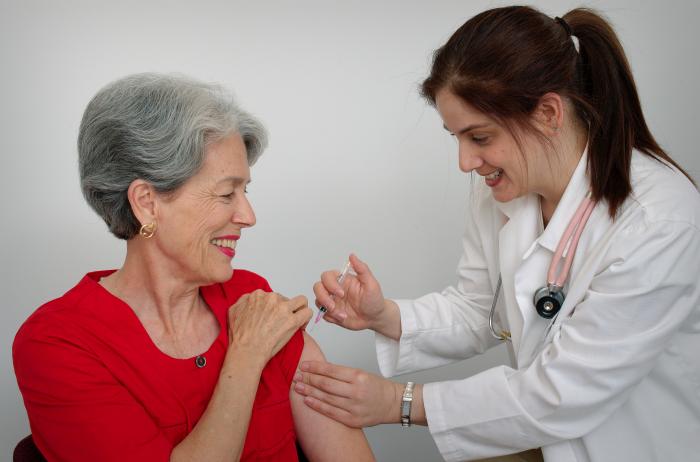
When you get the vaccine, it is NOT LIVE VIRUS that is injected. It is virus that has been grown then ‘killed’ before injection. Most are placed, via needle, in your upper arm muscle just below your shoulder (deltoid muscle). The injected substance then prompts your immune system to develop antibodies to the virus. Antibodies are the parts of your immune system that fight infections. The antibodies will be specific to the strains of virus in the vaccine.

Some flu vaccines cover three strains of flu while others cover four. The strains selected for the vaccine are the most dangerous. There are other milder strains of the flu not covered by the vaccine. So, you can still get the flu, but not the most deadly types.

The type of flu vaccine that is specific for people over age 65 is a bit stronger. In our 60’s and beyond our immune system often isn’t quite as active. So, the stronger vaccine will provide better protection.

There is also a live version of the flu strains that is given in the nose. This is an option for people who really, really hate needles. Note, people with cancer, compromised immune systems, and some other conditions cannot receive the live version. Please check with your doctor or person providing immunizations.

Who should NOT get the flu vaccine?

There are very few people in this category. For people with egg allergies, there is now a type of flu vaccine that does not contain egg. If you had a severe allergic reaction to a flu vaccine in the past, be sure to talk with your doctor before deciding whether to get one. With several varieties of vaccine available, there might be a version that does not contain the substance to which you are allergic. If you have or have had Guillain-Barre Syndrome, talk with your doctor. There is not currently a vaccine approved for children under 6 months of age. Otherwise, you should be seeking your flu vaccine!

The people who are DYING from the flu usually get the flu then get pneumonia while they are sick. Flu deaths tend to occur most often later in the flu season (so now!). Those who die are usually over age 75 or they have other medical conditions involved. Then there are those who no one would have expected.

Don’t let the flu catch you by surprise. It is NOT TOO LATE to get your flu vaccine!

For more information about flu vaccines, contact us at www.medsmash.com.

BIBLICAL APPLICATION

Flu vaccines can protect our physical health. What protects our spiritual health?

The armor of God is the first thing that comes to my mind.

Ephesians 6:10-18 ESV

Finally, be strong in the Lord and in the strength of his might. Put on the whole armor of God, that you may be able to stand against the schemes of the devil. For we do not wrestle against flesh and blood, but against the rulers, against the authorities, against the cosmic powers over this present darkness, against the spiritual forces of evil in the heavenly places. Therefore take up the whole armor of God, that you may be able to withstand in the evil day, and having done all, to stand firm. Stand therefore, having fastened on the belt of truth, and having put on the breastplate of righteousness, and, as shoes for your feet, having put on the readiness given by the gospel of peace. In all circumstances take up the shield of faith, with which you can extinguish all the flaming darts of the evil one; and take the helmet of salvation, and the sword of the Spirit, which is the word of God, praying at all times in the Spirit, with all prayer and supplication.

And all through the Psalms you will find cries for protection and rejoicing for the protection offered!

Psalm 5:11 CEV

“Let all who run to you for protection always sing joyful songs.

Provide shelter for those who truly love you and let them rejoice.”

Psalm 34:8 CEV

“Discover for yourself that the LORD is kind.

Come to him for protection, and you will be glad.”

Psalm 118:8 CEV

“It is better to trust the LORD for protection than to trust anyone else,”

I feel so assured when I read these verses! These are good ones to memorize or carry in your wallet for reference at frightening times.

Blessings,

Michelle

Image source: Centers for Disease Control and Prevention; U.S. Department of Health and Human Services

Four Components of True Health – Emotional Health

Slide1
Caring for and by others is key

The fourth of the four components of health is emotional health. True health requires health in all four components. Over the last three weeks we covered physical, mental, and spiritual health. Striving to attain health in all four areas enhances your overall health.

Emotional health refers to how you deal with life and its ups and downs. Everyone goes through difficult trials. The specifics are different between people. Even for you, there will be a wide variety of difficult times you experience.   Everyone has good days. These can be peaceful, contended days; days where you reach a goal; days where you are celebrated; and days when you feel loved and secure.

Your feelings play a big role in your emotional health. People express their feelings in many different ways. Some people are more visibly emotional. Other people keep their emotions carefully hidden from view. Either way, emotions can impact our behaviors. How we act, how we respond, how we treat people, and how we feel about ourselves can all be affected by our emotions.

Why does my emotional health matter?

When looking at the differences between healthy people and not so healthy people, researchers have found emotional health to be a key factor.

How do you handle your anger? How kind are you to yourself in your ‘self talk’? How do you express your joy? What is your response when someone criticizes you? How often do you put other people’s needs before your own? Do you feel like the world is out to get you? How do you respond when your car breaks down? How do you feel when you forget to send a birthday card on time? What makes you happy? What makes you sad?

Studies have shown that prolonged stress and negativity make you age faster. There are actually measurable changes in your brain (shorter telomere length and less activity). This stress can also make you more susceptible to other diseases. Your blood pressure can go up, risk of heart disease goes up, and risk of diabetes goes up.

Improved health does not come from lack of negative situations. It comes from how you handle those situations.

The research has shown that the people who are more emotionally healthy have:

  • Friend(s) to talk to
  • People who care about you
  • A sense of self-worth
  • Ability to give and receive forgiveness
  • Conflict management skills
  • A desire to be giving toward others
  • Concern for others

As you can see, these are not things you are born with. They are skills and attitudes you can develop. They are choices you can make. They are best navigated with friends and supportive people around you.

Similarly, other researchers found that keys to overall health are:

  • Thinking kindly of people
  • Feeling optimistic
  • Supportive friends & family
  • Ability to bounce back
  • Making healthy choices
  • Being grateful for all you have

I found it interesting that the findings are so similar. Other studies have supported these important areas of emotional health. When you feel good, your thinking of more creative and flexible. You see problems with more possibilities and solutions.

So, I encourage you to take a personal assessment of your current emotional health. Consider the things that delight you and the things that upset you. Where can you incorporate more of the listed items that are shared among people with more emotional health?

Medications can help on a short-term basis when circumstances have you so upset you can’t function or sleep. Long-term emotional health, however, is gained more through self-insight, positive choices, and self-development.

If you would like citations for the studies mentioned or have any questions about the role of your emotional health on your overall health, contact us at www.medsmash.com.

(Note, severe abuse, neglect, and trauma are much different than daily negative situations. This blog is not intended to cover the health effects of these experiences that usually involve severe mental illness of the perpetrator.)

BIBLICAL APPLICATION

Our emotions can guide so many of our behaviors, especially if we don’t have an anchor of hope. Resilience is the result of knowing God’s love and mercy never fail. No matter the situation, you are not alone, and you have the ultimate resource walking with you.

Throughout the Bible we are assured that bad things will happen. Since sin entered the world, this has been a basic fact. Throughout the Bible we are assured there is hope and joy that can get us through any situation.

Philippians 4:6-7 ESV

Do not be anxious about anything, but in everything by prayer and supplication with thanksgiving let your requests be made known to God. And the peace of God, which surpasses all understanding, will guard your hearts and your minds in Christ Jesus.

Joshua 1:9 ESV

Have I not commanded you? Be strong and courageous. Do not be frightened, and do not be dismayed, for the Lord your God is with you wherever you go.”

As we go through difficult times, either big life-altering events or short bursts of anger or frustration, we are encouraged to give those over to God. We aren’t meant to figure it all out or deal with it on our own. Actually, when we do try to handle things ourselves, we often get into trouble.

Proverbs 29:11 ESV

A fool gives full vent to his spirit, but a wise man quietly holds it back.

Proverbs 15:18 ESV

A hot-tempered man stirs up strife, but he who is slow to anger quiets contention.

A focus on God can help calm our storms. Once we learn to navigate the storms, we can be a better support to those around us.

Romans 12:2 ESV

Do not be conformed to this world, but be transformed by the renewal of your mind, that by testing you may discern what is the will of God, what is good and acceptable and perfect.

Romans 12:15 ESV

Rejoice with those who rejoice, weep with those who weep.

Proverbs 15:13 ESV

A glad heart makes a cheerful face, but by sorrow of heart the spirit is crushed.

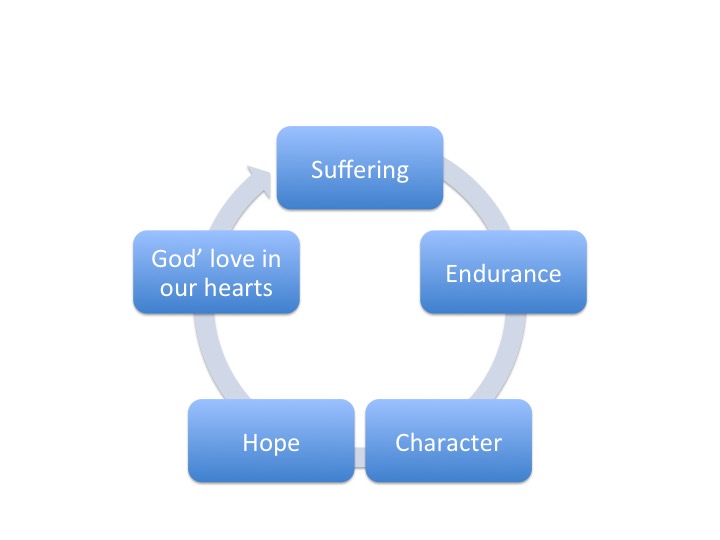
I love this visual of Romans 5:3-5. With each time around the circle, we grow in hope and joy and the certainty of God’s love. This can then spill over to others.

Slide1Blessings,

Michelle

Spiritual health

Four Components of True Health – Spiritual Health

Spiritual health
Spirituality is a key component of total health

Spiritual health is the third of the four components of health. True health requires health in all four components. Over the last two weeks we covered physical and mental health. Next week we will cover the fourth component.

This blog is being released on the most important holiday of the Christian religion. It seems timely to talk about spirituality and why and how it is linked with your health.

Researchers have studied what are the differences between the most healthy and the least health people in our world. Certainly some of the factors are:

  • our genes
  • our environment
  • our accessibility to healthcare
  • our social system

These are more tangible, or objective, types of factors. We can define and measure them. But, these measures alone can’t explain all of the differences in our health.

A component that many researches have included is the concept of religion. Most studies I have found don’t differentiate which religion. They just look at whether the person identifies with a religion. Studies have found that identifying with religion is associated with better health.

Why would spiritual health and religion be associated with better health?

One potential reason religion could enhance your health could be belief in a higher power. There is assurance and hope in having someone/something overseeing your life. In some religions there is a direct relationship with the higher power. In others, a common belief system provides a group to whom you can belong and share those beliefs.

Religion has also been credited with providing a way of coping with life events. In some religions, God can be asked for help. Some studies have demonstrated a positive benefit of prayer on health. In others, the care of one another by people within a religious group benefits health outcomes.

The sense of belonging, the social opportunities, and the structure of religion appear to add to enhanced health. In addition, religion provides additional opportunities for volunteering. Those who volunteer have been found to be healthier. Of course, there are non-religious ways to volunteer. But, some of the studies found those with a religious affiliation to be more likely to volunteer.

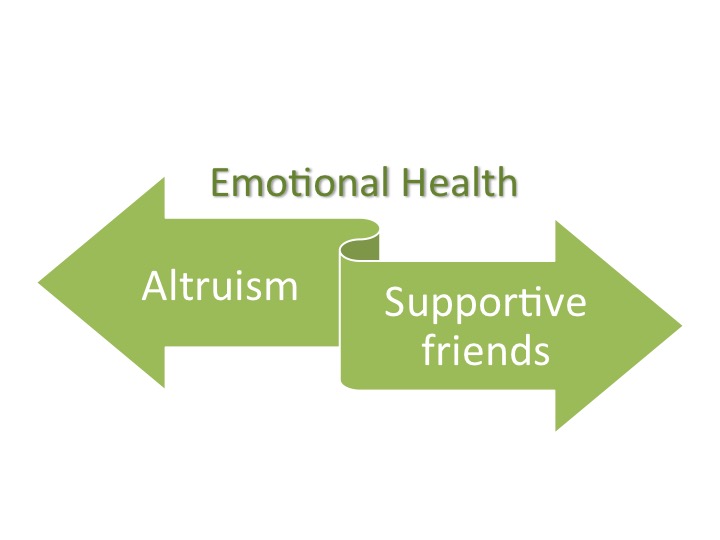
Altruism is one of the attributes associated with improved health. Altruism is defined as, “feelings and behaviors that show a desire to help other people and a lack of selfishness” (Merriam-Webster definition). Some of the major religions – Judaism, Christianity, and Islam – encourage helping others. Then, God will reward such actions. Either way, people who think about and do positive things for other people are healthier.

There is growing interest in studying this. There is now evidence to support the crucial role of spirituality in overall health. Stay tuned to see how this information will be incorporated in to our healthcare system.

There are no medications for spirituality. So, you might wonder why Meds MASH would be posting about this topic. But, it is a core part of overall health. So in the interest of completeness, spirituality is an important topic.

For a list of references used in the writing of this blog, please contact us at www.medsmash.com.

BIBLICAL APPLICATION

Happy holiest of days! Our Savior lives!

The sun has been shining, the days are warming, my favorite color of spring green is starting to turn up everywhere, flowers are blooming! This season makes me so happy!

Have you noticed how circumstances can really improve your mood and make you happy?

I’ve injured my leg (again) and will likely need surgery. Insurance has made the treatment process incredibly long. How frustrating. Have you noticed how circumstances can dampen your mood?

How much is your life tossed up and down by circumstances? The roller coaster ride of the ups and down can be exhausting!

You can’t keep life circumstances from happening. Good things and bad things happen to everyone. There is no avoiding it. But, you have the ultimate hedge of protection around you like a solid house that protects you in a hurricane. No matter what happens in your life, because of what happened Holy Week, you have a source of hope and peace.

Jesus was betrayed by one of his closest friends. Many people worked together behind his back to find a way to destroy him. He was slandered. He experienced the ultimate defamation of his character. He was accused of crimes he never committed. He was humiliated. He was physically abused beyond recognition. He was tortured. Many who had supported him either abandoned him or turned against him. The official who could have protected him did not. He was murdered in public with additional humiliations in the worst, most painful way known to people at that time.

He was completely without sin. He did nothing wrong. He is the only person to ever walk the earth who could claim that.

So, why did he willingly go to Jerusalem on Palm Sunday knowing full well this was what would happen by the end of the week?

Romans 14:9 ESV

For to this end Christ died and lived again, that he might be Lord both of the dead and of the living.

Isaiah 53:5 ESV

But he was wounded for our transgressions; he was crushed for our iniquities; upon him was the chastisement that brought us peace, and with his stripes we are healed.

John 3:16 ESV

“For God so loved the world, that he gave his only Son, that whoever believes in him should not perish but have eternal life.

YOU are the reason Jesus endured all of this. His love for YOU. Your sins. All that separated you from God due your weaknesses is now gone. Because Jesus died for YOU, you have the promise of eternal life! There is no better gift anyone could ever give you.

Jesus did not remain in the grave. After three days He came back to life! Again, all for YOU!

John 11:25 ESV

Jesus said to her, “I am the resurrection and the life. Whoever believes in me, though he die, yet shall he live,

John 6:40 ESV

For this is the will of my Father, that everyone who looks on the Son and believes in him should have eternal life, and I will raise him up on the last day.”

1 Corinthians 6:14 ESV

And God raised the Lord and will also raise us up by his power.

May you be richly blessed as you ponder this love that can protect you from any storm.

Michelle

Image source: colinsclipart.com

Four Components of True Health – Mental Health

03_vascular_lg
Mental health is one of four components of total health

Mental health is the second of the four components of health. True health requires health in all four components. Last week we covered physical health. Over the next two weeks we will talk about each of the others separately.

Mental health is getting more attention as an essential component of health.  It requires a health system of diagnosis, treatment, and management similar to physical health. Insurance has historically not provided as much coverage for mental health compared with physical. But, finally, that is changing in a very positive way!

A new set of diagnostic standards was published in 2013. This update came after over 10 years of work to refine and identify diagnoses since the previous set of guidelines. The standards cover everything from neurodevelopment disorders (such as autism), schizophrenia, bipolar disorder, and depression to anxiety.  They also cover obsessive-compulsive disorder, trauma and stress-related disorders, eating disorders, substance abuse, phobias, and personality disorders.

There are several classes of medications that are prescribed to manage mental health conditions. Some examples include neuroleptics (also called antipsychotics), antidepressants, antianxiety medications, and some medications that are also used to treat seizures.

So what can you do to improve your mental health?

Consistency is very important with mental health. Accurate diagnosis is obviously also key.

These conditions are complex. They are true biologic medical conditions. Sometimes people think these conditions are something someone can control by him/herself. That can lead to shame, denial, or avoidance of these complex conditions. They DO require medical care.

From mentalhealth.gov:

Myth: Personality weakness or character flaws cause mental health problems. People with mental health problems can snap out of it if they try hard enough.

Fact: Mental health problems have nothing to do with being lazy or weak and many people need help to get better. Many factors contribute to mental health problems, including:

  • Biological factors, such as genes, physical illness, injury, or brain chemistry
  • Life experiences, such as trauma or a history of abuse
  • Family history of mental health problems

People with mental health problems can get better and many recover completely.

Counseling is often an essential component of care for these conditions. Qualified counselors listen, coach, and strategize. They can also help diagnose and participate in therapy decisions. They can educate and work with the person with the  condition and with all family and caregivers, as approved by the patient.

So mental health conditions are medical conditions just like cancer and diabetes are medical conditions. They are treated with counseling, procedures, and medications. Many require lifetime management (versus one time treatment). So, relationships with the healthcare team are important. You want providers with whom you are comfortable and can be open.

Note, for many mental health conditions, especially depression, medication needs to be taken every day for up to two months to see the full benefit. The medication very gradually changes transmitters in the brain back to healthy amounts. So, please be patient and take the medicine faithfully.

For more information about mental health, please contact us at www.medsmash.com.

BIBLICAL APPLICATION

Mental illness impacts people of faith just as it impacts people who have never heard about Christ. So, can God use mental illness for His glory? Can anything good come from struggling with mental illness?

I believe God can use any of our weaknesses, any of our conditions, to His glory. Nothing is beyond His ability.

John 16:33 ESV

I have said these things to you, that in me you may have peace. In the world you will have tribulation. But take heart; I have overcome the world.

2 Corinthians 12:9 ESV

But he said to me, “My grace is sufficient for you, for my power is made perfect in weakness.” Therefore I will boast all the more gladly of my weaknesses, so that the power of Christ may rest upon me.

Luke 1:37 ESV

For nothing will be impossible with God.

In the Bible, mental illness is sometimes referred to as having an ‘afflicting demon’. Understanding of mental health continues to grow. The medical/biological understanding of these conditions is much better understood than they were in Biblical days, but there are still questions to be answered.

Matthew 4:24-25 The Message (MSG)

He also healed people of their diseases and of the bad effects of their bad lives. Word got around the entire Roman province of Syria. People brought anybody with an ailment, whether mental, emotional, or physical. Jesus healed them, one and all. More and more people came, the momentum gathering. Besides those from Galilee, crowds came from the “Ten Towns” across the lake, others up from Jerusalem and Judea, still others from across the Jordan.(emphasis mine)

The multiple components of total health – physical, mental, emotional, spiritual – are recognized throughout the Bible. Mental health conditions require treatment and must be addressed to reach a state of true health.

There is no shame. Again, these conditions have biological sources. We are called to love and support each other.   Education, understanding, and unconditional love can help us help each other find God’s purposes in each of our afflictions.

Blessings,

Michelle

Image Source:  National Institute on Aging; National Institutes of Health; U.S. Department of Health and Human Services

Four Components of True Health – Physical Health

ThinkstockPhotos-464212219
Physical health – one of four essential components of health

Physical health is the first of the four components of health. True health requires health in all four components. Over the next three weeks we will talk about each separately.

Physical health is the type that is usually thought of first when describing ‘health’. It relates to medical conditions, joint and muscle function, infections, bones, and organ systems. It is the primary reason we go to the doctor.

The main emphasis of health insurance has historically been physical health.

Most of the medications that are prescribed are for physical health. Medications for diabetes, high blood pressure, pain, asthma, etc. are prescribed to improve physical health.

Your physical health is often part of your decision-making. It is the main motivation to choose healthy foods, exercise, avoid smoking, and limit alcohol.

So what can you do to improve your physical health?

First, there are several things you can do to preserve your physical health. Prevention is key. To prevent heart disease and diabetes, diet and exercise are especially important. They help maintain a healthy weight. Lack of exercise and poor food choices lead to excess weight, which adds to risk for many medical conditions.

Avoid smoking. Quit if you smoke now. The negative effects on physical health are enormous.

Limit alcohol intake. An occasional drink is probably fine unless you are genetically at risk for alcoholism. Excess alcohol has many health risks.

If you have been diagnosed with a medical condition, be sure to ask plenty of questions to fully understand your diagnosis and treatment plan. Then, follow your treatment plan while keeping track of your response. Communicate your response and any medication side effects to your healthcare team.

If you have more than one medical condition and/or if you have more than one provider, keep everyone informed. You want healthcare providers who communicate with each other and take time to communicate with you. Each provider needs to know exactly what the others are doing.  Each also needs to know how you actually take each of your medications. It is only then that the safety of all your medications together can be assessed.

For more information about your physical health, contact us at www.medsmash.com.

BIBLICAL APPLICATION

We learn in Genesis we were made in God’s image. Each cell, each hair, each component is specially designed. If you’ve ever experienced the birth of a baby and watched it grow, you have seen the astounding complexities of the human body.

Physical health allows us to perform our daily tasks. It also allows us to pursue the plans to which God has called us. There are several verses throughout the Bible that pertain to health. Here are a few:

1 Corinthians 6:19-20 ESV

Or do you not know that your body is a temple of the Holy Spirit within you, whom you have from God? You are not your own, for you were bought with a price. So glorify God in your body.

1 Corinthians 3:17 ESV

If anyone destroys God’s temple, God will destroy him. For God’s temple is holy, and you are that temple.

1 Timothy 4:8 ESV

For while bodily training is of some value, godliness is of value in every way, as it holds promise for the present life and also for the life to come.

1 Corinthians 9:27 ESV

But I discipline my body and keep it under control, lest after preaching to others I myself should be disqualified.

3 John 1:2 ESV

Beloved, I pray that all may go well with you and that you may be in good health, as it goes well with your soul.

Consider the steps to maintain your health and the role your health plays in your response to God’s call for your life.

Blessings,

Michelle

When repetition causes pain – osteoarthritis

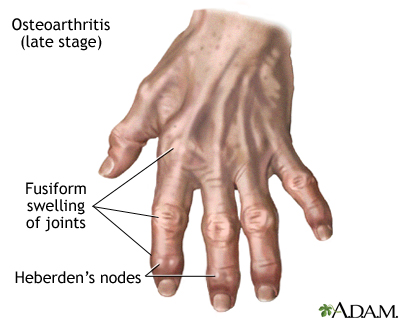
OA hand
Late stage hand osteoarthritis

Osteoarthritis (OA) is a very common and painful condition. One way to explain it is that the cushion, or cartilage, lining bones wears away leaving bone to wear on bone.

Some of the most common causes of osteoarthritis are:

  • Injury to the joint– e.g. sports or motor vehicle accident
  • Repetitive use of a joint
    • In your job
    • In hobbies
    • In sports
  • Being overweight

Currently, there is not a way to rebuild the cartilage that wears away. So, the goals of treatment are:

  • to maintain what cartilage is left,
  • avoid making it worse,
  • keep you doing what you need to do during your day
  • control pain

Occupational and physical therapists can help.  They are experts in helping you find new ways to perform tasks without making the joint worse. There are many tools that can help support painful joints such as knee braces and thumb splints.

Ways to manage osteoarthritis pain without medication include:

  • heat application to the painful joint
  • lose weight if overweight (especially helpful for foot, knee, and hip arthritis)
  • swim – less wear on the joint than land-based exercise
  • find new ways to do tasks that don’t wear on the joint

OSTEOARTHRITIS MEDICATION THERAPY

The number one, gold-standard therapy for OA is acetaminophen. (A common brand name is Tylenol). Acetaminophen can help manage the pain. It is most effective if it is taken regularly (two extra strength 500mg tablets three times daily). This works better than waiting for pain to get really bad then taking a dose.

Note, be sure to check with your doctor to make sure your liver is healthy. And, limit or avoid alcohol to further protect your liver while taking acetaminophen.

The other medications commonly used for OA are nonsteroidal anti-inflammatory drugs (NSAIDs) such as ibuprofen (brand names such as Motrin and Advil) and naproxen (brand name Aleve). These are also good for reducing arthritis pain. They can raise blood pressure, so avoid them if you have high blood pressure, heart failure, or a strong family history of heart attack. They can worsen kidney function, so talk with your doctor to be sure your kidneys are healthy. They can irritate your stomach, so always take them with food. Another option in this class of medicine is celecoxib (brand name Celebrex) that has less stomach irritation.  There are also topical versions that avoid some of the side effects.  You rub these onto the joint area that is in pain.

So, first and foremost, stop doing repetitive activities that are hurting your joint(s). Second, take steps to preserve the joint function you still have. Third, medication can help with the pain association with osteoarthritis. Be sure to discuss the pros and cons of the medication options with your doctor and/or with us.

For more information about osteoarthritis and treatment, contact us at www.medsmash.com.

BIBLICAL APPLICATION

Insanity: doing the same thing over and over again and expecting different results. Albert Einstein

Just as repetitive movement can worsen osteoarthritis, repetitive approaches to anything can ultimately lead to harm if those approaches are not productive.

  • In your spiritual life, how responsive are you to God’s call?
  • How much do you vary your Bible study?
  • What types of worship have you experienced?
  • How does your prayer life vary in the seasons of your life?

It is so easy to fall in to a rut. You are busy; daily tasks use up all of your time. Prayer becomes relegated to particular times or left out completely. Sunday worship becomes your primary connection to God. Fellowship with other believers only occurs walking in and out of church.

Paul has some ideas about the many ways to worship in his letter to the Colossians:

Colossians 3:14-17 ESV

And above all these put on love, which binds everything together in perfect harmony. And let the peace of Christ rule in your hearts, to which indeed you were called in one body. And be thankful. Let the word of Christ dwell in you richly, teaching and admonishing one another in all wisdom, singing psalms and hymns and spiritual songs, with thankfulness in your hearts to God. And whatever you do, in word or deed, do everything in the name of the Lord Jesus, giving thanks to God the Father through him.

I encourage you to get creative and deliberate in your spiritual life. God has so much to share with you as you let Him in. His joy, peace, and love can change everything!

Blessings,

Michelle

Image Source:  National Library of Medicine; National Institutes of Health; U.S. Department of Health and Human Services

Over-the-counter NSAID pain medicines – how safe are they?

Slide1Some people think medicines that are available over-the-counter are always safe.   I don’t want you to be one of those people. Ibuprofen and naproxen are a class of medicines called nonsteroidal anti-inflammatory drugs (NSAIDs). They can treat pain, inflammation (swelling and redness), and fever. Hundreds of million of Americans take them every year. You probably have some in your home right now.
The NSAIDs that you can buy without a prescription are ibuprofen (brand names Motrin, Advil) and naproxen sodium (brand name Aleve). They are part of a class of over 20 medications that are available by prescription.

5 IMPORTANT THINGS about NSAIDs

There are five important things I want to make sure you know about these medicines:

  1. They do work to treat mild to moderate pain, fever, and inflammation. They all work the same way. No measurable difference between them in how they work has been found. So one is not better than another.
  2. They irritate your stomach lining. If you already have reflux, gastroesophageal reflux disease (GERD), ulcers, or have ever had a stomach bleed, please tell your doctor. Whether or not you already have stomach problems, always TAKE NSAIDs WITH FOOD.
  3. They cause you to retain extra fluid. This can raise your blood pressure. It can also make heart failure worse and increase your risk for a heart attack if you have heart problems. Talk with your doctor if you have high blood pressure or heart problems BEFORE you take an NSAID.
  4. They can worsen kidney function. If you already have diminished kidney function, talk with your doctor before you take an NSAID.
  5. They make your platelets less sticky. This lowers your chance of have a clot. But, NSAIDs do this for a limited time. ASPIRIN can make your platelets less sticky for the entire life of the platelet. That is why aspirin, usually 81mg baby aspirin, is used to help prevent a clot that leads to a heart attack or stroke.

I always buy the generic version. It will save you some money and give you the very same effect.

If you have pain or fever, there is an option that does not have the stomach, heart, or kidney issues. That option is acetaminophen (brand name Tylenol). For pain that does not include inflammation (redness, swelling), acetaminophen controls the pain similarly to the NSAID.

The problem you do have to watch with acetaminophen is it can hurt your liver. The most you should take in a day is 4 grams (2 extra strength tablets four times daily). The Food and Drug Administration might even recommend that you not take more than 3 grams per day soon. Also, if you drink alcohol more than 2 drinks per day or have any liver condition, then acetaminophen might not be your best choice. Please talk to your doctor before you take it if you have liver issues or drink more than 2 drinks per day.

For more information about safe pain medicine options, contact us at www.medsmash.com.

BIBLICAL APPLICATION

Many people think that any medication you can buy on your own, without a prescription must be safe. I hope you now realize this isn’t always true. In some patients, with some other conditions, a relatively safe medication can be downright dangerous.

So, how do we know what is true? On what can we truly rely?

Voice of Truth” by Casting Crowns took on a whole new meaning for me this week. I love this song. I have heard it countless times. On this particular day, when it came on the radio I wasn’t even listening very intently.

Then, the words, ‘this is for my glory’ hit me suddenly in a whole new, EXTREMELY POWERFUL way. I have been working through a large, unexpected life transition over the past couple of years. It is not a bad situation. It is just a very big transition leading down a path I can’t really see yet. The whole experience has been and continues to be a real faith walk. I often pray for guidance, help with decision-making, and peace while waiting.

Then, out of the blue, I hear the lyrics, “The voice of truth says, “This is for My glory”. It hit me; none of this is even about me. If I could be in the future looking back, I would be telling myself to “stop it, be quiet, just wait and see, God is doing something here.” It’s not about me at all. It’s all about God working through this situation for HIS glory.

I felt a wave of peace, a wave of admonition, and a lot of emotion. I fluctuated between laughing and crying.

I just love such spontaneous GOD moments!

Proverbs 16:9 ESV

The heart of man plans his way, but the Lord establishes his steps.

Acts 18:9 ESV

And the Lord said to Paul one night in a vision, “Do not be afraid, but go on speaking and do not be silent,

Listen to the ‘voice of truth’ and wait to see what He is cooking up that is for His glory in your life.

Blessings,

Michelle


I have diabetes – let the pills fix it!

ID-10093880
Diabetes – let the pills fix it


Medications to treat diabetes have revolutionized the treatment of this condition. The number of people with diabetes has been increasing for many years. So, a lot of emphasis has been put on finding new treatments. The number of new types of medications to treat diabetes has greatly increased even in the last five years. This is GREAT news!

So, with all of these new and the older tried and true treatments, diabetes is in good control, right? Surely with all of these options, diabetes is a problem of the past.

Unfortunately, it’s more complex than that. The same things that are causing this increase in number of people with diabetes need to be at the core of the treatment. So what are these things?

At the core of diabetes management

The primary link to the growing number of people with diabetes is the growth of the population. I’m not referring to number of people, I’m referring to SIZE of people.

Obesity has been on the rise. As a population we have gained significant weight. This is one of the main risk factors for diabetes. It is also a risk factor for high blood pressure, high cholesterol, heart disease, and stroke.

So, besides medications to treat diabetes, changes in diet, exercise, and weight are key parts of treatment. Diet and exercise changes are the best way to manage weight. They are not always the most fun and certainly not the easiest. There are all sorts of ‘quick fix’ schemes for weight management that sound very enticing. But, after all is considered, none of these are as safe or effective as true, daily, positive changes in food and movement.

Daily changes

Move every day. Spend less time in a chair and more walking, participating in dance or games, cleaning, or doing other things that are active.

Diet changes are best made in moderation. Sudden, huge diet changes are very hard to sustain. A few simple changes can make a big different. Try some of these:

  • Avoid second helpings
  • Eat a bit smaller portions
  • Cut back on white bread, crackers, pasta
    • Replace with those with higher grain content
  • Eat some more vegetables in place of bread and sweets
  • Eat some more fruit in place of sweets

It is important to make changes that you can make new habits. Keep up these gradual changes over time.

Be good to yourself. If you occasionally slip and fall back in old habits, pick yourself up, forgive yourself, and try again. As you adopt healthier habits, your weight decreases, and you move more, you will start to feel better and more energetic. That will made it easier to continue to make positive changes.

If you want to talk about more details aobut how you can start making these changes, contact us at www.medsmash.com.

BIBLICAL APPLICATION

Just as it is tempting to let pills fix medical health, it is tempting to let Sunday church fix our spiritual health.

If you go to church most Sundays, you have all you need for spiritual growth and development, right?

Peter had some very insightful instruction about spiritual growth.

1 Peter 2:1-5 ESV

So put away all malice and all deceit and hypocrisy and envy and all slander. Like newborn infants, long for the pure spiritual milk, that by it you may grow up into salvation— if indeed you have tasted that the Lord is good. As you come to him, a living stone rejected by men but in the sight of God chosen and precious, you yourselves like living stones are being built up as a spiritual house, to be a holy priesthood, to offer spiritual sacrifices acceptable to God through Jesus Christ.

I encourage you to read the rest of this chapter of 1 Peter.

2 Peter 1:5-8 ESV

For this very reason, make every effort to supplement your faith with virtue, and virtue with knowledge, and knowledge with self-control, and self-control with steadfastness, and steadfastness with godliness, and godliness with brotherly affection, and brotherly affection with love. For if these qualities are yours and are increasing, they keep you from being ineffective or unfruitful in the knowledge of our Lord Jesus Christ.

2 Peter 3:18 ESV

But grow in the grace and knowledge of our Lord and Savior Jesus Christ. To him be the glory both now and to the day of eternity. Amen.

Another verse with some instruction about spiritual growth is:

2 Timothy 3:16-17 ESV

All Scripture is breathed out by God and profitable for teaching, for reproof, for correction, and for training in righteousness, that the man of God may be competent, equipped for every good work.

Growing in your faith is a lifelong quest. With each new thing you learn, your perspective changes and you realize there is so much more to learn.

Sundays, church, and fellowship are incredibly important! And so are all of the other ways you spend time with God and the Bible and other growth opportunities.

Blessings,

Michelle