Posttraumatic Stress Disorder (PTSD) – Is It Real?

Slide1
There are growing resources, help, and hope for those with PTSD.

Posttraumatic Stress Disorder (PTSD) is finally becoming a topic that is discussed – in public. It finally has ‘a voice’ and several avenues of treatment to address it.

I was fortunate to serve about seven years of my career in the Veterans Affairs system. I worked alongside some of the best, most caring providers and the most robust interprofessional teams. These teams consisted of physicians (geriatricians who focus on people over 65, in my case), nurses, pharmacists, dieticians, physical therapists, occupational therapists, social workers, psychologists, psychiatrists, and every level of trainee – students, residents, and fellows. Together we provided care to aging adults in the clinic, the acute care hospital, the intermediate unit, long-term-care (nursing home), and the domiciliary. The ‘dom’ was long term, independent housing for veterans who did not have a family to live with after the war.

I am thankful for every veteran that has served our country in one of the countless ways our uniformed services care for this country every day. The stories I heard during those years were enlightening, empowering, endearing, and sometimes gut wrenching. I have heard others say this: In my experience, those who talked the least about their service saw the most ‘action’ and devastation.

One day I was in clinic with a student. It was a very normal day. As the pharmacist, my visits mostly pertained to medications – why, how, when they are taken and the result. On this day, during a normal pharmacy clinic visit, one of our veterans told his story. It forever changed my life. Here is a paraphrase. I will leave out the specific war, because the story could fit any of them.

“I was assigned the night guard shift for my platoon. It was my duty to walk around the perimeter of the base to look for anyone (of the enemy) who might try to attack at night. It was typically uneventful. One night, as I rounded a corner, I was face-to-face with a man from the ‘other side.’ In a split second I thought about my family – my wife and children. I thought about how I just want to go home to them. I thought I don’t know this man. I don’t hate this man. He probably has a wife and children waiting for him at home, too. We might even be friends in other circumstances.’

We all sat and cried for a long time.

After this event, this man, this veteran had a mental breakdown. He was sent to an island where soldiers not able to function in combat were stationed during that war. While there he started trying to stop reliving the event through alcohol. When he finally got home to his wife and children, he was an alcoholic. He had posttraumatic stress disorder. But, it wasn’t recognized, diagnosed, and treated as it is now. I certainly don’t know all of the details, but he and his family were not able to reunite and stay together. It broke my heart to see what had happened. I wonder if his wife and children ever knew what happened? I wonder if knowing could have changed the outcome for their family. No doubt he would be forever changed after an experience like that.

Post Traumatic Stress Disorder (PTSD)

PTSD is a condition where there is stress and symptoms for more than three months after a trauma or highly stressful event (or series of events). The stress and symptoms disrupt regular daily activities and are distressing. PTSD can result from war (as in the example above), natural disasters, sexual or physical assault, horror, accidents, or other terrifying event. PTSD can present in about four different ways.

  1. Reliving the event – nightmares, flashbacks, triggers
  2. Avoiding any reminders of the event – driving if in a car crash; crowds if they cause insecurity; fireworks if associated with gunfire; movies related to the event
  3. Negative feelings or changes in feelings about the world and the future; suppressing or forgetting parts of the event
  4. Feeling keyed up (hyperarousal) – easily startled, trouble sleeping, difficulty concentrating

Treatment has multiple components. Understanding PTSD is an important step. Counseling and cognitive behavioral therapy can help. In cognitive behavioral therapy, people can become aware of thoughts and feelings, and that allows them to be processed and better understood. Then skills to face those feelings and make changes in a way that allows them to have less impact are developed. For each person, this process is different. There are highly trained, experienced therapists who will work with each personal individually.

For medication treatment, selective serotonin reuptake inhibitors (SSRIs) are most commonly used. These are medications that are also commonly used to treat depression and anxiety. They are unlikely to resolve symptoms alone. They are an important part of the multiple components of treatment.

Other components might be exposure therapy, group therapy, family therapy, and more.

A recommended site to learn more about PTSD is through the VA.

Again, there is a growing number of resources available to anyone who might be experiencing PTSD. If you or someone you know might have PTSD, please seek help right away. To suffer alone is not the answer. Alcohol, drugs, and suicide are not the answer. Help is available!

For more information about PTSD, contact us at www.medsmash.com.

BIBLICAL APPLICATION

PTSD is a real disorder. It is estimated about 3.5% of adults in the US have PTSD. Over 9% of people ages 50-65 have now or have experienced PTSD.

It can be hard to think rationally when suffering from PTSD. The terror, stress, and anxiety can keep the brain in ‘fight or flight’ mode. When in this mode, reflection, perspective, and problem-solving functions are very limited.

So, how can you support someone suffering from PTSD? Understanding the disorder and being a source of compassion and love are good places to start.

No platitude or Bible verse makes PTSD go away. Some Christian leaders have implied PTSD is something that can be chosen or can be avoided with a focus on God. I strongly disagree. Sinful people can hurt, traumatize, and destroy other people. Even people who know and love God can be traumatized.

But as people of God, we can support people who have suffered. If you have PTSD, know you are not alone. If you know someone who has (or you suspect may have) PTSD, approach with God’s unconditional love. Support through the many stages and steps of recovery and learning to cope. PTSD doesn’t just go away at some point; it might take a lifetime of coping and skill building to live in spite of past trauma.

There are many stories of violence, war, and crimes in the Bible.

These are followed by God’s restorative grace and mercy.

There are many verses about love, strength, deliverance, and rest for our soul.

In time, with treatment and a strong support network, these conversations can be had.

Until then, in the more acute phases when the brain is so busy with ‘fight or flight’ mode, prayer, presence, and unconditional love are ways you can start the story of grace.

Be on the lookout for people who may have PTSD who are not yet receiving treatment. Pray for the many people in our world who are PTSD victims. Love and care for those with PTSD in your life.

1 John 4:11-12 The Message (MSG)

My dear, dear friends, if God loved us like this, we certainly ought to love each other. No one has seen God, ever. But if we love one another, God dwells deeply within us, and his love becomes complete in us—perfect love!

Blessings,

Michelle

No U-turn available

When a U-turn is not available – end-of-life care

No U-turn available
Supportive options when it’s time for end-of-life care.

Now we turn to end-of-life care.  Last blog we talked about the U-turns available in your life and health. These can help you feel better and live healthier. We learned you can still make changes that have a positive impact on your overall health.

What about when a U-turn is not available?

What about when you get that diagnosis of:

The U-turn is not available.

We can’t stop it. We won’t be able to turn it around. There are a number of conditions that at this moment have no cure or way to get rid of them.

When we run out of options, then the end of life becomes our focus. This is peaceful for some. It is frightening and a huge struggle for others. It impacts not only the person diagnosed but also all of their friends and family. Each person involved deals with a number of feelings during this time. There can be guilt, fear, conflict, regret, and grief, among others.

The support of others, education about what is happening, and sources of comfort are critical.

Resources for end-of-life

Following are some resources for everyone involved in end-of-life care.

  • Support groups – There are support groups for most common diagnoses, for people with the diagnosis and for caregivers and family members, and for various stages of the condition.
  • Caregiver stress and burden – Caring for a loved one near the end of life can be emotionally and physically exhausting. There are many resources that provide assistance (such as in-home care agencies) or respite (short term stays while the caregiver takes a break).
  • Caregiver care – A caregiver can’t fully care for their loved one if they don’t also take care of themselves. Emotional, physical, and spiritual health need attention during this demanding time.
  • Resources – Your community will have various agencies available to provide numerous sources of help. These include direct healthcare, legal guidance, financial aid, spiritual support, placement options, and more. If the person nearing end-of-life is over age 65, your local Agency on Aging could be a valuable source of lists of the resources available in your area.
  • Palliative care – This is care that is focused on comfort and support to accomplish goals toward the end of life.
    • Hospice is one form of palliative care. Your hospice organization can support you, provide education about current and future changes, and help you with preparation for all involved.

When the end-of-life can be anticipated (vs suddenly taken), there is an opportunity to prepare and fully live those final months or days.

For more information about end-of-life options, contact us at www.medsmash.com.

BIBLICAL APPLICATION

What’s different about the people that find peace in the end of life?

Romans 6:23 ESV

For the wages of sin is death, but the free gift of God is eternal life in Christ Jesus our Lord.

This tells us that death of this life is not he end. It is only the beginning of eternity. What does that mean to you? Is it really true?

John 3:16 ESV

“For God so loved the world, that he gave his only Son, that whoever believes in him should not perish but have eternal life.”

The hope we can take through those seasons of palliative care and hospice is the result of anticipating the end of this life and moving on to eternal life.

John 5:24 ESV

Truly, truly, I say to you, whoever hears my word and believes him who sent me has eternal life. He does not come into judgment, but has passed from death to life.

Ephesians 2:8-9 ESV

For by grace you have been saved through faith. And this is not your own doing; it is the gift of God, not a result of works, so that no one may boast.

If this life is just the preamble to a life of eternity with Christ, then death loses its sting.

1 Corinthians 15:55-57 NIV

“Where, O death, is your victory?

    Where, O death, is your sting?”

The sting of death is sin, and the power of sin is the law.  But thanks be to God! He gives us the victory through our Lord Jesus Christ.

I pray you find hope and peace as you ponder this perspective of death.

Blessings,

Michelle

U-Turn ahead – not too late to turn your health around

Slide1
Turn your health around. Make changes to improve your health.

Is it too late to turn your health around? Although we were raised certain ways we can still make a U-turn, or at least navigate a big curve. I was raised with dessert every day, lots of processed foods, little to no access to seafood, and limited fresh vegetables beyond summer. Meals were built around meat and potatoes. As for exercise, anyone who knows me can attest to my utter lack of athletic ability. So, should we settle for life-long habits and figure it’s too late to make changes now?

Actually, there is a LOT of evidence that changes, at all stages of life, still help you. Below are just a few of the most common habits/choices that can be changed in a way that really makes you feel better.

Changes to turn your health around

  • Quit smoking –
    • Just 20 minutes after you quit your blood pressure and heart rate decrease.
    • Your risk of a heart attack starts to go down at 24 hours.
    • Taste and smell start to improve at 48 hours.
    • After 1-5 years your risk of heart disease is cut in half.
    • After 10 years your risk of lung cancer is almost as low as a lifelong nonsmoker.
  • Weight loss – short and long term
    • Small weight loss can have big advantages.
    • If you lose 5-10% of your body weight, your blood pressure, blood sugar, and cholesterol all improve.
    • Your risk of heart disease goes down.
    • It gets easier to breathe.
    • Sleep apnea can improve helping you sleep better and be less sleepy during the day.
    • Your sex drive
    • Joint pain
  • Diet changes –
    • Decreasing your daily calories by 500-1,000 per day will decrease weight 1-2 pounds per week. [Faster weight loss is not as healthy and hard to sustain.]
    • Gradually add more interesting fruits and vegetables to your diet.
      • Sudden, drastic changes are not necessary and are hard to do.
      • More variety in fruits and vegetables will increase the types of vitamins and nutrients you get.
    • Change up your fat
      • Exchange some of your red meat meals for fish (your grocery store meat section will likely have instructions on how to prepare whatever is on sale or available in the meat section).
      • Try nuts for snacks over sugary snacks.
    • Sugar
      • Drink more water or unsweetened beverages in place of sugary soda or fruit juice.
      • Eat smaller portions of your dessert, as a starting point to cut back.
  •  Exercise
    • Get moving – it helps with more than just weight control.
    • Decrease joint pain and strain, especially your lower back.
    • Get stronger and be more resilient against small strains and sprains.
    • Be more flexible.
    • Decrease your risk of a fall that could injure you.
    • Stay healthy and independent longer through fitness.
    • Have more energy and stamina.
    • Exercise doesn’t have to mean joining a gym or playing a sport.
      • Get up and move around during commercial breaks on TV.
      • Park farther from the front door.
      • Go for a walk with a friend.
      • Window shop in all of the stores at the mall before making a purchase.

U-turns are allowed in your life. No matter your age and for how long you have been doing things a certain way, make a change. Turn your health around. See how much better you can feel with very small changes starting today.

For more information about healthy choices and making a U-turn, contact us at www.medsmash.com.

BIBLICAL APPLICATION

Are you drowning in your negative self-talk? Are you always striving to do better? Or, are you constantly making excuses and blaming others for your weaknesses?

These are such easy routes to take! They are such easy ruts to fall into.

Will you ever be at peace and feel that all is right in your world? What would that take?

My understanding of the Bible is that the peace and promise you’re seeking is available to you RIGHT NOW.

There is nothing you have done that God doesn’t already know about. You can’t hide. Rather than being terrified by that, realize you are loved. You are loved and accepted and forgivable. Absolutely nothing you have done could make God turn away from you.

1 John 4:18 ESV

There is no fear in love, but perfect love casts out fear. For fear has to do with punishment, and whoever fears has not been perfected in love.

Grace, mercy, and forgiveness are right here waiting for you.

Romans 5:8 ESV

But God shows his love for us in that while we were still sinners, Christ died for us.

You could absolutely never do anything so terrible that would exclude you from the love and grace of Jesus Christ.

It was this love that led to Jesus’ death – all for your sins and mine. And because of that sacrifice, you are saved.

Let’s look again at 1 John 4:17-18 from The Message:

God is love. When we take up permanent residence in a life of love, we live in God and God lives in us. This way, love has the run of the house, becomes at home and mature in us, so that we’re free of worry on Judgment Day—our standing in the world is identical with Christ’s. There is no room in love for fear. Well-formed love banishes fear. Since fear is crippling, a fearful life—fear of death, fear of judgment—is one not yet fully formed in love.

Not only can you take a U-turn in your daily physical health choices, you can take a U-turn in your spiritual health. Stop hiding. Stop beating yourself up. Embrace this love that is completely yours. You are forgiven as soon as you let go and give your all to God who loves you with no conditions.

Blessings,

Michelle


Sleep – To Medicate or Not to Medicate

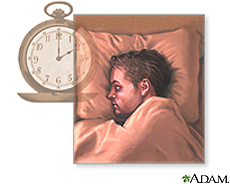
sleepingproblems
Regular sleep helps you think clearly and make better decisions

AAAhhhhh, there is nothing like a good night’s sleep. Don’t you feel refreshed and ready to conquer the world when you are well rested? How do you feel when you haven’t been sleeping well? Irritable, short-tempered, unfocused, …?

Feeling extra sleepy is linked to:

  • Motor vehicle accidents
  • Poor test performance
  • Poor decision making
  • Difficulty concentrating
  • Difficulty solving problems
  • Mood changes
  • Pain intolerance
  • Mistakes
  • Errors in judgment

So, it is not all in your head if you think you don’t have such a great day when you don’t sleep well.

The TV commercials tell you to grab one of the over-the-counter sleep medicines. I want to DISCOURAGE you from doing that. Most of the over-the-counter sleep options contain either diphenhydramine (Benadryl) or a sedating antihistamine like doxylamine. These medications are not recommended in people over 60. Not only do they make you really sleepy, they are very anticholinergic.

Anticholinergic

Anticholinergic medications are very drying. They cause dry mouth, dry eyes, constipation, and difficulty urinating. They also make your thought process fuzzy. Medications with anticholinergic side effects greatly increase risk of falls. There are MANY studies showing that people who take these sleep aids are more likely to fall.

Zzz sleep medications

There are some newer prescription sleep medications available. Three are referred to as the ‘zzz’ medications. They are zaleplon (Sonata), exzopiclone (Lunesta), and zolpidem (Ambien). Note the ‘z’ in each name. These are options when all good sleep habits have been tried and failed; or when insomnia occurs regularly or for a prolonged time. When they are used, the lowest possible dose for a short time is best. Each of these medications is linked to falls (especially if you get up during the night to go to the bathroom while sedated). Each is linked to car accidents if you drive while still under the effect of the medication. Each can cause odd behaviors in come people such as sleep driving or other tasks while asleep. I had a patient once who awoke to find Wal-Mart bags full of merchandise all over her living room floor. She had gone to Wal-Mart in her sleep and had a shopping spree. She brought it all home and into the house then went back to bed. She could remember none of it.

So use these medications only when necessary, at the lowest possible dose, for a short time under the careful guidance of a prescriber. Only take one when you are able to stay in bed and sleep for a full night (7-8 hours). These are NOT for a short sleep and get-up-and-go kind of night.

BEST sleep habits

Prior to considering adding medications, these habits can help you sleep better.

  • Keep your sleep schedule regular – Go to bed and get up at the same time each day.
  • Keep your bed for sleep and sex only.
  • Avoid daytime naps.
  • Avoid caffeine, chocolate, alcohol, or spicy food.
  • Avoid TV, reading your phone, using your computer right before bed. The light of the electronics triggers your brain to be active. There are several studies linking use of electronics before bed to poor sleep.
  • Get some exercise during the day so your body is tired as well as your brain.
  • Try deep breathing. Take slow, deep breaths in and slowly blow them out.
  • Try progressive muscle relaxation. Start at your toes. Squeeze your toes tightly then let them relax. Keep going with all of the muscles as you work up your body.
  • There are several other techniques available in the links on this page.

I highly encourage you to try all of the sleep techniques that don’t involve medications first. Then, if you do need medication, get a prescription from your doctor for a low dose. Use it only when truly needed for a very few days. Be sure you can dedicate a full night to sleep before taking a dose.

One other option when good sleep habits aren’t enough is melatonin. Melatonin is a natural product that improves sleep in some people. It takes up to a month to see the full effects. It can help you fall asleep quicker, sleep better, and sleep longer. Each dose won’t necessarily make you feel sleepy. The impact is more gradual over time. The starting dose is 2-3 mg at bedtime.

For more information on sleep options, contact us at www.medsmash.com.

BIBLICAL APPLICATION

It’s amazing how the eternal confidence of unconditional love can enhance sleep.

All of us have our overwhelming days, our painful nights, our frightening challenges.

We also have a source of hope and joy to see us through all circumstances. In Christ, you know who is ultimately in control. You know where you will be spending eternity.

So, on those bad, sleepless nights, give your burdens to the One who is asking you to give them over.

Proverbs 3:24 ESV

If you lie down, you will not be afraid; when you lie down, your sleep will be sweet.

Psalm 4:8 ESV

In peace I will both lie down and sleep; for you alone, O Lord, make me dwell in safety.

Psalm 121 CEV

The Lord Will Protect His People

I look to the hills!

    Where will I find help?

It will come from the Lord,

    who created the heavens

    and the earth.

The Lord is your protector,

    and he won’t go to sleep

    or let you stumble.

The protector of Israel

doesn’t doze

    or ever get drowsy.

The Lord is your protector,

there at your right side

    to shade you from the sun.

You won’t be harmed

by the sun during the day

    or by the moon[a] at night.

The Lord will protect you

    and keep you safe

    from all dangers.

The Lord will protect you

    now and always

    wherever you go.


Sweet dreams and blessings,

Michelle

Image source: Source:  National Library of Medicine; National Institutes of Health; U.S. Department of Health and Human Services

Four Components of True Health – Emotional Health

Slide1
Caring for and by others is key

The fourth of the four components of health is emotional health. True health requires health in all four components. Over the last three weeks we covered physical, mental, and spiritual health. Striving to attain health in all four areas enhances your overall health.

Emotional health refers to how you deal with life and its ups and downs. Everyone goes through difficult trials. The specifics are different between people. Even for you, there will be a wide variety of difficult times you experience.   Everyone has good days. These can be peaceful, contended days; days where you reach a goal; days where you are celebrated; and days when you feel loved and secure.

Your feelings play a big role in your emotional health. People express their feelings in many different ways. Some people are more visibly emotional. Other people keep their emotions carefully hidden from view. Either way, emotions can impact our behaviors. How we act, how we respond, how we treat people, and how we feel about ourselves can all be affected by our emotions.

Why does my emotional health matter?

When looking at the differences between healthy people and not so healthy people, researchers have found emotional health to be a key factor.

How do you handle your anger? How kind are you to yourself in your ‘self talk’? How do you express your joy? What is your response when someone criticizes you? How often do you put other people’s needs before your own? Do you feel like the world is out to get you? How do you respond when your car breaks down? How do you feel when you forget to send a birthday card on time? What makes you happy? What makes you sad?

Studies have shown that prolonged stress and negativity make you age faster. There are actually measurable changes in your brain (shorter telomere length and less activity). This stress can also make you more susceptible to other diseases. Your blood pressure can go up, risk of heart disease goes up, and risk of diabetes goes up.

Improved health does not come from lack of negative situations. It comes from how you handle those situations.

The research has shown that the people who are more emotionally healthy have:

  • Friend(s) to talk to
  • People who care about you
  • A sense of self-worth
  • Ability to give and receive forgiveness
  • Conflict management skills
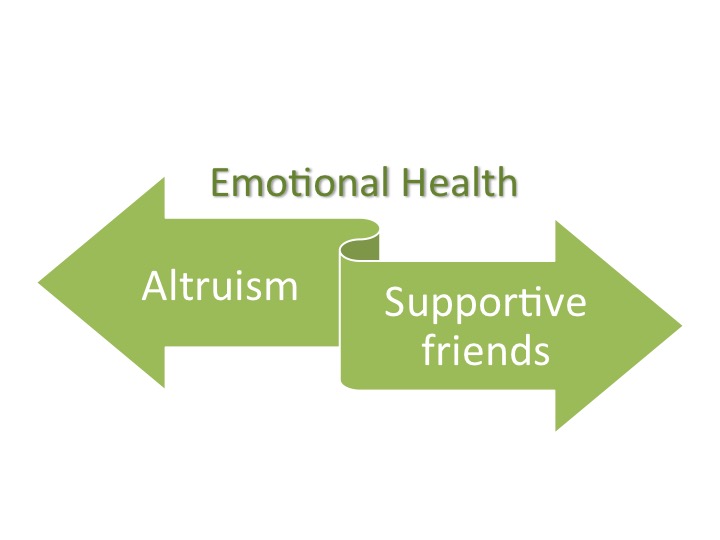
  • A desire to be giving toward others
  • Concern for others

As you can see, these are not things you are born with. They are skills and attitudes you can develop. They are choices you can make. They are best navigated with friends and supportive people around you.

Similarly, other researchers found that keys to overall health are:

  • Thinking kindly of people
  • Feeling optimistic
  • Supportive friends & family
  • Ability to bounce back
  • Making healthy choices
  • Being grateful for all you have

I found it interesting that the findings are so similar. Other studies have supported these important areas of emotional health. When you feel good, your thinking of more creative and flexible. You see problems with more possibilities and solutions.

So, I encourage you to take a personal assessment of your current emotional health. Consider the things that delight you and the things that upset you. Where can you incorporate more of the listed items that are shared among people with more emotional health?

Medications can help on a short-term basis when circumstances have you so upset you can’t function or sleep. Long-term emotional health, however, is gained more through self-insight, positive choices, and self-development.

If you would like citations for the studies mentioned or have any questions about the role of your emotional health on your overall health, contact us at www.medsmash.com.

(Note, severe abuse, neglect, and trauma are much different than daily negative situations. This blog is not intended to cover the health effects of these experiences that usually involve severe mental illness of the perpetrator.)

BIBLICAL APPLICATION

Our emotions can guide so many of our behaviors, especially if we don’t have an anchor of hope. Resilience is the result of knowing God’s love and mercy never fail. No matter the situation, you are not alone, and you have the ultimate resource walking with you.

Throughout the Bible we are assured that bad things will happen. Since sin entered the world, this has been a basic fact. Throughout the Bible we are assured there is hope and joy that can get us through any situation.

Philippians 4:6-7 ESV

Do not be anxious about anything, but in everything by prayer and supplication with thanksgiving let your requests be made known to God. And the peace of God, which surpasses all understanding, will guard your hearts and your minds in Christ Jesus.

Joshua 1:9 ESV

Have I not commanded you? Be strong and courageous. Do not be frightened, and do not be dismayed, for the Lord your God is with you wherever you go.”

As we go through difficult times, either big life-altering events or short bursts of anger or frustration, we are encouraged to give those over to God. We aren’t meant to figure it all out or deal with it on our own. Actually, when we do try to handle things ourselves, we often get into trouble.

Proverbs 29:11 ESV

A fool gives full vent to his spirit, but a wise man quietly holds it back.

Proverbs 15:18 ESV

A hot-tempered man stirs up strife, but he who is slow to anger quiets contention.

A focus on God can help calm our storms. Once we learn to navigate the storms, we can be a better support to those around us.

Romans 12:2 ESV

Do not be conformed to this world, but be transformed by the renewal of your mind, that by testing you may discern what is the will of God, what is good and acceptable and perfect.

Romans 12:15 ESV

Rejoice with those who rejoice, weep with those who weep.

Proverbs 15:13 ESV

A glad heart makes a cheerful face, but by sorrow of heart the spirit is crushed.

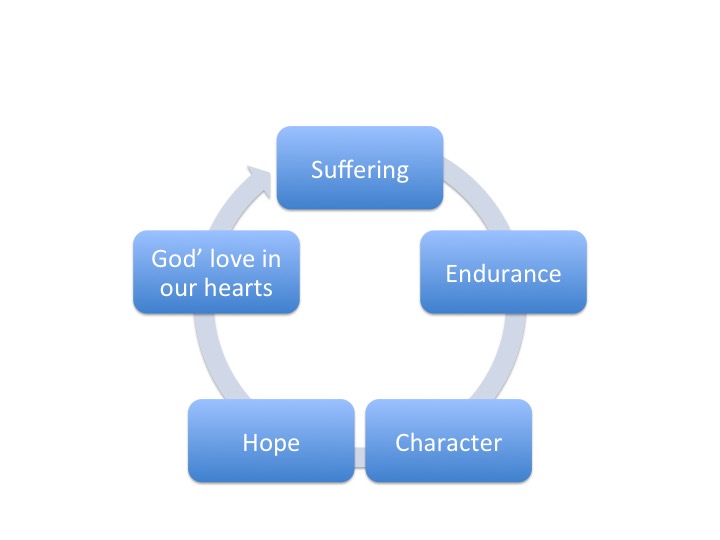
I love this visual of Romans 5:3-5. With each time around the circle, we grow in hope and joy and the certainty of God’s love. This can then spill over to others.

Slide1Blessings,

Michelle

Spiritual health

Four Components of True Health – Spiritual Health

Spiritual health
Spirituality is a key component of total health

Spiritual health is the third of the four components of health. True health requires health in all four components. Over the last two weeks we covered physical and mental health. Next week we will cover the fourth component.

This blog is being released on the most important holiday of the Christian religion. It seems timely to talk about spirituality and why and how it is linked with your health.

Researchers have studied what are the differences between the most healthy and the least health people in our world. Certainly some of the factors are:

  • our genes
  • our environment
  • our accessibility to healthcare
  • our social system

These are more tangible, or objective, types of factors. We can define and measure them. But, these measures alone can’t explain all of the differences in our health.

A component that many researches have included is the concept of religion. Most studies I have found don’t differentiate which religion. They just look at whether the person identifies with a religion. Studies have found that identifying with religion is associated with better health.

Why would spiritual health and religion be associated with better health?

One potential reason religion could enhance your health could be belief in a higher power. There is assurance and hope in having someone/something overseeing your life. In some religions there is a direct relationship with the higher power. In others, a common belief system provides a group to whom you can belong and share those beliefs.

Religion has also been credited with providing a way of coping with life events. In some religions, God can be asked for help. Some studies have demonstrated a positive benefit of prayer on health. In others, the care of one another by people within a religious group benefits health outcomes.

The sense of belonging, the social opportunities, and the structure of religion appear to add to enhanced health. In addition, religion provides additional opportunities for volunteering. Those who volunteer have been found to be healthier. Of course, there are non-religious ways to volunteer. But, some of the studies found those with a religious affiliation to be more likely to volunteer.

Altruism is one of the attributes associated with improved health. Altruism is defined as, “feelings and behaviors that show a desire to help other people and a lack of selfishness” (Merriam-Webster definition). Some of the major religions – Judaism, Christianity, and Islam – encourage helping others. Then, God will reward such actions. Either way, people who think about and do positive things for other people are healthier.

There is growing interest in studying this. There is now evidence to support the crucial role of spirituality in overall health. Stay tuned to see how this information will be incorporated in to our healthcare system.

There are no medications for spirituality. So, you might wonder why Meds MASH would be posting about this topic. But, it is a core part of overall health. So in the interest of completeness, spirituality is an important topic.

For a list of references used in the writing of this blog, please contact us at www.medsmash.com.

BIBLICAL APPLICATION

Happy holiest of days! Our Savior lives!

The sun has been shining, the days are warming, my favorite color of spring green is starting to turn up everywhere, flowers are blooming! This season makes me so happy!

Have you noticed how circumstances can really improve your mood and make you happy?

I’ve injured my leg (again) and will likely need surgery. Insurance has made the treatment process incredibly long. How frustrating. Have you noticed how circumstances can dampen your mood?

How much is your life tossed up and down by circumstances? The roller coaster ride of the ups and down can be exhausting!

You can’t keep life circumstances from happening. Good things and bad things happen to everyone. There is no avoiding it. But, you have the ultimate hedge of protection around you like a solid house that protects you in a hurricane. No matter what happens in your life, because of what happened Holy Week, you have a source of hope and peace.

Jesus was betrayed by one of his closest friends. Many people worked together behind his back to find a way to destroy him. He was slandered. He experienced the ultimate defamation of his character. He was accused of crimes he never committed. He was humiliated. He was physically abused beyond recognition. He was tortured. Many who had supported him either abandoned him or turned against him. The official who could have protected him did not. He was murdered in public with additional humiliations in the worst, most painful way known to people at that time.

He was completely without sin. He did nothing wrong. He is the only person to ever walk the earth who could claim that.

So, why did he willingly go to Jerusalem on Palm Sunday knowing full well this was what would happen by the end of the week?

Romans 14:9 ESV

For to this end Christ died and lived again, that he might be Lord both of the dead and of the living.

Isaiah 53:5 ESV

But he was wounded for our transgressions; he was crushed for our iniquities; upon him was the chastisement that brought us peace, and with his stripes we are healed.

John 3:16 ESV

“For God so loved the world, that he gave his only Son, that whoever believes in him should not perish but have eternal life.

YOU are the reason Jesus endured all of this. His love for YOU. Your sins. All that separated you from God due your weaknesses is now gone. Because Jesus died for YOU, you have the promise of eternal life! There is no better gift anyone could ever give you.

Jesus did not remain in the grave. After three days He came back to life! Again, all for YOU!

John 11:25 ESV

Jesus said to her, “I am the resurrection and the life. Whoever believes in me, though he die, yet shall he live,

John 6:40 ESV

For this is the will of my Father, that everyone who looks on the Son and believes in him should have eternal life, and I will raise him up on the last day.”

1 Corinthians 6:14 ESV

And God raised the Lord and will also raise us up by his power.

May you be richly blessed as you ponder this love that can protect you from any storm.

Michelle

Image source: colinsclipart.com

Four Components of True Health – Mental Health

03_vascular_lg
Mental health is one of four components of total health

Mental health is the second of the four components of health. True health requires health in all four components. Last week we covered physical health. Over the next two weeks we will talk about each of the others separately.

Mental health is getting more attention as an essential component of health.  It requires a health system of diagnosis, treatment, and management similar to physical health. Insurance has historically not provided as much coverage for mental health compared with physical. But, finally, that is changing in a very positive way!

A new set of diagnostic standards was published in 2013. This update came after over 10 years of work to refine and identify diagnoses since the previous set of guidelines. The standards cover everything from neurodevelopment disorders (such as autism), schizophrenia, bipolar disorder, and depression to anxiety.  They also cover obsessive-compulsive disorder, trauma and stress-related disorders, eating disorders, substance abuse, phobias, and personality disorders.

There are several classes of medications that are prescribed to manage mental health conditions. Some examples include neuroleptics (also called antipsychotics), antidepressants, antianxiety medications, and some medications that are also used to treat seizures.

So what can you do to improve your mental health?

Consistency is very important with mental health. Accurate diagnosis is obviously also key.

These conditions are complex. They are true biologic medical conditions. Sometimes people think these conditions are something someone can control by him/herself. That can lead to shame, denial, or avoidance of these complex conditions. They DO require medical care.

From mentalhealth.gov:

Myth: Personality weakness or character flaws cause mental health problems. People with mental health problems can snap out of it if they try hard enough.

Fact: Mental health problems have nothing to do with being lazy or weak and many people need help to get better. Many factors contribute to mental health problems, including:

  • Biological factors, such as genes, physical illness, injury, or brain chemistry
  • Life experiences, such as trauma or a history of abuse
  • Family history of mental health problems

People with mental health problems can get better and many recover completely.

Counseling is often an essential component of care for these conditions. Qualified counselors listen, coach, and strategize. They can also help diagnose and participate in therapy decisions. They can educate and work with the person with the  condition and with all family and caregivers, as approved by the patient.

So mental health conditions are medical conditions just like cancer and diabetes are medical conditions. They are treated with counseling, procedures, and medications. Many require lifetime management (versus one time treatment). So, relationships with the healthcare team are important. You want providers with whom you are comfortable and can be open.

Note, for many mental health conditions, especially depression, medication needs to be taken every day for up to two months to see the full benefit. The medication very gradually changes transmitters in the brain back to healthy amounts. So, please be patient and take the medicine faithfully.

For more information about mental health, please contact us at www.medsmash.com.

BIBLICAL APPLICATION

Mental illness impacts people of faith just as it impacts people who have never heard about Christ. So, can God use mental illness for His glory? Can anything good come from struggling with mental illness?

I believe God can use any of our weaknesses, any of our conditions, to His glory. Nothing is beyond His ability.

John 16:33 ESV

I have said these things to you, that in me you may have peace. In the world you will have tribulation. But take heart; I have overcome the world.

2 Corinthians 12:9 ESV

But he said to me, “My grace is sufficient for you, for my power is made perfect in weakness.” Therefore I will boast all the more gladly of my weaknesses, so that the power of Christ may rest upon me.

Luke 1:37 ESV

For nothing will be impossible with God.

In the Bible, mental illness is sometimes referred to as having an ‘afflicting demon’. Understanding of mental health continues to grow. The medical/biological understanding of these conditions is much better understood than they were in Biblical days, but there are still questions to be answered.

Matthew 4:24-25 The Message (MSG)

He also healed people of their diseases and of the bad effects of their bad lives. Word got around the entire Roman province of Syria. People brought anybody with an ailment, whether mental, emotional, or physical. Jesus healed them, one and all. More and more people came, the momentum gathering. Besides those from Galilee, crowds came from the “Ten Towns” across the lake, others up from Jerusalem and Judea, still others from across the Jordan.(emphasis mine)

The multiple components of total health – physical, mental, emotional, spiritual – are recognized throughout the Bible. Mental health conditions require treatment and must be addressed to reach a state of true health.

There is no shame. Again, these conditions have biological sources. We are called to love and support each other.   Education, understanding, and unconditional love can help us help each other find God’s purposes in each of our afflictions.

Blessings,

Michelle

Image Source:  National Institute on Aging; National Institutes of Health; U.S. Department of Health and Human Services

Four Components of True Health – Physical Health

ThinkstockPhotos-464212219
Physical health – one of four essential components of health

Physical health is the first of the four components of health. True health requires health in all four components. Over the next three weeks we will talk about each separately.

Physical health is the type that is usually thought of first when describing ‘health’. It relates to medical conditions, joint and muscle function, infections, bones, and organ systems. It is the primary reason we go to the doctor.

The main emphasis of health insurance has historically been physical health.

Most of the medications that are prescribed are for physical health. Medications for diabetes, high blood pressure, pain, asthma, etc. are prescribed to improve physical health.

Your physical health is often part of your decision-making. It is the main motivation to choose healthy foods, exercise, avoid smoking, and limit alcohol.

So what can you do to improve your physical health?

First, there are several things you can do to preserve your physical health. Prevention is key. To prevent heart disease and diabetes, diet and exercise are especially important. They help maintain a healthy weight. Lack of exercise and poor food choices lead to excess weight, which adds to risk for many medical conditions.

Avoid smoking. Quit if you smoke now. The negative effects on physical health are enormous.

Limit alcohol intake. An occasional drink is probably fine unless you are genetically at risk for alcoholism. Excess alcohol has many health risks.

If you have been diagnosed with a medical condition, be sure to ask plenty of questions to fully understand your diagnosis and treatment plan. Then, follow your treatment plan while keeping track of your response. Communicate your response and any medication side effects to your healthcare team.

If you have more than one medical condition and/or if you have more than one provider, keep everyone informed. You want healthcare providers who communicate with each other and take time to communicate with you. Each provider needs to know exactly what the others are doing.  Each also needs to know how you actually take each of your medications. It is only then that the safety of all your medications together can be assessed.

For more information about your physical health, contact us at www.medsmash.com.

BIBLICAL APPLICATION

We learn in Genesis we were made in God’s image. Each cell, each hair, each component is specially designed. If you’ve ever experienced the birth of a baby and watched it grow, you have seen the astounding complexities of the human body.

Physical health allows us to perform our daily tasks. It also allows us to pursue the plans to which God has called us. There are several verses throughout the Bible that pertain to health. Here are a few:

1 Corinthians 6:19-20 ESV

Or do you not know that your body is a temple of the Holy Spirit within you, whom you have from God? You are not your own, for you were bought with a price. So glorify God in your body.

1 Corinthians 3:17 ESV

If anyone destroys God’s temple, God will destroy him. For God’s temple is holy, and you are that temple.

1 Timothy 4:8 ESV

For while bodily training is of some value, godliness is of value in every way, as it holds promise for the present life and also for the life to come.

1 Corinthians 9:27 ESV

But I discipline my body and keep it under control, lest after preaching to others I myself should be disqualified.

3 John 1:2 ESV

Beloved, I pray that all may go well with you and that you may be in good health, as it goes well with your soul.

Consider the steps to maintain your health and the role your health plays in your response to God’s call for your life.

Blessings,

Michelle

When repetition causes pain – osteoarthritis

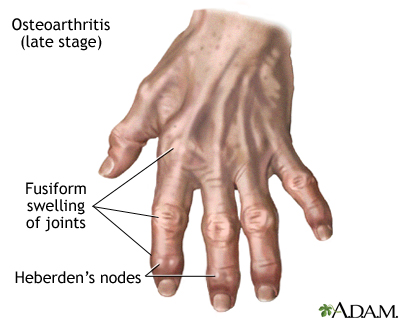
OA hand
Late stage hand osteoarthritis

Osteoarthritis (OA) is a very common and painful condition. One way to explain it is that the cushion, or cartilage, lining bones wears away leaving bone to wear on bone.

Some of the most common causes of osteoarthritis are:

  • Injury to the joint– e.g. sports or motor vehicle accident
  • Repetitive use of a joint
    • In your job
    • In hobbies
    • In sports
  • Being overweight

Currently, there is not a way to rebuild the cartilage that wears away. So, the goals of treatment are:

  • to maintain what cartilage is left,
  • avoid making it worse,
  • keep you doing what you need to do during your day
  • control pain

Occupational and physical therapists can help.  They are experts in helping you find new ways to perform tasks without making the joint worse. There are many tools that can help support painful joints such as knee braces and thumb splints.

Ways to manage osteoarthritis pain without medication include:

  • heat application to the painful joint
  • lose weight if overweight (especially helpful for foot, knee, and hip arthritis)
  • swim – less wear on the joint than land-based exercise
  • find new ways to do tasks that don’t wear on the joint

OSTEOARTHRITIS MEDICATION THERAPY

The number one, gold-standard therapy for OA is acetaminophen. (A common brand name is Tylenol). Acetaminophen can help manage the pain. It is most effective if it is taken regularly (two extra strength 500mg tablets three times daily). This works better than waiting for pain to get really bad then taking a dose.

Note, be sure to check with your doctor to make sure your liver is healthy. And, limit or avoid alcohol to further protect your liver while taking acetaminophen.

The other medications commonly used for OA are nonsteroidal anti-inflammatory drugs (NSAIDs) such as ibuprofen (brand names such as Motrin and Advil) and naproxen (brand name Aleve). These are also good for reducing arthritis pain. They can raise blood pressure, so avoid them if you have high blood pressure, heart failure, or a strong family history of heart attack. They can worsen kidney function, so talk with your doctor to be sure your kidneys are healthy. They can irritate your stomach, so always take them with food. Another option in this class of medicine is celecoxib (brand name Celebrex) that has less stomach irritation.  There are also topical versions that avoid some of the side effects.  You rub these onto the joint area that is in pain.

So, first and foremost, stop doing repetitive activities that are hurting your joint(s). Second, take steps to preserve the joint function you still have. Third, medication can help with the pain association with osteoarthritis. Be sure to discuss the pros and cons of the medication options with your doctor and/or with us.

For more information about osteoarthritis and treatment, contact us at www.medsmash.com.

BIBLICAL APPLICATION

Insanity: doing the same thing over and over again and expecting different results. Albert Einstein

Just as repetitive movement can worsen osteoarthritis, repetitive approaches to anything can ultimately lead to harm if those approaches are not productive.

  • In your spiritual life, how responsive are you to God’s call?
  • How much do you vary your Bible study?
  • What types of worship have you experienced?
  • How does your prayer life vary in the seasons of your life?

It is so easy to fall in to a rut. You are busy; daily tasks use up all of your time. Prayer becomes relegated to particular times or left out completely. Sunday worship becomes your primary connection to God. Fellowship with other believers only occurs walking in and out of church.

Paul has some ideas about the many ways to worship in his letter to the Colossians:

Colossians 3:14-17 ESV

And above all these put on love, which binds everything together in perfect harmony. And let the peace of Christ rule in your hearts, to which indeed you were called in one body. And be thankful. Let the word of Christ dwell in you richly, teaching and admonishing one another in all wisdom, singing psalms and hymns and spiritual songs, with thankfulness in your hearts to God. And whatever you do, in word or deed, do everything in the name of the Lord Jesus, giving thanks to God the Father through him.

I encourage you to get creative and deliberate in your spiritual life. God has so much to share with you as you let Him in. His joy, peace, and love can change everything!

Blessings,

Michelle

Image Source:  National Library of Medicine; National Institutes of Health; U.S. Department of Health and Human Services

Sugar, Pressure, and Lipids…Oh My! Metabolic Syndrome

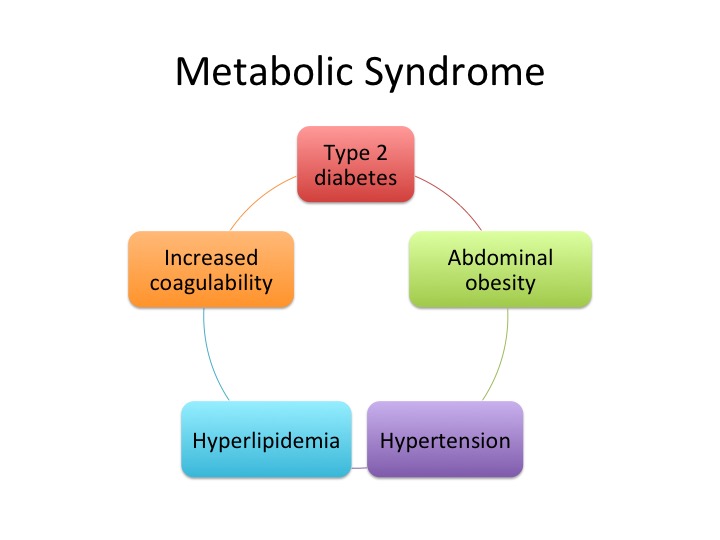
Slide1Do you have diabetes, or have you been told you have pre-diabetes? Are you overweight, especially around your midsection? Do you have high blood pressure? Do you have high cholesterol? Did you know they often go hand-in-hand? As a group they are called ‘metabolic syndrome’.

Metabolic Syndrome

This term describes a collection of medical conditions that each impacts the other. These conditions have many negative effects on your body. The primary risks have to do with your possibility of heart disease and stroke.

Risk factors

The biggest risk factor seems to be weight. Our population as a whole has been gaining weight over the last several years. As that has occurred, the number of people with diabetes has rapidly climbed. The number of people with metabolic syndrome has also climbed. Family history of high blood pressure, diabetes, heart disease, and/or high cholesterol also increases your risk of developing these conditions.

Treatment

No matter what medications are used, DIET and EXERCISE are key components of treatment. In particular, less fat, salt, sugar, carbohydrates, and overall calories can help you control this syndrome. Simple carbohydrates are foods like white bread, white pasta, sweets, honey, and fruits.

There have been many new types of medications to treat diabetes in recent years. This is great news if you have type 2 diabetes! The different types of medication help control your blood sugar in different ways. So, you might find that more than one medication is used.

The situation is similar with high blood pressure. There are several different types of medications to lower blood pressure.  These impact the blood pressure from different mechanisms. Using more than one can better lower blood pressure in some patients.

The best type of cholesterol medication depends on which parts of the lipid profile are to be treated. Which are selected is also impacted by liver function.

In addition to those medicines, often a low-dose aspirin is added to further lower risk for heart attack or stroke.

So, if you have metabolic syndrome, you are probably taking several different medications. You also hopefully monitor parts of the syndrome at home – blood pressure and/or blood sugars.

If you would like to better understand your medication regimen, please contact us at www.medsmash.com.

BIBLICAL APPLICATION

There are multiple different types of medications that approach the control of some medical conditions from different angles. Similarly, there are multiple ways to worship. In what ways do you worship the Lord?

Colossians 3:14-17 ESV

And above all these put on love, which binds everything together in perfect harmony. And let the peace of Christ rule in your hearts, to which indeed you were called in one body. And be thankful. Let the word of Christ dwell in you richly, teaching and admonishing one another in all wisdom, singing psalms and hymns and spiritual songs, with thankfulness in your hearts to God. And whatever you do, in word or deed, do everything in the name of the Lord Jesus, giving thanks to God the Father through him.

John 4:24 ESV

God is spirit, and those who worship him must worship in spirit and truth.”

Psalm 95:6 ESV

Oh come, let us worship and bow down; let us kneel before the Lord, our Maker!

Isaiah 12:5 ESV

“Sing praises to the Lord, for he has done gloriously; let this be made known in all the earth.

Worship is so much more than going to church on Sunday. God wants you to get to know Him and to worship in multiple ways. Fully experience the glory and joy of God!

Blessings,

Michelle