The Naughty List – Medications to AVOID when over age 65

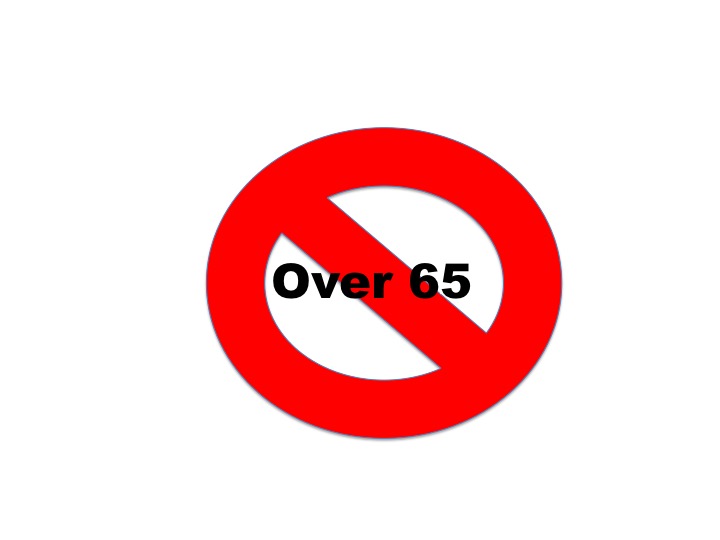
Slide1Did you know there is a list of medications to avoid over age 65? A group of physicians and other experts first published this type of list in 1991. Since that time, the list has been updated several times. The most recent update was released this October of 2015. The list is of medications for which there were safer, as effective options. Mark Beers is the physician who took the lead with these lists, so they are often called the ‘Beers List’.

Did you know that kidney function starts to decline – in the healthiest of people – around age 40? The liver also slows down as we age. The efficiency of the heart pumping is more than we need until about age 30, then it starts to slowly decline.

This is not all bad news. The body is designed to function for a very long time, even with the changes that occur with aging.

The more you keep yourself, and your body, healthy, the better you will feel for many years.

Getting back to the naughty list, these body changes slow how medications get out of the body. So often, a single dose will last longer in your 70’s than it did in your 30’s. This means some medications are dosed at a lower dose. Other medications are taken less often. And the Beer’s list medications should not be taken at all.

Beer’s list medications:

  • Anticholinergic medicines are very drying, increase risk of falls, increase confusion and constipation. A common example is diphenhydramine found in Benadryl, Tylenol PM, Aleve PM, and most over-the-counter sleep aids.
  • Certain blood pressure medicines that can make you very dizzy when you stand up – doxazosin, prazosin, terazosin, clonidine, methyldopa, nifedipine
  • Digoxin – if used, should be used a very low dose such as 0.125 mg daily
  • Some depression medicines like amitriptyline, imipramine, notriptyline, paroxetine have a lot of side effects. There are some effective antidepressants that are safe, have fewer anticholinergic (drying and confusion) effects, and less drop in blood pressure.
  • Benzodiazepines include alprazolam, lorazepam, oxazepam, temazepam, triazolam, clonazepam, diazepam. If you are taking one of these for anxiety, please talk with your doctor at your next visit about reducing and gradually coming off of this medication. They greatly increase your risk of falls, difficulty thinking, car crashes, and delirium.
  • Mineral oil. There are much safer remedies for constipation or any other use of mineral oil.
  • Meperidine is one of the most risky pain medications in older adults due to the slower ability of the body to get rid of it. Talk with your doctor about one of the many safer options.
  • Skeletal muscle relaxants include cyclobenzaprine, methocarbamol, orphenadrine, carisoprodol. These have anticholinergic (drying) effects, make you sleepy, and increase your risk of falls and fractures. In addition, they don’t have very good evidence that they are actually helpful.
  • Nonsteroidal pain medicines, especially indomethacin and ketorolac, can cause stomach bleeding and dizziness. Other common nonsteroidals are ibuprofen, Naprosyn, meloxicam, or etodolac.  If you take one of these, talk with your doctor about taking it with an acid blocking medication to help protect your stomach.

There are other medications on the list. Some are specifically hazardous if you have certain other medical conditions.

DO NOT STOP or change the way you take any medicine without first talking with your doctor.

This is a long list. Please discuss this with your doctor if you are taking any of these medications.

Or, please contact us at www.medsmash.com. We are experts in medications for adults over age 60. We can explain the list and any hazards in your medication list to you. Then, we can work with your doctors to make safer changes.

BIBLICAL APPLICATION

Here are two key ‘Nice Lists’. In these times of holiday activities and worldwide turbulence, I hope these bring hope and joy. The Bible says these are to help us glorify our God in Heaven.

THE FRUIT OF THE SPIRIT

Galations 4:22-23a ESV

But the fruit of the Spirit is love, joy, peace, patience, kindness, goodness, faithfulness, gentleness, self-control

THE BEATTITUDES

Matthew 5:3-12 ESV

“Blessed are the poor in spirit, for theirs is the kingdom of heaven.

“Blessed are those who mourn, for they shall be comforted.

“Blessed are the meek, for they shall inherit the earth.

“Blessed are those who hunger and thirst for righteousness, for they shall be satisfied.

“Blessed are the merciful, for they shall receive mercy.

“Blessed are the pure in heart, for they shall see God.

“Blessed are the peacemakers, for they shall be called sons[a] of God.

10 “Blessed are those who are persecuted for righteousness’ sake, for theirs is the kingdom of heaven.

11 “Blessed are you when others revile you and persecute you and utter all kinds of evil against you falsely on my account. 12 Rejoice and be glad, for your reward is great in heaven, for so they persecuted the prophets who were before you.

Some of the greatest gifts of the season can be love, tolerance, patience, and peace.

I will be praying for each of these for each of us.

Blessings,

Michelle
Antibiotic Resistance – REALLY, you should take them all

meds and bottleWe are coming into infection season. Colds, the flu, bronchitis, sinus infections, ear infections, pneumonia, and more seem to occur more often as the we stay inside in the colder weather.

Should all infections be treated with an antibiotic? NO

If your infection is from a virus then an antibiotic will provide NO HELP.

If your infection is mild, and your immune system is strong, you can often fight the infection without an antibiotic.

If you do require an antibiotic, have you ever been tempted to take it until you feel better then stop and save the rest for next time? DON’T DO IT!

If you take nothing else from this blog, please take your entire course of antibiotics.

Antibiotics can either weaken an infection until your body’s immune system can completely get rid of it or kill the bacteria. Either way, if the antibiotic is stopped once most of the bacteria are weak or killed, then those few bacteria that are not weak or killed can come back. When they do come back, they can also change just enough that the antibiotic will no longer work.

Antibiotic resistance, when bacteria stop responding to a particular antibiotic, is dangerous. It requires more advanced antibiotics which have more side effects and have a broader effect. Then, if resistance develops to those (usually when the full course is not taken), then even more advanced antibiotics are needed.

When this happens too much you can become resistant to many antibiotics. Also, when this happens over time, entire communities can get strains of bacteria that don’t respond to the usual antibiotics.

I share this to beg you to take every last dose of your antibiotics if you need them this year.

To help you avoid infections, please wash your hands frequently. Especially when you are out in public touching door handles, shopping cart handles, restaurant tables and chairs, etc, you are increasing your risk of picking up a virus or bacteria. When your hands dirty, avoid touching your face, mouth, eyes, and nose.

Have a healthy fall and winter!

For more information about antibiotics and treatment for colds and flu,contact us at www.medsmash.com.

BIBLICAL APPLICATION

It is tempting with antibiotics to stop them once you feel better. But, when you do that, you run the risk of an even more difficult-to-treat infection.

The spiritual equivalent is taking partial doses of all God has to offer. Maybe you go to church once a week and occasionally read the Bible.

Your limited doses of spiritual time can give you glimpses of all of the wonder and glory and peace and joy that is yours in Christ, but not the full view.

Galatians 5:22-23 ESV

But the fruit of the Spirit is love, joy, peace, patience, kindness, goodness, faithfulness, gentleness, self-control; against such things there is no law.

John 14:17 ESV

Even the Spirit of truth, whom the world cannot receive, because it neither sees him nor knows him. You know him, for he dwells with you and will be in you.

Romans 14:17 ESV

For the kingdom of God is not a matter of eating and drinking but of righteousness and peace and joy in the Holy Spirit.

Matthew 5:6 ESV

“Blessed are those who hunger and thirst for righteousness, for they shall be satisfied.”

Putting Christ first in your life, taking full doses of all He has to offer you, will lead to joy and peace beyond what you can imagine.

Little doses give glimpses. Full doses can change your life forever!

Blessings,

Michelle

Image credit: Centers for Disease Control Public Health Image Library

Medications to avoid when over age 65

Slide1

Since 1991 there has been a group of geriatricians and other physicians identifying medicines that might be inappropriate in people over age 65. Dr. Mark Beers originally led this group, so it is called the ‘Beers Criteria’. This list has been updated every few years. The most recent update was this month.

The medications on this list have SAFER and/or MORE EFFECTIVE options available.

Some of the reasons for medications to make the list include:

  • blood pressure lowering medicines that cause more dizziness and falls than other options
  • medicines with anticholinergic (very drying) effects that can have several negative effects including worsening memory
  • anxiety medicines that cause thinking/memory problems and falls
  • depression medicines that cause several problems
  • allergy medicines that cause drowsiness, driving accidents, and falls
  • medicines that are cleared from the body through the kidneys which slow down with age
  • medicines that are cleared from the body through the liver which can slow down with age
  • medicines that are ok at low doses but dangerous at high doses
  • medicines that can cause delirium
  • medicines that can worsen memory
  • medicines that can cause constipation
  • medicines that can make urination with prostate enlargement even more difficult

This year, for the first time, guidelines for safer options to replace these dangerous medicines were written. This is exciting news!

If you are over 65, please talk with your prescribers about these lists of potentially inappropriate medicines and these lists of safe alternatives.

For a personal evaluation of your medicines, please contact www.medsmash.com.

Biblical Application

In your daily walk with God, what are the most effective steps and activities? What does the Bible say you should do regularly?

And, where are the pitfalls? What should you avoid?

Just as the Beers List guides prescribers to select the most beneficial and safest medicines, the Bible guides our spiritual practices. Your heart, your tongue, your thoughts, your study, your time, and your actions are included in this guidance.

Romans 12:2 ESV

Do not be conformed to this world, but be transformed by the renewal of your mind, that by testing you may discern what is the will of God, what is good and acceptable and perfect.

Colossians 3:5-10 ESV

Put to death therefore what is earthly in you: sexual immorality, impurity, passion, evil desire, and covetousness, which is idolatry. On account of these the wrath of God is coming. In these you too once walked, when you were living in them. But now you must put them all away: anger, wrath, malice, slander, and obscene talk from your mouth. Do not lie to one another, seeing that you have put off the old self with its practices and have put on the new self, which is being renewed in knowledge after the image of its creator.

James 1:19-20 ESV

Know this, my beloved brothers: let every person be quick to hear, slow to speak, slow to anger; for the anger of man does not produce the righteousness of God.

Ephesians 4:32 ESV

Be kind to one another, tenderhearted, forgiving one another, as God in Christ forgave you.

James 1:22-27 ESV

But be doers of the word, and not hearers only, deceiving yourselves. For if anyone is a hearer of the word and not a doer, he is like a man who looks intently at his natural face in a mirror. For he looks at himself and goes away and at once forgets what he was like. But the one who looks into the perfect law, the law of liberty, and perseveres, being no hearer who forgets but a doer who acts, he will be blessed in his doing. If anyone thinks he is religious and does not bridle his tongue but deceives his heart, this person’s religion is worthless. Religion that is pure and undefiled before God, the Father, is this: to visit orphans and widows in their affliction, and to keep oneself unstained from the world.

There are certainly many more verses that guide our lives. These can be a start in developing a strategy to avoid inappropriate, dangerous behaviors and replace them with life-giving, holy options.

Blessings,

Michelle

Getting Better – It Takes More than a Prescription

ID-10093880Do you have a health issue? If so, you just need a prescription, and you’ll be all better, right?

Huey Lewis sang that he ‘wanted a new drug’. His proposed ‘new drug’ had no side effects and made him feel like he felt when falling in love.

Does that describe the prescriptions that you take?

Unfortunately it’s just not that easy.

All medications have side effects. Many medications have very specific instructions to use them in a way that leads to the best possible outcome.

But, we are all busy. Who has time for those pesky details? Does it REALLY matter if you take it with food or first thing in the morning when you brush your teeth? If you take two when you remember them vs one in the morning and one at night, that’s ok, right? Do you really have to breathe in some special way when you use an inhaler? You just squirt it in, right?

To get the most benefit from your medications – and – to minimize your side effects, these details are very important. Let’s explore some of the types of important details.

Timing – If your medication is to be taken more than one time per day that means it doesn’t last a full 24 hours. To keep the medication active in your body, you need to take it more than once. If you take it too close together, you will get more than a full dose while the two doses overlap. This can increase your side effects or even be dangerous because you have too much medication. If you miss a dose, you will have time with little or no medication in your system to treat your condition.

Food – Some medications will bind to medication in the stomach and not be absorbed. So, you will get no medication in your body if you take it with food. Other medications will make you sick to your stomach if you don’t take them with food. Food will decrease or prevent that side effect of feeling nauseous.

Finishing early – Some conditions require that the whole bottle/set of medications be taken. Often we think once we feel better we’ll just stop taking the medication. Sometimes we even keep the extra in case we need them another time. Some medications, like antibiotics, need to be taken until all are gone. You start feeling better when the bacteria is made weak, but it is not gone yet. If you stop the antibiotic when you feel better, the bacteria can get strong again. Often that same antibiotic won’t weaken the bacteria the next time, so you will need to be on an even stronger antibiotic.

Finishing too quickly – Other medications need to be gradually taken away rather than stopped all at once. Your body can’t take back over all at once if you have been taking these medications. Examples are beta blockers for high blood pressure and prednisone for inflammatory reactions. The gradual taper of these medications is essential to avoid severe side effects. (Note, this DOES NOT mean you are addicted.)

Technique – Inhalers, eye drops, ear drops, injections, patches, suppositories, and other medication forms can be difficult to use correctly. If you don’t use them just right, you won’t get the full benefit of the medication. This is a waste of money, and more importantly, won’t help you feel better. For some of these medications, correct use can even be the difference between getting better and calling 911.

So, I highly encourage you to pay attention to these details about your medications. If you see instructions you don’t understand or know their purpose, ask your pharmacist. Pharmacists are there to explain, demonstrate, and help you get the most from your medications.

For more information, contact us at www.medsmash.com

BIBLICAL APPLICATION

What are the quick fixes to Heaven? What is the way to assure entry then get on with the busy-ness of life?

First, God’s every desire for you to live eternally in Heaven is clear in the Bible. The basics of the path to God are below.

John 3:16 ESV

“For God so loved the world, that he gave his only Son, that whoever believes in him should not perish but have eternal life.

John 14:6 ESV

Jesus said to him, “I am the way, and the truth, and the life. No one comes to the Father except through me.

Ephesians 2:8-9 ESV

For by grace you have been saved through faith. And this is not your own doing; it is the gift of God, not a result of works, so that no one may boast.

Once you have had the amazing experience of finding God, and you have welcomed Him in to your life, what next?

Do you then work hard to earn God’s love? No, God loves you no matter what. His grace covers anything you do or do not do.

Do you then go on about your business now that this task is done?

Timing – Filling your life with God is an all-of-the-time, every day, all times of day opportunity. I don’t think any of us take advantage of this fully. Not a single one of us is perfect. But, God’s grace is always there for you!

Food – The Bible, the word of God, is your nourishment. This is not a one-time read that then goes on the shelf. Each time you read it, you will learn new things. God has so much to share with you!

Finishing early – It can be tempting to make this life-altering, life-filling decision to dedicate yourself to God. It can then be easy to move on to other things. God wants to be in close contact with you all of the time, good times and bad, busy times and leisure. I highly encourage you to experience this close daily walk with your God!

Jesus states there are two main rules for life for us.

Mark 12:30-31 ESV

And you shall love the Lord your God with all your heart and with all your soul and with all your mind and with all your strength.’  The second is this: ‘You shall love your neighbor as yourself.’ There is no other commandment greater than these.”

This prescription to walk with God is a daily, sometimes even minute-to-minute, dose that is always available. And the side effects are wonderful!

Blessings,

Michelle

Image courtesy of rakratchada torsap at FreeDigitalPhotos.net

Know before you decide

What is a tmedication-sliderhorough medication evaluation? Would you benefit from one? Don’t other people already
evaluate your medications on a regular basis? Do you worry about hurting someone’s feelings if there is a difference of opinion about your medication regimen?

You likely have several different healthcare providers – your primary care doctor, any nurse practitioners or physician assistants in that office, your specialist doctor(s), your local pharmacist, and maybe a chiropractor, physical therapist dietician, and others. Surely between all of them someone is providing you with a very thorough evaluation of your medications?

Do you take anything for a cold? Or a stomachache? Or to help you sleep? Or for pain?

Do you tell your healthcare providers about these things you take only once in awhile?

Do you take vitamins or supplements or herbal therapies that you select for yourself? Do you tell your healthcare providers about these?

Do you always take your medications at the same time every day? What do you do when you forget to take them? Do you take some of them only when you feel like you need them? Have you ever stopped taking a medication without telling your providers?

thorough medication evaluation will cover all of these things. Our research has shown that in 98% of visits there is at least one thing that you didn’t know about your medication that you really should know.

As a clinical pharmacist, I am looking at all of your prescribed medications and other substances you take to assure none of these nine problems exist:

  • Each dose is not too high (You have more side effects than needed or even have toxicity.)
  • Each dose is not too low (You take it but it doesn’t work for you.)
  • All conditions that should be treated with a medication are being treated with the best medication(s) based on current medical studies.
  • Each medication you take is actually necessary. (Sometimes there are medications that have been on your list for a long time but no one remembers why.)
  • No medications interact with each other making your health worse. Also, your diet and supplements don’t interact with your other medications or each other.
  • You are able to obtain and take each prescribed medication. (Sometimes pills are too big, inhalers are hard to use, eye drops are hard to get into the eye, or medications are too expensive or not covered by insurance.)
  • None of your medications for one condition make another condition worse.
  • You are able to safely take all of your medications. Allergies and medication intolerances will be reviewed and clarified for your healthcare team.
  • You are taking each medication at the optimal time in relation to food, other medications, and potential side effects.

Clinical pharmacists have extensive training specific to all aspects of medications and how they work., more than any other health professional. Often, having a clinical pharmacist working with the rest of your providers will further assure that all of your medication use is necessary, safe, and effective.

For more information about a thorough medication assessment, contact www.medsmash.com.

Biblical Application

Just like medication intended for good can sometimes actually cause harm, are there elements of our spiritual lives that can be more harmful than good?

There are many interpretations of the content of the Bible. There are many preachers and teachers and blogs and radio programs and television programs and articles written.

Are they all true and accurate?

How do you determine what to believe and what to implement in your life?

Jesus, Paul, John, and others warned us about false teachers and the importance of discernment. Well, that sounds good, but how do you actually do it?

First, here is what the Bible says.

1 John 4:1 (MSG)

My dear friends, don’t believe everything you hear. Carefully weigh and examine what people tell you. Not everyone who talks about God comes from God. There are a lot of lying preachers loose in the world.

John 7:24 ESV

Do not judge by appearances, but judge with right judgment.

Proverbs 2:1-5 ESV

My son, if you receive my words and treasure up my commandments with you, making your ear attentive to wisdom and inclining your heart to understanding; yes, if you call out for insight and raise your voice for understanding, if you seek it like silver and search for it as for hidden treasures, then you will understand the fear of the Lord and find the knowledge of God.

Discernment might sound difficult or only for those with advanced theological training, but the Bible encourages us to pray about it. When you hear or read something that you’re not sure about, pray and ask God to guide you. Jesus says that the Holy Spirit is with us at all times.

Matthew 28:20 ESV

Teaching them to observe all that I have commanded you. And behold, I am with you always, to the end of the age.

Joshua 1:9 ESV

Have I not commanded you? Be strong and courageous. Do not be frightened, and do not be dismayed, for the Lord your God is with you wherever you go.

(And there are several more such verses throughout the Old and New Testament).

Let God lead you with discernment and love.

Blessings,

Michelle