Use reflective statements to enhance communication and decrease conflict

Communicate Your Way to Better Health

Use reflective statements to enhance communication and decrease conflict
Communicate to decrease conflict and increase understanding using reflective statements

How do you handle conflict? For most of us the answer is, ‘not very well’. Conflict can raise your blood pressure, constrict your veins and arteries, and make your heart beat harder and faster.

Did you know that communication is NEARLY ALWAYS at the heart of conflict. As people, we miscommunicate on a regular basis. Part of what makes good communication so difficult is that it involves at least two people. Once is communicating and one is interpreting that communication. Let’s take a look at both important parts.

Communicate a consistent message

I was at a retreat this weekend where we played a game about consistent messaging. Think about a time when someone was talking with you and their message was not consistent. Their words said something that did not match their tone or their face or their body language. Imagine someone saying, ‘I love you’ with a grimace on their face and a mocking tone. Or picture someone saying, ‘So nice to meet you’ while glancing around the room looking for someone else. Has anyone ever tried to express anger with you then started laughing? It is hard to express anger while laughing. Someone was just telling me a story about a toddler rearranging a bunch of decorations and falling into a box headfirst with her feet sticking out of the top. The decoration was too heavy and pulled her over. This parent had to stifle giggles and get a picture before retrieving and correcting the toddler.

So, when you are communicating, carefully think about saying the same message with your words, your tone, your eye contact, your facial expression, and your body language. That will help avoid misinterpretation.

Check for understanding

When you are the one communicating, make sure the receiver actually understands what you are saying. It is ok to ask them to repeat it back. Or to ask what questions they have. If we assume the other person understood exactly what we were thinking and trying to communicate, we can often be disappointed. Think about the last time you thought someone understood and they did something completely different than what you asked.

If you are the listener, this is a critical step to assure you are understanding the message.

Reflective Statements

When you are the listener, one of the best techniques you can use is ‘reflective statements’. State back to the person communicating with you what you hear them saying. Put it in your own words. Here are some examples:

  • You are saying you are upset about _________ because _________.
  • You are asking me to _________________ and have it done by _________.
  • ___________ frustrates you when he/she ______________.
  • You want to ________________ before you agree to a hip surgery.
  • You heard that I ______________, and it has upset you.
  • Your son forgot to _______________, and not you don’t know what to do.

When you respond with a reflecting statement, you are making sure you understood the person’s message. It is a chance for them to clarify if you misunderstood. It is also a chance for them to feel heard and understood if you are correct.

Making sure you understand before taking any action, even before getting angry, and help avoid a lot of conflict.

If someone is upset or angry and respond also upset and angry, the situation escalates quickly. I have seen this happen where the two people don’t even realize they are saying the same thing. Neither is listening, they are just yelling. Now that will really get your blood pressure up!

I have found that FREQUENTLY, what I think I heard and what the person really intended were different. Especially when the topic is emotionally charged. It is our natural reaction to get defensive when someone comes at us angry. It is very hard to listen well in that state. So, a really deep breath and a calm reflecting statement can often help the situation calm back down. Sometimes when we are angry or frustrated we just want to vent. Once the venting is done, and the recipient reflects understanding, the situation doesn’t seem so bad.

Communicate with your Healthcare Team

These same techniques are very helpful when you communicate with your doctor. Sometimes the news we receive from our doctor can be upsetting. The words used in medicine are big and scary all by themselves. It can be hard to understand all of the technical information.

I highly encourage you to state back to your doctor what you just heard. Say it in your own words.   This will help the doctor know where to clarify. I have had many patients get upset by a medical term that was actually no big deal. It just sounded scary. My grandfather, after 40+ years of smoking, a heart attack, a stroke, and stomach ulcers quit smoking cold turkey. We had been trying to get him to quit for years. None of those scary medical issues made him quit. But, when he was diagnosed with hiatal hernia he quit on the spot. [Hiatal hernia is when the sphincter between the esophagus and the stomach can’t close all the way. This allows stomach acid to come back up giving you heartburn. For him, this was the mildest of his issues.] I ask him why. His answer, ‘That’s a really scary word.’ I was in pharmacy school at the time. I had all sorts of scary words I could have given him. Who knew that was all it would take to get him to quit.

So, I encourage use to be clear and consistent with your communication. And, ask clarifying questions and use reflective statements when you are receiving communication. Especially if it seems upsetting, make sure you really understand the message before you make any decisions. This could help you avoid a lot of conflict.

Your heart will thank you for managing conflict better and keeping your blood pressure down.

For more information about communication techniques for your health, please contact us at Meds MASH at 410-472-5078 or www.medsmash.com/contact.

BIBLICAL APPLICATION

When we react without first understanding, we often get ourselves into trouble. Throughout the Bible we see examples of people making bad assumptions followed by bad actions.

The people of Israel, after God had gotten them out of slavery and out of Egypt and led them through the desert supplying food and water and protection, still made bad assumptions. While Moses was on the mountain with God himself, they assumed he wasn’t coming back, so they made a golden calf to be their god.

Exodus 32:1 NIV

When the people saw that Moses was so long in coming down from the mountain, they gathered around Aaron and said, “Come, make us gods[a] who will go before us. As for this fellow Moses who brought us up out of Egypt, we don’t know what has happened to him.”

When Jesus was talking with his disciples about what was coming next for him, including his death, Peter jumped right in and disagreed.

Matthew 16:21-23 NIV

From that time on Jesus began to explain to his disciples that he must go to Jerusalem and suffer many things at the hands of the elders, the chief priests and the teachers of the law, and that he must be killed and on the third day be raised to life.

Peter took him aside and began to rebuke him. “Never, Lord!” he said. “This shall never happen to you!”

Jesus turned and said to Peter, “Get behind me, Satan! You are a stumbling block to me; you do not have in mind the concerns of God, but merely human concerns.”

In the bible we are also told to expect miscommunication in the future. There will be false prophets and all sorts of misinformation.

Matthew 7:15 ESV

“Beware of false prophets, who come to you in sheep’s clothing but inwardly are ravenous wolves.

1 John 4:1 ESV

Beloved, do not believe every spirit, but test the spirits to see whether they are from God, for many false prophets have gone out into the world.

We are called to be discerning. Ask questions. Get the full story. Make sure you understand and that what you hear matches the messages of the Bible.

I feel better when I read this passage. There will be no doubt when Jesus returns. Other people can claim what they want. I won’t believe it until it is this obvious:

Matthew 24:29-31 ESV

The Coming of the Son of Man

“Immediately after the tribulation of those days the sun will be darkened, and the moon will not give its light, and the stars will fall from heaven, and the powers of the heavens will be shaken. Then will appear in heaven the sign of the Son of Man, and then all the tribes of the earth will mourn, and they will see the Son of Man coming on the clouds of heaven with power and great glory. And he will send out his angels with a loud trumpet call, and they will gather his elect from the four winds, from one end of heaven to the other.

That doesn’t sound too subtle. So, until it is extremely obvious and visible to all of creation, let’s not fall for false messages.

Blessings,

Michelle
 

Peace

Peace, Joy, and Health – What is the Link?

Peace
Peace and Joy can improve your health this holiday season

Merry Christmas! Happy Hanukkah! Happy Holidays! For many this is a season of wonder, excitement, friends, and family. It is a time of joy and celebration. The comforts of the season, and for many, the reasons for the season, are a source of peace.

Then, for others, this is a difficult season. It can be a reminder of loss, a lonely time, or a negative experience. I am regularly horrified at how people can hurt people. And hurt people tend to hurt people. It is a devastating trend.

Hurt and Health

The obvious connection between peace and health pertains to war. I am happy to see survivors finally being moved to safety away from Aleppo. War is definitely hazardous to health. Aleppo has been an example of how horrible things can get in the midst of war.

Conflict, abuse, hurtful words, neglect, oppression, and bullying are bad for your health, too. Anxiety, depression, and loss of hope are some common themes.

These cycles are hard to break. It can be challenging to find the hope.

I have seen in MANY patients that when this hurt is kept inside, it DOES come out. It can come out as depression, social anxiety, avoidance of people, and very often pain.

Peace and Health

Finding peace in life doesn’t only happen when things are perfect. Name the times in your life that absolutely everything was perfect. I’ll be surprised if you can find any at all. Rarely if ever are you in a place where there is absolutely no hurt, no mess, and all is good. So how do you ever find peace?

I have had the privilege of knowing many people, including many patients, who have found peace in spite of very turbulent events in their life.

Finding faith, meaning, and peace has been shown to improve quality of life in people with cancer. Some people bring these qualities into their cancer experience. Others find it in the midst of their cancer. I believe if this is true in cancer, it will be true with other chronic illnesses as well.

Another link is the association between giving to others and finding joy for yourself. Altruism and giving are linked with improved health. We often associate happiness with getting gifts. Now, it appears you will find even more joy if you focus on the giving of the season. Who could benefit from your giving today?

So, on this holiday weekend, seeking your source of peace and joy can actually improve your health. You physical, mental, emotional, and spiritual health will all benefit.

For more information about the health benefits of finding peace in the midst of life, contact us at 410-472-5078 or www.medsmash.com/contact.

BIBLICAL APPLICATION

I know a lot of Christians who struggle to find the peace and joy of Christmas. The busy-ness, stress, expectations, obligations, traffic, and events can be overwhelming.

None of that sounds like peace.

The birth of Jesus wasn’t surrounded by shopping, parties, pressure, or obligations. There might have been some traffic with the census.   🙂

The songs like ‘O, Holy Night’, ‘Silent Night’, and ‘It Came Upon a Midnight Clear’ paint a peaceful, serene event. The rich and famous were not present. The finest china and silver were not set in a well-decorated setting. No one compared value of gifts given and received.

Peace was mentioned to the very first people told about his birth.

Luke 2:14 ESV

“Glory to God in the highest, and on earth peace among those with whom he is pleased!”

Jesus had several messages about peace during his ministry.

John 16:33 ESV

I have said these things to you, that in me you may have peace. In the world you will have tribulation. But take heart; I have overcome the world.”

John 14:27 ESV

Peace I leave with you; my peace I give to you. Not as the world gives do I give to you. Let not your hearts be troubled, neither let them be afraid.

Jesus’ brother James understood the types of things that lead to our stress and frustration at Christmas.

James 4:2-3 ESV

You desire and do not have, so you murder. You covet and cannot obtain, so you fight and quarrel. You do not have, because you do not ask. You ask and do not receive, because you ask wrongly, to spend it on your passions.

Paul tells us what we should do instead.

Galatians 5:22 ESV

But the fruit of the Spirit is love, joy, peace, patience, kindness, goodness, faithfulness,

Jesus demonstrated this kind of life. Christmas is a time of love, joy, peace, patience, kindness, and goodness. How delightful if we can stay focused on these principles as we celebrate with our loved ones.

I pray Paul’s blessing for you and your family this blessed Christmas.

Romans 15:13 ESV

May the God of hope fill you with all joy and peace in believing, so that by the power of the Holy Spirit you may abound in hope.

Blessings,

Michelle

Thanksgiving – Gratitude keeping you Healthy

thanksgiving-14-grab
A grateful attitude can improve your outlook and your health!

Gratitude, grateful, thankful, thanksgiving, appreciation

What do these words mean to you? What role do they play in your everyday life?

Wow, I am amazed how much information is available on this important link between gratitude and health. Just search for these two terms and see what all you will find.

What is gratitude?

This is being aware of all of the good things in your life. And it is being thankful for those things. Have you considered being grateful for:

  • A safe place to sleep
  • Food to eat
  • Clothes to cover yourself
  • Having a friend to call
  • Your job – current or past
  • A beautiful day

This simple awareness of and being thankful for these ‘little’ things can boost your health.

Note, it doesn’t have to be the biggest house or the softest bed or the tastiest food or the latest fashion clothing to be grateful. Gratitude focuses on what you have – all of the good things – rather than what you don’t have.

Expressing gratitude can:

  • Boost your spirits and sense of well-being
  • Boost your immune system making you less likely to get sick
  • Decrease your chances of heart disease
  • Improve your performance (grades, work productivity, concentration)
  • Bust your stress

There are many ways you can make gratitude part of your life. Here are a few recommended in a Harvard Mental Health newsletter:

  • Write a thank-you note
  • Go up and thank someone
  • Keep a gratitude journal
  • Pray
  • Meditate
  • Keep a list of your thanks = count your blessings

See your day and your health improve by focusing on the positive.

Even therapy for mood disorders and approaches to negative thinking know this truth. I am quoting this from Rick Warren, “When you change the way you think, it changes the way you feel. And when you change the way you feel, it changes the way you act.”

On this Independence Day weekend, as a country, we have much reason for gratitude!

For more information on gratitude and health, contact us at www.medsmash.com.

BIBLICAL APPLICATION

We have so many reasons to be grateful!

Have you ever been in a ‘funk’ having a bad day and then remembered to be grateful? I have done this so many times. When all looks dark and gloomy, make yourself think about all of the things that are good and right.

1 Thessalonians 5:18 ESV

Give thanks in all circumstances; for this is the will of God in Christ Jesus for you.

I’ll quickly admit I don’t always think to do this. I stay in that dark place far too long. Later, once I’m out I realize I had the ‘magic potion’ to leave that darkness behind. It was given to us by Christ when he died to erase our sins. It was given to us by God who maintained His love and focus on the good in the Jews through centuries of missteps (just as we live a series of missteps).

Lamentations 3:23 ESV

They are new every morning; great is your faithfulness.

I don’t even know where to begin selecting Bible verses to draw us closer to the benefits of gratitude. There are so many!!!

Psalm 118:24 ESV

This is the day that the Lord has made; let us rejoice and be glad in it.

Colossians 3:17 ESV

And whatever you do, in word or deed, do everything in the name of the Lord Jesus, giving thanks to God the Father through him.

Psalm 136:1 ESV

Give thanks to the Lord, for he is good, for his steadfast love endures forever.

Ephesians 1:16 ESV

I do not cease to give thanks for you, remembering you in my prayers,

James 1:17 ESV

Every good gift and every perfect gift is from above, coming down from the Father of lights with whom there is no variation or shadow due to change.

I feel energized, positive, and excited just reading these verses full of hope and promise! I am thankful for each person who takes the time to read this. May you be blessed by these assurances from God!

I pray you can stay focused on the many good things in your life this week and that can keep you out of the dark, gloomy places.

Blessings,

Michelle


Quality of Life – your attitude and health

Slide1
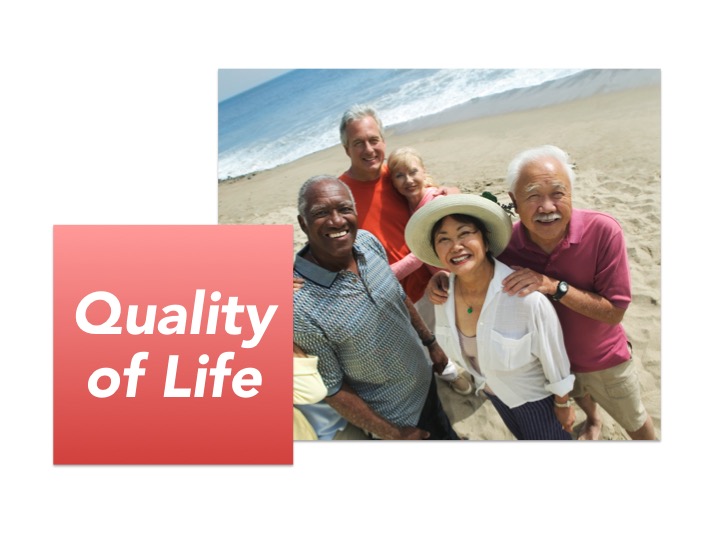
Your quality of life is shaped by your attitude, and that also impact your health.

Your quality of life is different than just living. If you are breathing and your heart is beating, then you are alive. Within that life there can be a HUGE range in your quality of life. Quality of life is your overall well-being or satisfaction. How is yours?

Being satisfied with your life encompasses many different factors. There is no one ‘right recipe’ for gloriously high quality of life. Your quality of life will likely change throughout your life with your changing circumstances. But, some people maintain a relatively good quality of life in spite of their circumstances. It is interesting that the factors some people would rate as important don’t actually lead to high quality of life scores.

  • For instance, many people would propose more money would increase their quality of life. Yet there are many miserable people who have a lot of money.
  • Many people would propose that better health is the key to quality of life. Yet there are sick/disabled/injured people with a wonderful quality of life and super healthy people who are miserable.
  • Some would list having many friends around as the key to quality of life. But there are some people who are at parties all of the time surrounded by friends who are miserable. There are others who lead very quiet lives with few friends who are very happy and content.

So what is the key to a magnificent quality of life? 

Your attitude

I have been very interested in the large range of responses people give when asked about their life satisfaction. I am not the only one interested in this. I have read many articles from all sorts of authors on the subject of health and attitude. If you are interested, to get started, just search for the terms ‘attitude and health’. I think you will be surprised by all that you find.

Will there be dark days when things are not going right? Will you lose loved ones? Can your life slip out of your control on more than one occasion? YES!

You then make a choice as to how you respond.   Your attitude matters.

Great example

Your physical health, mental health, emotional health, and spiritual health are all wrapped up in how you live your life. There will be many things that happen ‘to you’. But you alone decide how you respond. Here is a story I’ve read in many places that captures this truth:

A 92-year-old, petite, well-poised and proud lady, who is fully dressed each morning by eight o’clock, with her hair fashionably coifed and makeup perfectly applied, even though she is legally blind, moved to a nursing home today. Her husband of 70 years recently passed away, making the move necessary.

After many hours of waiting patiently in the lobby of the nursing home, she smiled sweetly when told her room was ready. As she maneuvered her walker to the elevator, I provided a visual description of her tiny room, including the eyelet sheets that had been hung on her window. “I love it,” she stated with the enthusiasm of an eight-year-old having just been presented with a new puppy.

“Mrs. Jones, you haven’t seen the room …. just wait.”

“That doesn’t have anything to do with it,” she replied. “Happiness is something you decide on ahead of time. Whether I like my room or not doesn’t depend on how the furniture is arranged, it’s how I arrange my mind. I already decided to love it. It’s a decision I make every morning when I wake up. I have a choice; I can spend the day in bed recounting the difficulty I have with the parts of my body that no longer work, or get out of bed and be thankful for the ones that do. Each day is a gift, and as long as my eyes open I’ll focus on the new day and all the happy memories I’ve stored away, just for this time in my life.”

She went on to explain, “Old age is like a bank account, you withdraw from what you’ve put in. So, my advice to you would be to deposit a lot of happiness in the bank account of memories. Thank you for your part in filling my Memory bank. I am still depositing.”

And with a smile, she said: “Remember the five simple rules to be happy:

  1. Free your heart from hatred.
  2. Free your mind from worries.
  3. Live simply.
  4. Give more.
  5. Expect less.

(Copied from this source.)

If you would like to know more about how your attitude impacts your quality of life and your health, please contact us at www.medsmash.com/contact.

BIBLICAL APPLICATION

How is your attitude? How easily do you become bitter, frustrated, angry, and discontented? Wow, doesn’t that happen so easily!!!!

The devotions that come to my e-mail every day from Pastor Rick Warren have been focused on envy for several days. What a nasty, cruel, pervasive worm is ENVY.

Doesn’t that negatively impact your day?

Paul outlines to Timothy many facets of living a God-centered life. And he repeatedly makes reference to the fulfillment, joy, and quality of life that comes with that kind of living.

1 Timothy 6:6-7 ESV

But godliness with contentment is great gain, for we brought nothing into the world, and we cannot take anything out of the world.

Paul tells Timothy about all of the pitfalls in this world. He even talks about how things will get worse the closer we get to the coming of Christ. So, finding contentment in the midst of so much negativity is not easy. It is a choice and an active pursuit. A pursuit that is well worth the effort.

1 Timothy 6:11-12 MSG

But you, Timothy, man of God: Run for your life from all this. Pursue a righteous life—a life of wonder, faith, love, steadiness, courtesy. Run hard and fast in the faith. Seize the eternal life, the life you were called to, the life you so fervently embraced in the presence of so many witnesses.

The following kind of advice from Paul makes me feel more at ease. I like the visual I get and the response from other people when this is put into action.

Ephesians 4:31-32 MSG

Make a clean break with all cutting, backbiting, profane talk. Be gentle with one another, sensitive. Forgive one another as quickly and thoroughly as God in Christ forgave you.

Now that you are on your road to a fabulous quality of life and true contentment no matter what is going on around you, here is some encouragement from Paul.

Ephesians 4:1-3 MSG

In light of all this, here’s what I want you to do. While I’m locked up here, a prisoner for the Master, I want you to get out there and walk—better yet, run!—on the road God called you to travel. I don’t want any of you sitting around on your hands. I don’t want anyone strolling off, down some path that goes nowhere. And mark that you do this with humility and discipline—not in fits and starts, but steadily, pouring yourselves out for each other in acts of love, alert at noticing differences and quick at mending fences.

Blessings,

Michelle


Hate and Health – Surviving These Days

Hate and ugliness can shape your life. It often comes out of nowhere. How you deal with it has a huge impact on your health.

You often can’t prevent it. You can’t predict. It hits you out of nowhere, so you can’t prepare for it. Yet, hate and ugliness touch most, if not all, of us at some time at least once.

What is the ugliest event that has occurred in your life? How have you been touched by hate? How did you handle it at the time? How have you handled it since?

As a nation and a global community we have seen and experienced acts of hate in so many forms recently. There is unrest stirred by fear, threats, and acts of terror. If this fear takes over in your life, your stress levels increase, your heart works harder, your risk of depression goes way up, anxiety increases, sleep is impaired, and your overall health declines.

Last week I talked about the health benefits of thinking about other people and their needs rather than focusing just on yourself. Altruism is very directly linked to improved health.

The other thing that was directly related to this particular medical mission to Jamaica from which I just returned was a tragic act of hate. The group with whom I worked, Teams for Medical Missions, www.t4mm.org, has been served for many years by long-term missionary couples in Jamaica. These couples have developed programs for children, programs for youth, programs to train ministers for local churches, built many houses, provided chronic and acute medical care by hosting medical mission teams, and so much more. They are Christian missionaries with a real passion for the people of Jamaica, in particular those in the more rural and underserved area of St. Mary Parish.

At the end of April, the two men of these couples were riding their motorcycles on some trails at the top of a mountain known to have beautiful views of the island. Two young men were in that area and heard the motorcycle motors. They decided to wait in a particular place where the motorcycles were sure to pass and ambush them. Both missionaries were killed. It was not a targeted act, just a needless act of hate.

This shook the entire island. The young men who had been actively served by events hosted by these couples for years now stay close to the wife who remains, and they have been staying at her house so she is not alone. The Prime Minister, head of island security, and many others have come to show their respect. Many people have expressed their sorrow in many tender ways.

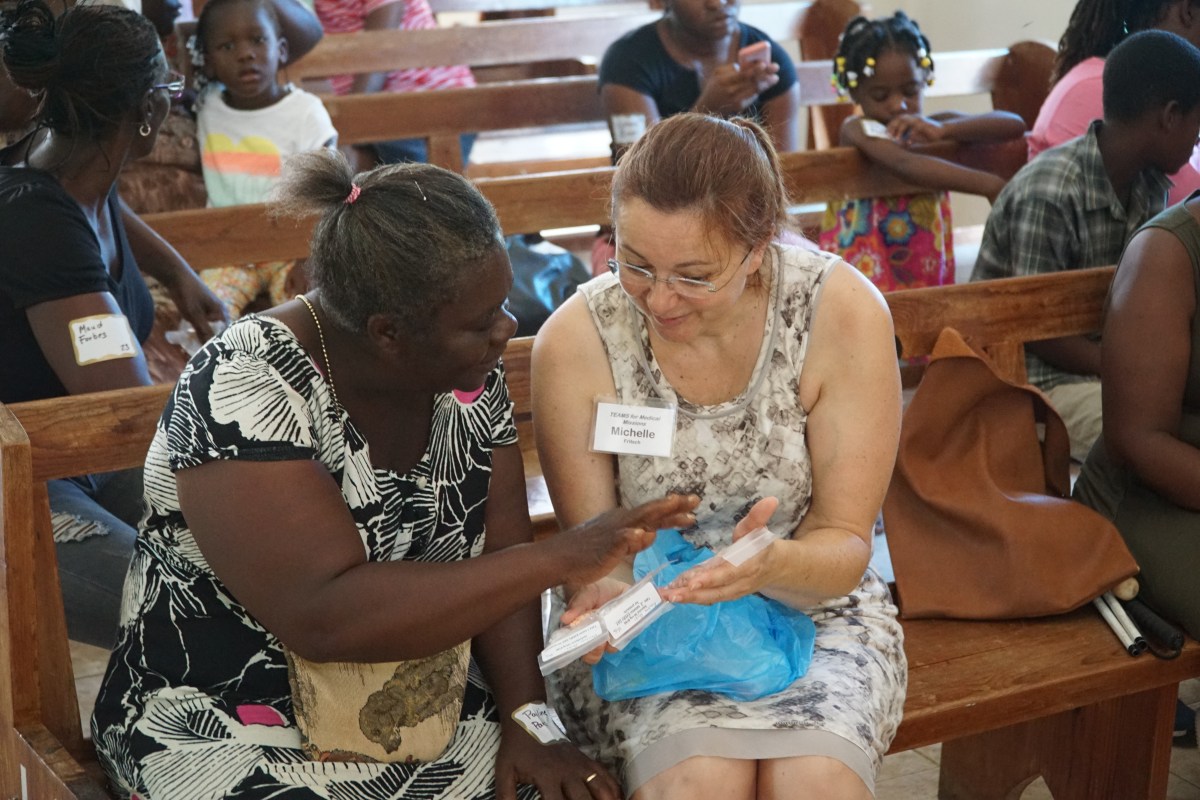
These medical teams typically provide care in provisional clinics in four local churches once a quarter. People are given a 3-month supply of medication for chronic illnesses, and acute illnesses are treated. Many people in that Parish rely on those clinics for their medical care. I had the humbling experience of seeing the love and gratitude shared with the missionary wife and all of the team members. (All had been on these teams several times and knew the slain missionaries well. This was a very emotional trip for all who were simultaneously grieving and expressing the desire to keep moving forward.) Many residents expressed surprise the clinics were continuing. There was an expectation the mission would fold and return to the US after these deaths.

In spite of these acts of hate, the hope continues. Teri, an incredibly strong and faithful woman is staying and planning what the future can hold in this completely new scenario. Her grief is real and raw. Yet, she is not curled in a corner refusing to move forward.

Health in the midst of hate

The elements that are associated with maintaining health in the midst of hate are:

  • friends to talk to
  • people who care about you
  • a sense of self-worth
  • forgiveness
  • security
  • conflict management skills
  • religion/spirituality

These have all been linked with improved health.

And I will add having a source of HOPE. I believe hope is powerful in the midst of difficulty.

So, knowing that hate and ugliness can strike at any time, the best you can prepare is to take care of yourself, cherish your friends and family, develop your conflict management skills, and forgive others. Find your personal source of hope.  Like Teri, find ways to find hope and stay positive and undeterred in the face of hate.

For more information about hate and health, contact us at www.medsmash.com/contact.

BIBLICAL APPLICATION

Hate, terror, oppression, racism, and other ugliness are all around. And, the Bible gives us indication this will only get worse.

2 Timothy 3:1-5 MSG

Don’t be naive. There are difficult times ahead. As the end approaches, people are going to be self-absorbed, money-hungry, self-promoting, stuck-up, profane, contemptuous of parents, crude, coarse, dog-eat-dog, unbending, slanderers, impulsively wild, savage, cynical, treacherous, ruthless, bloated windbags, addicted to lust, and allergic to God. They’ll make a show of religion, but behind the scenes they’re animals. Stay clear of these people.

I believe our role in these days is three fold:

  1. Be prepared

1 Peter 3:14-16 ESV

But even if you should suffer for righteousness’ sake, you will be blessed. Have no fear of them, nor be troubled, but in your hearts honor Christ the Lord as holy, always being prepared to make a defense to anyone who asks you for a reason for the hope that is in you; yet do it with gentleness and respect, having a good conscience, so that, when you are slandered, those who revile your good behavior in Christ may be put to shame.

  1. Be discerning

Matthew 24:4-8 MSG

Jesus said, “Watch out for doomsday deceivers. Many leaders are going to show up with forged identities, claiming, ‘I am Christ, the Messiah.’ They will deceive a lot of people. When reports come in of wars and rumored wars, keep your head and don’t panic. This is routine history; this is no sign of the end. Nation will fight nation and ruler fight ruler, over and over. Famines and earthquakes will occur in various places. This is nothing compared to what is coming.

  1. Be reaching out

Philippians 2:1-4 MSG

If you’ve gotten anything at all out of following Christ, if his love has made any difference in your life, if being in a community of the Spirit means anything to you, if you have a heart, if you care— then do me a favor: Agree with each other, love each other, be deep-spirited friends. Don’t push your way to the front; don’t sweet-talk your way to the top. Put yourself aside, and help others get ahead. Don’t be obsessed with getting your own advantage. Forget yourselves long enough to lend a helping hand.

And another version of my favorite verses of the year about hope!

Romans 5:3-5 MSG

There’s more to come: We continue to shout our praise even when we’re hemmed in with troubles, because we know how troubles can develop passionate patience in us, and how that patience in turn forges the tempered steel of virtue, keeping us alert for whatever God will do next. In alert expectancy such as this, we’re never left feeling shortchanged. Quite the contrary—we can’t round up enough containers to hold everything God generously pours into our lives through the Holy Spirit!

Blessings,

Michelle

To feel better – do for someone else – altruism

DSC01221
Altruism helps others and improves your health

I am just back from Jamaica, and I need to write about altruism. I was working with a mission group called TEAMS. You can learn more about them at www.t4mm.org. This medical mission group included 3 physicians, 1 nurse practitioner, 2 nurses, 3 pharmacists, 3 for registration, 2 to be with the children while their parents received care, and 2 to provide prayer and emotional support to those coming for care.

We were serving in St. Mary Parish, one of the poorest of the country. Clinic was held in churches in four different areas of the Parish. A Parish is similar to a state in the United States. Sheets draped over ropes often separated exam rooms for physicians. I counseled people about their medications as they sat among many other people. So this was not a private setting. But, excellent practitioners provided individualized care with great compassion.

Each clinic served a particular community. Within that community you could look out at all who were waiting and see the way they cared for each other. Babies would be passed around, older members would be assisted with steps, others in nearby seats would assist with understanding when I was struggling with the Patois (English with a thick dialect spoken very quickly).

It was very hot. Fans helped to stir the air. There was no running water. (I am so thankful for hand sanitizer). Some children had lice or scabies yet they waited patiently with their family. You know they had to be miserable between the heat and the intense itching. Some people had to wait from early morning until mid afternoon to be seen.

Yet, I didn’t hear one person complain. No one was demanding to know why their wait was so long. No one was complaining about the conditions. No one was asserting their needs or rights before someone else’s.

On the medical team, several people were struggling with their own health issues. One was on crutches due to a broken leg; one was recovering from bronchitis; one had a cold; several had various aches and pains. The age range of the care team was 22 to 82. Personally, my leg is still recovering from a ripped calf muscle, and my back has been hurting from all of the time that I was on crutches and a boot.

What struck me was how none of that mattered! Rather than thinking about our issues, we were completely focused on all of the people who had arrived to receive care. My leg did fine the entire week, even carrying heavy tables and boxes and fans to set up and take down clinic every day up steep hills and steps. I didn’t do my back stretches or sit around rubbing my back the way I do at home. That is because I wasn’t even thinking about my back.

Altruism

Altruism is, ‘feelings and behavior that show a desire to help other people and a lack of selfishness’ as defined by Merriam-Webster. I have read several articles linking altruism as a factor in happiness, health, and how long you live. In general, studies have shown that people who focus on others are happier and even live longer, in general. In 2005, Stephen Post published an article in the International Journal of Behavioral Medicine entitled, ‘Altruism, Happiness, and Health: It’s Good to be Good’. A quote from the article is, ‘The article concludes, with some caveats, that a strong correlation exists between the well-being, happiness, health, and longevity of people who are emotionally and behaviorally compassionate, so long as they are not overwhelmed by helping tasks.’

I have seen truth in this in many instances. While I was doing post-graduate training in Wisconsin a study demonstrated that home-bound elders who were in a calling circle.  Those who called to check on each other and remind each other to take medications felt less isolated and more valued. A project called the Eden Alternative long ago demonstrated the value in having daily purpose for everyone in a nursing home setting. Depending on ability level residents would care for a cat or dog, garden, water plants, feed birds, feed fish, or other activities. It was a huge success and continues today! Everyone needs to be needed. That sense of purpose and belonging plays a big role in overall health, including anxiety levels, pain, and depression.

When was the last time you focused on the needs of someone else? I encourage you to find a way each day this week to meet someone else’s needs. Some examples are to check on an older neighbor; take a meal to someone who recently had surgery; call a mom with small children to see if you can grab some things for her when you go to the grocery store and save her a trip.

For more information about how altruism is connected to health, contact us at www.medsmash.com/contact.

BIBLICAL APPLICATION

It is no surprise that altruism is linked to enhanced health. Jesus told us many times about the importance of selflessness.

John 15:12-14 ESV

“This is my commandment, that you love one another as I have loved you. Greater love has no one than this, that someone lay down his life for his friends. You are my friends if you do what I command you.”

Daily devotions, a lot of singing, and prayer with each community were cherished parts of this mission.  The care was among providers, among recipients, among those at the church helping with coordination, and among those providing protection.  My visual each day was being filled up with the Spirit to be completely poured out by the end of the day.

Some say Christian selflessness is not true altruism because we will be rewarded for such care and compassion. Ultimately, eternally a reward is waiting. But while here in this life, you might not see a reward. In fact, your giving isn’t meant to be for show.

Matthew 6:2-4 MSG

“When you do something for someone else, don’t call attention to yourself. You’ve seen them in action, I’m sure—‘playactors’ I call them—treating prayer meeting and street corner alike as a stage, acting compassionate as long as someone is watching, playing to the crowds. They get applause, true, but that’s all they get. When you help someone out, don’t think about how it looks. Just do it—quietly and unobtrusively. That is the way your God, who conceived you in love, working behind the scenes, helps you out.

Paul, Peter, Luke, John, and many other writers in the New Testament extol the virtues of giving to others.

Philippians 2:4 ESV

Let each of you look not only to his own interests, but also to the interests of others.

Luke 6:35 ESV

But love your enemies, and do good, and lend, expecting nothing in return, and your reward will be great, and you will be sons of the Most High, for he is kind to the ungrateful and the evil.

1 Peter 3:8 ESV

Finally, all of you, have unity of mind, sympathy, brotherly love, a tender heart, and a humble mind.

What can you do today to help someone else?

Proverbs 19:17 ESV

Whoever is generous to the poor lends to the Lord, and he will repay him for his deed.

Blessings,

Michelle

Your Medical Insurance – perfect?

Slide1
Does you medical insurance meet your needs? Is it a right?

You likely have medical insurance if you live in the United States. As of 2014, 90% of Americans did. When the 2015 data is released, that number is likely to go up a bit. It increased 2.9% from 2013 to 2014.

Does your insurance policy cover all that you want it to cover? Are all of the types of care you desire covered? Is your care ever delayed longer than anticipated due to insurance company authorization steps?

Our family just experienced this for the second time this year. It is very easy to get frustrated with insurance-related delays. Your doctor orders a test or procedure, and your insurance company takes time to authorize it.

There is a series of checks and balances between the healthcare system (doctors, clinics, hospitals, etc.), insurance companies, and lawyers. Sometimes it seems to tip, leaning more in one of these three directions, but each aspect is needed. Insurance provides you with coverage to maintain your health without losing all of your money due to an illness. It also provides checks and balances to assure cost-effective use of resources, such as procedures, surgeries, and devices. Lawyers help assure you have recourse if healthcare harms you rather than help you.

As a healthcare provider, I have seen numerous examples of excellent healthcare that has prevented or effectively treated a medical issue. I have seen unnecessary use of resources such as antibiotics or procedures. I have seen mistakes and the ramifications. I have seen heroic efforts by all involved to pull together, analyze mistakes, and create safety procedures to prevent such a mistake from happening again.

Is healthcare a right?

A question I annually ask students is whether healthcare is a right. It always leads to great discussion. If it is a right, then how should the system look that provides healthcare to the uninsured? Right now the emergency department (most cannot turn people away for lack of payment) is often the only source for uninsured people. That is a grotesquely expensive misuse of the specialized skills of emergency department personnel. But if you had no insurance, and your child was sick, what would you do? I know I would take my child to the emergency department if that were my only choice.

If it is not a right, then what should happen to uninsured people who are unable to access the healthcare system? Should we stand by and watch suffering and disease that could be treated? Could you walk down the street and just pass by someone suffering? (Do we already do that every day? If you live in Baltimore or another city of significant size, I know that you do.) It’s so easy to focus on ourselves and lose sight of those around us. I challenge you to get to know at least one uninsured person and hear his/her story. What should happen next time that person is injured in an accident or has trouble breathing due to asthma?

Is your medical insurance perfect?

I imaging your answer is ‘no.’ I know mine is far from perfect. But, I am so grateful to have insurance! I am grateful for the coverage I do have. Next week my daughter will get a sports physical to be sure she is healthy enough for her sport; my other daughter will be assessed for a nagging cough; my husband will see a surgeon to create a plan to treat his shoulder. All of these things are possible due to insurance. If all of that was out-of-pocket, my youngest would not play a sport, my middle child would continue to cough, and my husband would try to continue to function with one arm.

Perspective

Next weekend I leave on my first international medical mission trip. In the excellent materials I have been given to prepare, there is a statement that I will see more worms, scabies, and lice than I have seen in my entire career. Caring for the homeless of Baltimore, I have seen some of these things, but apparently not in the quantity I will see next week. How many times have you been treated for scabies, lice, or worms? Probably not many, if ever. We will also be caring for people with diabetes, hypertension, asthma, and the chronic conditions we treat in the affluent in the US. I am especially looking forward to analyzing the needs of a growing population over age 65.

I don’t claim to have the answers. But I do know there are several issues to be pondered. If you have ideas and opinions, please share them with me at www.medsmash.com/contact/.

BIBLICAL APPLICATION

There is no shortage of social issues that need to be addressed. Quality of insurance for the insured and what to do about the uninsured are certainly on that list.

Our pastoral team has been delivering a series based on Deuteronomy this summer. Here is a verse that very directly addresses these questions:

Deuteronomy 15:11 ESV

For there will never cease to be poor in the land. Therefore I command you, ‘You shall open wide your hand to your brother, to the needy and to the poor, in your land.’

This is from the Old Testament/Hebrew Bible, but wow, is it not as relevant today as it has ever been?

We are challenged in at least 60 verses to address these issues.

Proverbs 19:17 ESV

Whoever is generous to the poor lends to the Lord, and he will repay him for his deed.

1 John 3:17 ESV

But if anyone has the world’s goods and sees his brother in need, yet closes his heart against him, how does God’s love abide in him?

Luke 12:33 ESV

Sell your possessions, and give to the needy. Provide yourselves with moneybags that do not grow old, with a treasure in the heavens that does not fail, where no thief approaches and no moth destroys.

Proverbs 14:31 ESV

Whoever oppresses a poor man insults his Maker, but he who is generous to the needy honors him.

Proverbs 29:7 ESV

A righteous man knows the rights of the poor; a wicked man does not understand such knowledge.

I am not suggesting you go out and give everything you have right now. I am not suggesting you feel guilty about what you have.

I am suggesting you join me in contemplating these issues. They will certainly be in my face next week. So, I will be back to talk more about this as my own understanding and experience continue to grow.

Blessings,

Michelle

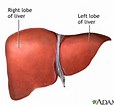
Your amazing liver

Your Amazing Liver – what does it do exactly?

Your amazing liver
Your liver breaks down medication and many other functions.

You have a liver. Do you have any idea what it does? I would venture a guess that most people don’t.

The liver sits in the upper right quadrant of your abdomen. When your doctor presses on your abdomen and puts fingers up under your ribs, that is what is being checked. Usually they won’t feel it or maybe just feel the very edge.

The liver has several functions:

  • Clotting factors in your blood are produced
  • Proteins in your blood are produced
  • Triglycerides and cholesterol are made
  • Stores vitamins
  • Removes toxins, such as ammonia, from the blood
  • Processes nutrients from our food
  • Regulates sugar in the blood
  • Metabolizes (breaks down) alcohol and medications

Of course it is the medication part that I am anxious to talk about.

What does the liver do to medication?

There are several types of enzymes in the liver.

These enzymes change the form of medications. They usually break medications down to a less active form. This also allows the medication to be processed and then to leave the body. If this slows down, then the medication stays in active form longer giving the medication a bigger effect and making it last longer.

Different medicines are broken down by different enzymes. Most of these enzymes are cytochrome P450 (CYP450)enzymes. There are several different CYP450 enzymes, each impacting different medications.

Some people have genetic differences that change those enzymes. For instance, a particular enzyme can be less active in some people based on their genes. This will make that medication more active, sometimes even toxic, for that person. It is becoming more common for people to be tested for any genetic changes that can help guide best medication use.

When there is more than one medication that is metabolized by the same enzyme that can change how those medications are broken down. This is where it really gets complicated. Some medications will induce the enzyme, or make it more effective. Others will inhibit the enzyme making it less effective. While others compete for the activity of the enzyme. These actions and interactions impact how well the medicine works and the amount of side effects it will have.

Even tobacco, some food, and herbs can impact the enzymes.

So, when your pharmacist is filling your prescription, there is SO MUCH more they are looking at than just getting the right number of tablets in to the bottle. The potential interactions need to be carefully screened each time any of your medicines are changed.

AND, this screening can only be complete if your pharmacist also knows what herbs, vitamins, over-the-counter, and other substances you take.

Pay attention to the extra instructions on your medicine label. These liver enzymes are often the reason for special instructions such as ‘avoid grapefruit’ or take at particular times of the day (to separate from other medications).

If you would like to know more about the liver and how liver enzymes impact medications, contact us at www.medsmash.com.

BIBLICAL APPLICATION

Just as the liver has a very specific function within the body, each element of the armor of God has a specific function.

Ephesians 6:10-17 NIV

Finally, be strong in the Lord and in his mighty power.  Put on the full armor of God, so that you can take your stand against the devil’s schemes.  For our struggle is not against flesh and blood, but against the rulers, against the authorities, against the powers of this dark world and against the spiritual forces of evil in the heavenly realms.  Therefore put on the full armor of God, so that when the day of evil comes, you may be able to stand your ground, and after you have done everything, to stand.  Stand firm then, with the belt of truth buckled around your waist, with the breastplate of righteousness in place, and with your feet fitted with the readiness that comes from the gospel of peace.  In addition to all this, take up the shield of faith, with which you can extinguish all the flaming arrows of the evil one.  Take the helmet of salvation and the sword of the Spirit, which is the word of God.

To take advantage of the full protection available to you, put on each piece of armor. Keep each functioning in its most complete and efficient form through prayer and reading the Bible.

If you’ve so much as glanced at the news in the last few weeks, you know that the ‘power of this dark world’ seems to be out in full force. People are hurting people all over the place.

Go out into this hurting world with your truth, righteousness, faith, assurance of salvation, and the Word securely in place.

Now is the time to have some scripture memorized or in your phone where you can reinforce your own understanding or reach out to others in an instant. That sword of the Spirit might be just what someone needs.

I’m praying for the hurt, the evil, the grief, the biases, the fear that separates us from each other and from turning to the love of God. May you be a light in this darkness.

Blessings,

Michelle

Image source: National Library of Medicine; National Institutes of Health; U.S. Department of Health and Human Services

U-Turn ahead – not too late to turn your health around

Slide1
Turn your health around. Make changes to improve your health.

Is it too late to turn your health around? Although we were raised certain ways we can still make a U-turn, or at least navigate a big curve. I was raised with dessert every day, lots of processed foods, little to no access to seafood, and limited fresh vegetables beyond summer. Meals were built around meat and potatoes. As for exercise, anyone who knows me can attest to my utter lack of athletic ability. So, should we settle for life-long habits and figure it’s too late to make changes now?

Actually, there is a LOT of evidence that changes, at all stages of life, still help you. Below are just a few of the most common habits/choices that can be changed in a way that really makes you feel better.

Changes to turn your health around

  • Quit smoking –
    • Just 20 minutes after you quit your blood pressure and heart rate decrease.
    • Your risk of a heart attack starts to go down at 24 hours.
    • Taste and smell start to improve at 48 hours.
    • After 1-5 years your risk of heart disease is cut in half.
    • After 10 years your risk of lung cancer is almost as low as a lifelong nonsmoker.
  • Weight loss – short and long term
    • Small weight loss can have big advantages.
    • If you lose 5-10% of your body weight, your blood pressure, blood sugar, and cholesterol all improve.
    • Your risk of heart disease goes down.
    • It gets easier to breathe.
    • Sleep apnea can improve helping you sleep better and be less sleepy during the day.
    • Your sex drive
    • Joint pain
  • Diet changes –
    • Decreasing your daily calories by 500-1,000 per day will decrease weight 1-2 pounds per week. [Faster weight loss is not as healthy and hard to sustain.]
    • Gradually add more interesting fruits and vegetables to your diet.
      • Sudden, drastic changes are not necessary and are hard to do.
      • More variety in fruits and vegetables will increase the types of vitamins and nutrients you get.
    • Change up your fat
      • Exchange some of your red meat meals for fish (your grocery store meat section will likely have instructions on how to prepare whatever is on sale or available in the meat section).
      • Try nuts for snacks over sugary snacks.
    • Sugar
      • Drink more water or unsweetened beverages in place of sugary soda or fruit juice.
      • Eat smaller portions of your dessert, as a starting point to cut back.
  •  Exercise
    • Get moving – it helps with more than just weight control.
    • Decrease joint pain and strain, especially your lower back.
    • Get stronger and be more resilient against small strains and sprains.
    • Be more flexible.
    • Decrease your risk of a fall that could injure you.
    • Stay healthy and independent longer through fitness.
    • Have more energy and stamina.
    • Exercise doesn’t have to mean joining a gym or playing a sport.
      • Get up and move around during commercial breaks on TV.
      • Park farther from the front door.
      • Go for a walk with a friend.
      • Window shop in all of the stores at the mall before making a purchase.

U-turns are allowed in your life. No matter your age and for how long you have been doing things a certain way, make a change. Turn your health around. See how much better you can feel with very small changes starting today.

For more information about healthy choices and making a U-turn, contact us at www.medsmash.com.

BIBLICAL APPLICATION

Are you drowning in your negative self-talk? Are you always striving to do better? Or, are you constantly making excuses and blaming others for your weaknesses?

These are such easy routes to take! They are such easy ruts to fall into.

Will you ever be at peace and feel that all is right in your world? What would that take?

My understanding of the Bible is that the peace and promise you’re seeking is available to you RIGHT NOW.

There is nothing you have done that God doesn’t already know about. You can’t hide. Rather than being terrified by that, realize you are loved. You are loved and accepted and forgivable. Absolutely nothing you have done could make God turn away from you.

1 John 4:18 ESV

There is no fear in love, but perfect love casts out fear. For fear has to do with punishment, and whoever fears has not been perfected in love.

Grace, mercy, and forgiveness are right here waiting for you.

Romans 5:8 ESV

But God shows his love for us in that while we were still sinners, Christ died for us.

You could absolutely never do anything so terrible that would exclude you from the love and grace of Jesus Christ.

It was this love that led to Jesus’ death – all for your sins and mine. And because of that sacrifice, you are saved.

Let’s look again at 1 John 4:17-18 from The Message:

God is love. When we take up permanent residence in a life of love, we live in God and God lives in us. This way, love has the run of the house, becomes at home and mature in us, so that we’re free of worry on Judgment Day—our standing in the world is identical with Christ’s. There is no room in love for fear. Well-formed love banishes fear. Since fear is crippling, a fearful life—fear of death, fear of judgment—is one not yet fully formed in love.

Not only can you take a U-turn in your daily physical health choices, you can take a U-turn in your spiritual health. Stop hiding. Stop beating yourself up. Embrace this love that is completely yours. You are forgiven as soon as you let go and give your all to God who loves you with no conditions.

Blessings,

Michelle


Four Components of True Health – Emotional Health

Slide1
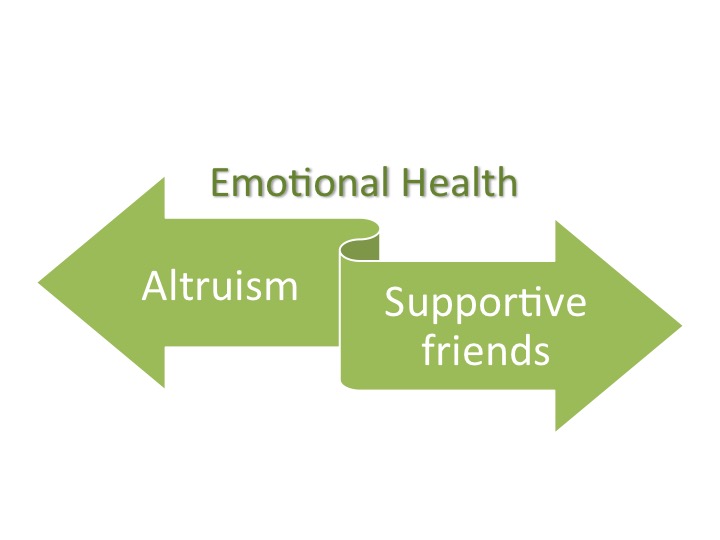
Caring for and by others is key

The fourth of the four components of health is emotional health. True health requires health in all four components. Over the last three weeks we covered physical, mental, and spiritual health. Striving to attain health in all four areas enhances your overall health.

Emotional health refers to how you deal with life and its ups and downs. Everyone goes through difficult trials. The specifics are different between people. Even for you, there will be a wide variety of difficult times you experience.   Everyone has good days. These can be peaceful, contended days; days where you reach a goal; days where you are celebrated; and days when you feel loved and secure.

Your feelings play a big role in your emotional health. People express their feelings in many different ways. Some people are more visibly emotional. Other people keep their emotions carefully hidden from view. Either way, emotions can impact our behaviors. How we act, how we respond, how we treat people, and how we feel about ourselves can all be affected by our emotions.

Why does my emotional health matter?

When looking at the differences between healthy people and not so healthy people, researchers have found emotional health to be a key factor.

How do you handle your anger? How kind are you to yourself in your ‘self talk’? How do you express your joy? What is your response when someone criticizes you? How often do you put other people’s needs before your own? Do you feel like the world is out to get you? How do you respond when your car breaks down? How do you feel when you forget to send a birthday card on time? What makes you happy? What makes you sad?

Studies have shown that prolonged stress and negativity make you age faster. There are actually measurable changes in your brain (shorter telomere length and less activity). This stress can also make you more susceptible to other diseases. Your blood pressure can go up, risk of heart disease goes up, and risk of diabetes goes up.

Improved health does not come from lack of negative situations. It comes from how you handle those situations.

The research has shown that the people who are more emotionally healthy have:

  • Friend(s) to talk to
  • People who care about you
  • A sense of self-worth
  • Ability to give and receive forgiveness
  • Conflict management skills
  • A desire to be giving toward others
  • Concern for others

As you can see, these are not things you are born with. They are skills and attitudes you can develop. They are choices you can make. They are best navigated with friends and supportive people around you.

Similarly, other researchers found that keys to overall health are:

  • Thinking kindly of people
  • Feeling optimistic
  • Supportive friends & family
  • Ability to bounce back
  • Making healthy choices
  • Being grateful for all you have

I found it interesting that the findings are so similar. Other studies have supported these important areas of emotional health. When you feel good, your thinking of more creative and flexible. You see problems with more possibilities and solutions.

So, I encourage you to take a personal assessment of your current emotional health. Consider the things that delight you and the things that upset you. Where can you incorporate more of the listed items that are shared among people with more emotional health?

Medications can help on a short-term basis when circumstances have you so upset you can’t function or sleep. Long-term emotional health, however, is gained more through self-insight, positive choices, and self-development.

If you would like citations for the studies mentioned or have any questions about the role of your emotional health on your overall health, contact us at www.medsmash.com.

(Note, severe abuse, neglect, and trauma are much different than daily negative situations. This blog is not intended to cover the health effects of these experiences that usually involve severe mental illness of the perpetrator.)

BIBLICAL APPLICATION

Our emotions can guide so many of our behaviors, especially if we don’t have an anchor of hope. Resilience is the result of knowing God’s love and mercy never fail. No matter the situation, you are not alone, and you have the ultimate resource walking with you.

Throughout the Bible we are assured that bad things will happen. Since sin entered the world, this has been a basic fact. Throughout the Bible we are assured there is hope and joy that can get us through any situation.

Philippians 4:6-7 ESV

Do not be anxious about anything, but in everything by prayer and supplication with thanksgiving let your requests be made known to God. And the peace of God, which surpasses all understanding, will guard your hearts and your minds in Christ Jesus.

Joshua 1:9 ESV

Have I not commanded you? Be strong and courageous. Do not be frightened, and do not be dismayed, for the Lord your God is with you wherever you go.”

As we go through difficult times, either big life-altering events or short bursts of anger or frustration, we are encouraged to give those over to God. We aren’t meant to figure it all out or deal with it on our own. Actually, when we do try to handle things ourselves, we often get into trouble.

Proverbs 29:11 ESV

A fool gives full vent to his spirit, but a wise man quietly holds it back.

Proverbs 15:18 ESV

A hot-tempered man stirs up strife, but he who is slow to anger quiets contention.

A focus on God can help calm our storms. Once we learn to navigate the storms, we can be a better support to those around us.

Romans 12:2 ESV

Do not be conformed to this world, but be transformed by the renewal of your mind, that by testing you may discern what is the will of God, what is good and acceptable and perfect.

Romans 12:15 ESV

Rejoice with those who rejoice, weep with those who weep.

Proverbs 15:13 ESV

A glad heart makes a cheerful face, but by sorrow of heart the spirit is crushed.

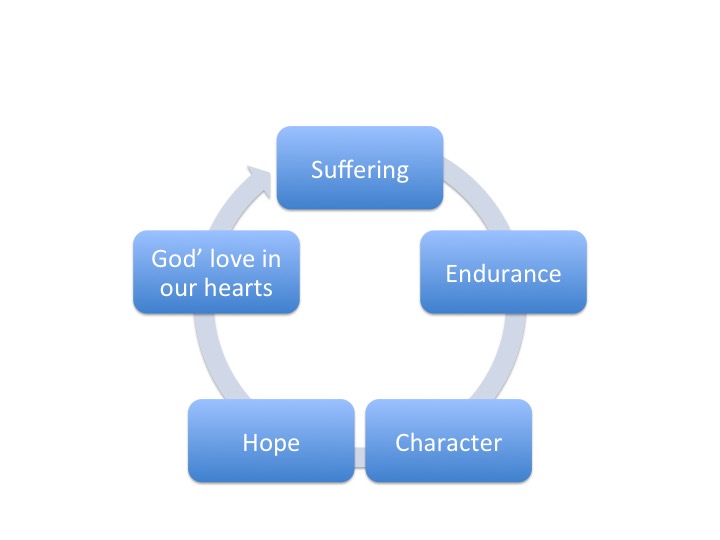
I love this visual of Romans 5:3-5. With each time around the circle, we grow in hope and joy and the certainty of God’s love. This can then spill over to others.

Slide1Blessings,

Michelle