Medications and Falls

Did you know that taking some medications can increase your risk of falling?

Did you know not taking some medications can increase your risk of falling?

Did you know some medical conditions can increase your risk of falling?

Did you know not getting enough of some vitamins can increase your risk of falling?

Wow, fall risks are so complicated!

The Centers for Disease Control recently created and released a tool for healthcare providers and patients to help screen for and diminish fall risk. You can find it at http://www.cdc.gov/steadi/patient.html. I encourage you to use these tools to minimize your risks.

Some of the things addressed are clutter in your home that can trip you, the importance of exercise to stay strong, use/add grab bars, sturdy hand rails, wear shoes or nonslip slippers, improve lighting, and more.

In addition, have a medication expert review all of your medications to minimize the fall risk caused by drugs that you take.   This is an area where all of your healthcare team can work together to make sure your risks are minimized.

Some types of medication are more likely than others to make falls occur more easily. Then, if you take several of these medicines, your risk is even higher.

The vitamin associated with falls is vitamin D. If you have too little vitamin D your risk is higher. If your doctor has not checked your vitamin D level, request that be done at your next visit. Most adults have a deficiency.

If you would like a thorough fall risk assessment, please contact Meds MASH at www.medsmash.com.

Biblical Application

I have been struck lately by the words to a song sung by Jason Gray, “More Like Falling in Love”. If you have not heard it, I highly encourage you to check it out.

The lyrics say,

“More like falling in love

than something to believe in

more like losing myself

than pledging my allegiance.”

“It’s like I’m falling in love.”

I adore this description of meeting and giving it all to Christ.

If you’re going to fall, what’s better than falling in love? And what’s better than falling deeply in love with Christ?

Luke 10:27 ESV

And he answered, “You shall love the Lord your God with all your heart and with all your soul and with all your strength and with all your mind, and your neighbor as yourself.”

1 John 4:18 ESV

There is no fear in love, but perfect love casts out fear. For fear has to do with punishment, and whoever fears has not been perfected in love.

Psalm 85:10 ESV

Steadfast love and faithfulness meet; righteousness and peace kiss each other.

May you be enveloped with this wonderful love!

Blessings,

Michelle
Know before you decide

What is a tmedication-sliderhorough medication evaluation? Would you benefit from one? Don’t other people already
evaluate your medications on a regular basis? Do you worry about hurting someone’s feelings if there is a difference of opinion about your medication regimen?

You likely have several different healthcare providers – your primary care doctor, any nurse practitioners or physician assistants in that office, your specialist doctor(s), your local pharmacist, and maybe a chiropractor, physical therapist dietician, and others. Surely between all of them someone is providing you with a very thorough evaluation of your medications?

Do you take anything for a cold? Or a stomachache? Or to help you sleep? Or for pain?

Do you tell your healthcare providers about these things you take only once in awhile?

Do you take vitamins or supplements or herbal therapies that you select for yourself? Do you tell your healthcare providers about these?

Do you always take your medications at the same time every day? What do you do when you forget to take them? Do you take some of them only when you feel like you need them? Have you ever stopped taking a medication without telling your providers?

thorough medication evaluation will cover all of these things. Our research has shown that in 98% of visits there is at least one thing that you didn’t know about your medication that you really should know.

As a clinical pharmacist, I am looking at all of your prescribed medications and other substances you take to assure none of these nine problems exist:

  • Each dose is not too high (You have more side effects than needed or even have toxicity.)
  • Each dose is not too low (You take it but it doesn’t work for you.)
  • All conditions that should be treated with a medication are being treated with the best medication(s) based on current medical studies.
  • Each medication you take is actually necessary. (Sometimes there are medications that have been on your list for a long time but no one remembers why.)
  • No medications interact with each other making your health worse. Also, your diet and supplements don’t interact with your other medications or each other.
  • You are able to obtain and take each prescribed medication. (Sometimes pills are too big, inhalers are hard to use, eye drops are hard to get into the eye, or medications are too expensive or not covered by insurance.)
  • None of your medications for one condition make another condition worse.
  • You are able to safely take all of your medications. Allergies and medication intolerances will be reviewed and clarified for your healthcare team.
  • You are taking each medication at the optimal time in relation to food, other medications, and potential side effects.

Clinical pharmacists have extensive training specific to all aspects of medications and how they work., more than any other health professional. Often, having a clinical pharmacist working with the rest of your providers will further assure that all of your medication use is necessary, safe, and effective.

For more information about a thorough medication assessment, contact www.medsmash.com.

Biblical Application

Just like medication intended for good can sometimes actually cause harm, are there elements of our spiritual lives that can be more harmful than good?

There are many interpretations of the content of the Bible. There are many preachers and teachers and blogs and radio programs and television programs and articles written.

Are they all true and accurate?

How do you determine what to believe and what to implement in your life?

Jesus, Paul, John, and others warned us about false teachers and the importance of discernment. Well, that sounds good, but how do you actually do it?

First, here is what the Bible says.

1 John 4:1 (MSG)

My dear friends, don’t believe everything you hear. Carefully weigh and examine what people tell you. Not everyone who talks about God comes from God. There are a lot of lying preachers loose in the world.

John 7:24 ESV

Do not judge by appearances, but judge with right judgment.

Proverbs 2:1-5 ESV

My son, if you receive my words and treasure up my commandments with you, making your ear attentive to wisdom and inclining your heart to understanding; yes, if you call out for insight and raise your voice for understanding, if you seek it like silver and search for it as for hidden treasures, then you will understand the fear of the Lord and find the knowledge of God.

Discernment might sound difficult or only for those with advanced theological training, but the Bible encourages us to pray about it. When you hear or read something that you’re not sure about, pray and ask God to guide you. Jesus says that the Holy Spirit is with us at all times.

Matthew 28:20 ESV

Teaching them to observe all that I have commanded you. And behold, I am with you always, to the end of the age.

Joshua 1:9 ESV

Have I not commanded you? Be strong and courageous. Do not be frightened, and do not be dismayed, for the Lord your God is with you wherever you go.

(And there are several more such verses throughout the Old and New Testament).

Let God lead you with discernment and love.

Blessings,

Michelle

Clots lead to TROUBLE

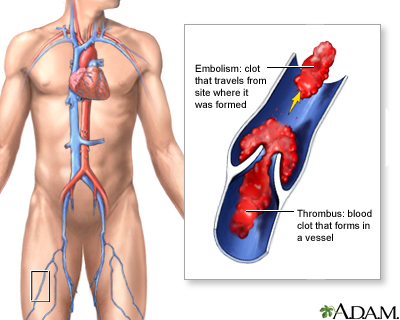
Most strokes and heart attacks have something in common – CLclotOTS.

Normally blood whooshes right through veins and arteries with nothing blocking the way. The blood carries oxygen to all of the parts of the body to provide energy to keep everything functioning properly.

Sometimes a fatty diet and genes/family history and some medical conditions lead to fibrin (a protein in the blood) and fat lining the edges of the veins and arteries. Some of this can happen with no real danger.

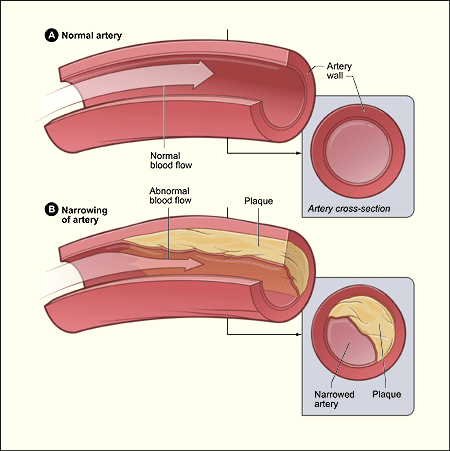
Then other times, something occurs that takes that fat and fibrin and knocks out a chunk of artery lining or makes the surface rough. This allows platelets (a component of the blood) and fibrin to stick to the rough/injured area. As these continue to stick, the blood goes through a more and more narrow passage. Eventually, blood flow is completely blocked.

When this happens in the brain, a stroke results. When this happens in the arteries providing blood to the heart, a heart attack happens. When this happens in the legs, it is called deep vein thrombosis. When it happens in the lungs it is a pulmonary embolus.

What can you do to prevent these clots? There are several key things:

  • Stop smoking if you smoke
  • Exercise regularly
  • Lose weight if you are overweight
  • Avoid sitting for long periods of time (even if you travel, take breaks to move around)
  • After surgery or being sick in bed, get up and move as soon as possible and move frequently.
  • Lower high blood pressure
  • Eat a heart healthy diet

Take control of your future and make these positive changes so you can avoid clots.

For more information, contact www.medsmash.com.

Biblical Application

A clot often starts with some little thing going wrong. Either a tiny piece breaks off the fat lining of the artery or something roughs up the edge a bit. Then that small negative event grows and grows and grows until a major life-threatening event occurs.

How often does this happen in life and relationships?

Someone says something that hurts your feelings. It might be deliberate or a result of poor social skills or completely unintended. But, you take offense. Then, you start thinking about the words and you get more angry. Then you start recounting any other thing that person has ever done that could be interpreted negatively. Then you start watching this person and interpreting anything they say or do negatively. Maybe you even bring in other people to support your interpretation of the hurtful statement.

The next thing you know, that relationship stops receiving any sustaining positive input. It completely dies. Everyone walks away hurt.

Have you ever said or done something hurtful completely by accident? I recently was talking with a friend who plans to disown any relationships that didn’t reach out to support her when she lost a dear family member. I understand the hurt, especially at such a tender time. Did all of those people who didn’t reach out intend to hurt her? Or, was a mistake made? Did they not know how important that support could be? Did they not know how to support?

I’m not making excuses. I’m extending grace.

Ephesians 2:8-9 ESV

For by grace you have been saved through faith. And this is not your own doing; it is the gift of God, not a result of works, so that no one may boast.

Ephesians 4:32 ESV

Be kind to one another, tenderhearted, forgiving one another, as God in Christ forgave you.

James 1:19-20 ESV

Know this, my beloved brothers: let every person be quick to hear, slow to speak, slow to anger; for the anger of man does not produce the righteousness of God.

Let’s all try to keep our focus on love, forgiveness, and grace to bring out the best in each other.

Blessings,

Michelle

All Confused – Urinary Tract Infection

thumb-confusion-clip-art-440303When we’re younger we learn the typical symptoms of a urinary tract infection (UTI). Burning, frequent urge to urinate, cloudy urine, pelvic pain, and sometimes fever usually accompany a UTI.

As we age, these symptoms can be quite different. Confusion is a common symptom. Yet confusion is such a nonspecific symptom, it is often misinterpreted. The person with the confusion or those around them may attribute the confusion to lack of sleep, stress, a cold, early dementia changes, or other things.

So, the point of this blog post is to help us all think of infection, and specifically UTI, when confusion occurs in someone over middle age.

Other symptoms of a UTI can include generally not feeling well (very nonspecific), more frequent urination, new-onset incontinence, and lower abdominal pain.

If a UTI extends beyond the urethra and bladder, the lower/mid back can also hurt. This can be an indication the kidneys are involved and could indicate a more severe infection. A fever does not always accompany a UTI as we age.

Any of these changes in wellbeing are worthy of a check up to include a urinalysis (check of a urine sample for bacteria).

There are several changes that occur with aging that increase risk for UTI in both women and men. For women, after menopause, atrophy of the vagina and changes in the urethra make it easier for bacteria to grow and move from one place to the other. Diabetes, incontinence, bladder prolapse (drop down), and use of a catheter also increase risk for UTI. In men, an enlarged prostate that causes any blockage of the urinary tract also increases risk.

Note, sometimes people can have bacteria in their urine and not have an infection. Your physician can determine if treatment of any bacteria that is found is warranted.

So please don’t ignore new onset confusion. Remember to check for a UTI if you experience these symptoms.

For more information, contact us at www.medsmash.com or call 410-472-5078.

Biblical Application

Confusion as a primary symptom of UTI makes me think of other aspects of life that aren’t as they initial appear.

How often does something happen in your life, and you make assumptions about the why, how, what of that event? You then start making plans and reacting based on those assumptions.

How often do we see only part of the picture and make wrong assumptions about the missing parts?

Have your assumptions ever been wrong?

Have you ever been embarrassed or even hurt someone because of those misguided assumptions?

These are the sorts of lessons we often learn the hard way.

Religion is much the same.  Some people looking in from the outside only see part of what God has in store for them.  One or two views of very human Christians not doing the right thing can give a skewed picture.  God’s grace is misunderstood.  Beliefs are created that aren’t founded in Biblical truth.

So how can we focus more on truth and test our assumptions before acting on them?

1 John 4:1 ESV

Beloved, do not believe every spirit, but test the spirits to see whether they are from God, for many false prophets have gone out into the world.

Proverbs 18:2 ESV

A fool takes no pleasure in understanding, but only in expressing his opinion.

Proverbs 25:8 ESV

Do not hastily bring into court, for what will you do in the end, when your neighbor puts you to shame?

Matthew 7:1 ESV

“Judge not, that you be not judged.

John 8:32 NLT

“And you will know the truth, and the truth will set you free.”

Give it all to God and ask him to first help you see the truth and then paint the accurate picture.

Blessings,

Michelle

Life Transitions = Depression Risk

car-clip-art-879As my son returns to college I am fighting tears and happy at the same time. It is such a big adjustment to be away from him for several weeks at a time. I am sitting here thinking about the big impact of life transitions. We all experience them.

It is common knowledge that loss of a loved one and tragedies can increase risk of depression.

Moving, marriage, child moving out, job loss, retirement, and functional changes can increase risk of depression.

Diagnosis with a chronic illness can increase risk of depression.

As age increases, these life transitions can become more frequent.

When not recognized and addressed, depression can make you feel tired with too little energy, make it hard to concentrate and cause you to lose interest in things that you used to enjoy. It can also lead to you feeling sad and hopeless.

Depression is NOT a normal part of aging.

You do NOT have to just tolerate it and think this is your new normal.

Depression does NOT mean you have done something wrong.

There is help, and there is hope! Effective depression treatment usually requires support from people and medications. Medications that treat depression take about 8 weeks to work, so please be patient and take them every day until they work.

To further complicate things, depression is common in someone experiencing memory decline. As stated above, depression makes it harder to concentrate and remember. Cognitive or memory decline often leads to depression as the decline is recognized. Professional diagnosis and treatment is imperative to sort through what is causing what symptoms and the best course of action.

Remember, you do not have to live with depression.

If you’re interested in a depression screening, contact www.medsmash.com.

Biblical Application

If you are depressed, are you a bad person? NO!

Are you a weak Christian? NO!

Have you done something wrong? NO!

Throughout the Bible there are stories of people dealing with difficult situations, life transitions, illnesses, chronic problems. These include David and Paul and Joseph. You are not alone.

Also found throughout the Bible are messages about joy and hope. You have an eternal source of this joy and hope.

I believe part of God’s design for helping you through these difficult times is medical and psychological treatment. God gave these abilities and resources to your treatment team for your benefit.

Psalm 28:7 (NLT)

The Lord is my strength and shield.

I trust him with all my heart.

He helps me, and my heart is filled with joy.

I burst out in songs of thanksgiving.

Hebrews 6:19 (CEV)

This hope is like a firm and steady anchor for our souls. In fact, hope reaches behind the curtain and into the most holy place.

Romans 12:12 (NLT)

Rejoice in our confident hope. Be patient in trouble, and keep on praying.

I’ll be praying you find the eternal joy that is yours in Christ. And I encourage you to seek God’s blessing through treatment by your healthcare providers.

Blessings,

Michelle

I have hypertension – so what, I don’t feel any different

When your bSlide1lood pressure is elevated, most often you don’t feel anything. It is a silent condition. All medications have the potential for side effects. So many people have chosen to avoid the medications and ignore the hypertension.

So what?

If untreated, high blood pressure (hypertension) can lead to heart attacksstrokesheart failure, and other cardiovascular conditions. It really is a big deal.

So what can you do if you have hypertension?

First, take your medicine every day as prescribed! If you have side effects or problems taking it, tell your doctor or pharmacist right away.

Second, if you smoke, it is truly important that you stop. Smoking greatly increases your risk of a heart attack or stroke.

Third, if you drink alcohol, limit yourself to 1 drink per day and let your doctor know that you drink. This way your medicine regimen can be chosen with that in mind to reduce any risks to you.

Fourth, limit your salt intake. Ideally stop using your saltshaker, rinse your canned vegetables and
cook them in fresh water, watch sodium content in foods.   Many quick and easy (heat and eat) foods are high in sodium. This can increase your blood pressure.

Fifth, maintain a healthy weight. Being overweight increases your risk for heart disease and makes your blood pressure harder to control. Losing weight usually requires a combination of healthier eating and exercise. Check with your doctor before you start an exercise routine to be sure it is a healthy one for you with your hypertension. (You can calculate your body mass index at this link.)

Sixth, control your diabetes. Many people with diabetes have hypertension and are overweight. Metabolic syndrome is a term to describe having hypertension; obesity, especially around your middle; high cholesterol; and diabetes. Having this syndrome is another risk factor for heart disease and stroke.

So, there are several healthy steps you can take to protect your heart and lower your blood pressure.

For more information, contact us at www.medsmash.com.

Biblical Application

Choices. We are faced with them every day. Sometimes the bad choices seem so much easier than the good choices.

Where can you find the strength and willpower to make good choices?

On your own, there are definite limits to what you can do. Temptations can be great. Life changes, whether your diet, your exercise, or a host of other areas, can be a source of great frustration. Words like procrastination, justification, avoidance, and defensiveness come to mind. Have you experienced any of these?

But you do have access to infinite strength and support.

Philippians 4:13 ESV

I can do all things through him who strengthens me.

Deuteronomy 31:6 ESV

Be strong and courageous. Do not fear or be in dread of them, for it is the Lord your God who goes with you. He will not leave you or forsake you.”

Isaiah 41:10 ESV

Fear not, for I am with you; be not dismayed, for I am your God; I will strengthen you, I will help you, I will uphold you with my righteous right hand.

Deuteronomy 20:4 ESV

For the Lord your God is he who goes with you to fight for you against your enemies, to give you the victory.’

1 Corinthians 10:13 ESV

No temptation has overtaken you that is not common to man. God is faithful, and he will not let you be tempted beyond your ability, but with the temptation he will also provide the way of escape, that you may be able to endure it.

Rather than trying to make important changes with your own strength and willpower, turn to your true power source. Take that minute by minute journey with God leading you through.

Blessings,

Michelle

Hypertension ≠ High Tension

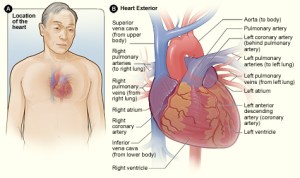
I have Heart - NIHhad several clients who have interpreted the medical condition hypertension as ‘high tension’. They thought this was a condition related to stress. And then, several thought the condition was only present when they were feeling stressed.
How much stress is there in your life right now? How much stress is there in the world? Some of us feel stressed much of the time. Others take a laid back approach to life and rarely feel stress.

Is it true that the stressed people have hypertension and the laid back people don’t?

NO

Hypertension (also known as high blood pressure) is a medical condition that goes way beyond stress or tension. It is a complex condition that is related to our genes (which we can’t control), our environment (some of which we can control), our behaviors (which we CAN control), and likely other factors that are still to be discovered.

Because it is such a complex condition with so many systems in the body involved, there are many medications that are used to treat it. Each category, or type, of medicaion treats hypertension in a different way. So, for some people, hypertension can be controlled with one medication. For other people, it could take two, three, four, or more medications, each acting on a different aspect of the condition.

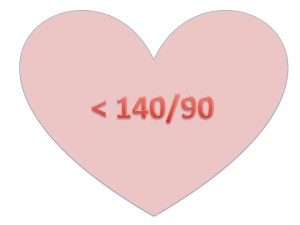
How high is too high? The very general answer is a blood pressure over 140/90 is too high based on current guidelines. If someone has a history of heart disease or diabetes or some other conditions, your doctor might give you a lower goal such as less than 130/80.

How low is too low? Too low is not a strict number. Rather, it is more related to symptoms. If you feel dizzy when you stand or turn, have seen a marked decrease in your energy since starting your hypertension medicine, or are having trouble catching your breath, talk with your doctor.

Blood pressure that gets too high can be dangerous. It can lead to a myocardial infarction (heart attack) or stroke.

So what can you do about hypertension if you have it?

Check back next week for a ‘prescription’ for lowering and controlling your blood pressure.

For more information, contact us at www.medsmash.com.

Biblical Application

Do you have stress in your life? Do you worry? Does your mind keep you awake at night thinking about all you need to do, or the things you are worried about?

I don’t know about you, but just watching the news can increase my stress level. It all seems so out of control.

It is at those times that we can be assured that God is in control. Ultimately, God wins. This universe, all of history, all current events, and the future belong to Him.

On Sunday our pastor mentioned that you could sum up the entire Bible in two words – GRACE and PEACE. Jesus came to provide access to both. His grace and peace are with us at all times; we just need to quiet ourselves, turn our hearts and minds to Him to experience it.

Philippians 4:6-7 ESV

Do not be anxious about anything, but in everything by prayer and supplication with thanksgiving let your requests be made known to God. And the peace of God, which surpasses all understanding, will guard your hearts and your minds in Christ Jesus.

Matthew 6:34 ESV

“Therefore do not be anxious about tomorrow, for tomorrow will be anxious for itself. Sufficient for the day is its own trouble.

1 Peter 5:7 NIV

Cast all your anxiety on him because he cares for you.

John 14:27 NLT

“I am leaving you with a gift—peace of mind and heart. And the peace I give is a gift the world cannot give. So don’t be troubled or afraid.

Don’t let your hearts be troubled. God is in control.

Blessings,

Michelle

Image Source:  National Heart, Lung, and Blood Institute; National Institutes of Health; U.S. Department of Health and Human Services

Stiff and Inflexible – Arterial Stenosis

atherosclerosis NIHSo why shouldn’t you eat all of the high fat foods that you want? They really do taste good. You know other people who eat those foods. So why shouldn’t you?

What can it hurt?

Your arteries are the part of your venous system that carry the clean, full-of-oxygen blood from your heart throughout your body. Your veins then carry the blood that has given up its oxygen to ‘feed’ your body and is now ready to go back to the heart to get a fresh supply.

In addition, your veins and arteries dilate (open up wider) or constrict (squeeze down tighter) based on the pressure needs in your body to keep the blood flowing. This ability to change how open they are is essential for blood pressure control, heart protection, kidney function, and more.

Arterial stenosis is a condition where those flexible, open tubes start to get thicker and less flexible. When this happens, they cannot respond to the body’s pressure needs as well. Specific areas where this thickening can be problematic is in the renal arteries (main arteries of the kidneys), carotid arteries (main arteries to the brain), and the aorta (main artery leaving the heart). This can cause quicker fatigue, decrease exercise tolerance, and increased risk of heart attack or stroke.

Those fatty foods can increase the cholesterol in your blood. That cholesterol can then ‘stick’ to the walls of your arteries making them even more thick and inflexible.

Too much cholesterol, too little exercise, smoking, diabetes, and being overweight can all increase risk of and worsen this condition.

So, making those good decisions about the food you eat, getting regular exercise, and not smoking can keep your blood flowing easily. This will keep your heart, your kidneys, your brain healthy and keep you living your dreams!

For more information, contact us at www.medsmash.com.  There you can find a short movie demonstration of a clean verses a stenotic artery.

Biblical Application

How often do we become too stiff and inflexible in our lives? Has God ever compelled you to do something, and you ignored or refused?

Have you ever had your feelings hurt and shunned the person who hurt you without trying to talk it through?

Do you know anyone who has stopped going to church or attending church functions because they don’t agree with some aspect of the service, or the people in leadership, or who sits where, or whatever reason?

Why do we get so caught up in small matters that we miss the BIG PICTURE of love and grace and eternity?

Like thickening of our arteries, sin, greed, jealousy, strife, self-interests can thicken our spiritual life-line causing us to be inflexible and obstinate.

God’s word mentions the stubbornness of us humans from the very first book.

Genesis 16:12 ESV

He shall be a wild donkey of a man, his hand against everyone and everyone’s hand against him, and he shall dwell over against all his kinsmen.”

Psalm 81:11-12 ESV

“But my people did not listen to my voice; Israel would not submit to me. So I gave them over to their stubborn hearts, to follow their own counsels.

Hosea 4:16 ESV

Like a stubborn heifer, Israel is stubborn; can the Lord now feed them like a lamb in a broad pasture?

2 Timothy 4:3-4 ESV

For the time is coming when people will not endure sound teaching, but having itching ears they will accumulate for themselves teachers to suit their own passions, and will turn away from listening to the truth and wander off into myths.

Job 36:11 NIV

If they obey and serve him, they will spend the rest of their days in prosperity and their years in contentment.

The only way I will keep a pliable, obedient spirit in the larger decisions is to look to Him and to obey in the smaller ones.”  Catherine Marshall

Next time you’re feeling irritable and obstinate, take a minute to reconnect with the One who can keep your spiritual arteries clean and flowing. Let His love and acceptance flow unimpeded through you with prayer, time in the Bible, and fellowship with faithful people.

Blessings,

Michelle

Image source: National Heart, Lung, and Blood Institute; National Institutes of Health; U.S. Department of Health and Human Services

Vision – do we see things the same way?

Our viIMG_3357sion is so important. It helps with orientation, recognition of people and things, understanding our surroundings, keeping us safe, and so much more.

When you look at something, does everyone else see it exactly the same way?

The eye is a complex organ. It is worth protection. Following are just a few common disorders that can alter vision. Included is a brief description of how this condition can alter vision.

Color blindness – In our eyes there are rods and cones that are responsible for our vision. The cones control color vision. They are primarily red, green, and blue. Some people, 5-8% of men and up to 1% of women, inherit genes that impair their ability to see colors. The most common variety is red-green color blindness or decreased perception. People with this condition don’t see the bright versions of these colors, and in some instances can’t differentiate the colors at all. Other variations are blue-green color blindness and difficulty with all colors.

Glaucoma – This is caused by fluid build-up in the eye leading to pressure that damages vision. The added pressure can decrease vision to the point of blindness, especially if not treated. Over 2 million people in the US have open-angle glaucoma, the more common type. The incidence goes up after middle age. You often don’t notice any change until there is significant vision loss. Loss of vision around the edges usually occurs first. Testing for this is one of the key reasons for a thorough vision exam regularly.

Cataract – Cataracts are the leading cause of blindness in the world. It is a clouding of the lens of the eye making your vision look cloudy. It is treatable with an outpatient surgery, in most cases. Medicare pays for most of the surgery and follow up resources such as eyeglasses and lenses. Again, a regular vision screen can identify cataracts early and determine when the time is right for correction.

Macular degeneration – This condition is age-related and the leading case of vision decline in people over age 65. With macular degeneration, it is difficult to focus clearly on things in the central vision. This makes reading and face recognition difficult. There are few treatments for this, and the damage is permanent.

Diabetic retinopathy – This is a complication of diabetes and can be controlled and prevented with good blood sugar and blood pressure control. It is the leading cause of blindness in working adults in the US. As blood vessels in the retina of the eye are damaged, there is an appearance of dark spots in the vision.

To keep your eyes healthy, get regular (frequency guided by your eye doctor) dilated eye exams to catch problems early. Wear protective glasses when mowing, weed eating, or other activities that could cause anything to fly into your eye. Protect them with sunglasses on these bright summer days. If you are a tech junky, give your eyes a rest to reduce strain. For each 20 minutes at the computer, look away about 20 feet for at least 20 seconds.

So for many reasons, we do not all see things in the same way.

For more information, contact us at www.medsmash.com.

BIBLICAL APPLICATION

In our daily life and faith, do we all ‘see’ things the same way? Have you ever been in a Bible study or discussion and marveled at the varying insights from people reading the same passages?

What can alter our perceptions? In our lives and our faith, these factors and more impact each of us:

  • Life experiences to date
  • Bible knowledge – amount of reading and study
  • Current place in faith walk
  • Current stressors and distractions
  • Current openness to God’s message
  • The individual gifts and abilities we each have

Our spiritual eyes, like our physical eyes, can be damaged. False messages, discouragement, sin, poor choices all impact our ability to ‘see’ God.

In the Old Testament, the Israelites repeatedly made decisions in opposition to God’s messages through the prophets.  Often their ‘view’ of reality was so skewed, and that led them further and further in to trouble.  See Jeremiah 44:11-30.  People were giving tribute to their offerings for the ‘Queen of Heaven’ rather than the one true God.

Thankfully, differences in opinion are not always bad.   When shared in love with the intent to build each other up, diversity of perspective can richly enhance our understanding.

And in prayer, study, and communication with God, we can ‘see’ His plans and His answers.

1 Corinthians 12:4-6 NLT

There are different kinds of spiritual gifts, but the same Spirit is the source of them all. There are different kinds of service, but we serve the same Lord. God works in different ways, but it is the same God who does the work in all of us.

Romans 14:13 NIV

Therefore let us stop passing judgment on one another. Instead, make up your mind not to put any stumbling block or obstacle in the way of a brother or sister.

Praying you ‘see’ clearly God’s plans for your life.

Blessings,

Michelle

Water- How Much is Enough?

clipart-sun-opT55BpiBSummer can be so fun! Bright sunny days, warm temperatures, festivals, vacations, long hours of daylight…

Summer can also be hot! During the summer it is even more important to drink plenty of water. So, how much is enough?

When we don’t drink enough water, we become dehydrated. When it is hot, and we sweat, it is even easier to be dehydrated.

What about age? As we age, our total body water decreases. (Check out your skin lines and wrinkles,). So, it is even more easy to be dehydrated.

When you are dehydrated you can feel dizzy, especially when standing or quickly turning. You can also have a headache, feel extra tired, and feel like your heart is pounding or beating differently. With decreased water in your body, you can become constipated and can find you urinate less.

If you take diuretics (water pills), your risk of dehydration goes up.

If you have incontinence (trouble holding your urine), do you tend to avoid drinking when you are going to be somewhere without easy bathroom access? This can make it easier to be dehydrated, too.

Note, one technique that often helps with incontinence is to empty your bladder on a scheduled basis. Rather than drink less, schedule bathroom stops every 2-3 hours rather than waiting for the urge to urinate.

When you are going to be out in the heat, don’t forget to drink water. The hotter and more you sweat, the more important that you drink as you get thirsty. Dehydration can make it easier to fall and keep you from feeling good.

If you would like to learn more, please contact us at www.medsmash.com.

Biblical Application

Thirst is mentioned at least 42 times in the Bible. The term is often used to represent our longing for God. Jesus said He could quench thirst.

Small doses of the ‘water’ He offers are not sufficient. To be thoroughly quenched, full commitment is the best dose. Think of full glasses of water vs drops. Regular time in the Word vs hearing verses on Sunday. Daily, or even many times per day, time in prayer. Regular time in praise.

John 4:14 ESV

“But whoever drinks of the water that I will give him will never be thirsty again. The water that I will give him will become in him a spring of water welling up to eternal life.”

John 7:37 ESV

On the last day of the feast, the great day, Jesus stood up and cried out, “If anyone thirsts, let him come to me and drink.”

Isaiah 44:3 ESV

For I will pour water on the thirsty land, and streams on the dry ground; I will pour my Spirit upon your offspring, and my blessing on your descendants.

I’m praying we all find the living water than can truly quench our thirst.

Blessings,

Michelle